๐ŸŒฟ Honest plant care, grown and tested at home NEW 180 plant, mushroom & tea profiles published ๐Ÿ“ฉ Weekly newsletter As an Amazon Associate we earn from qualifying purchases
Home/Gardening/Ornamental grasses

Ornamental grasses, sorted.

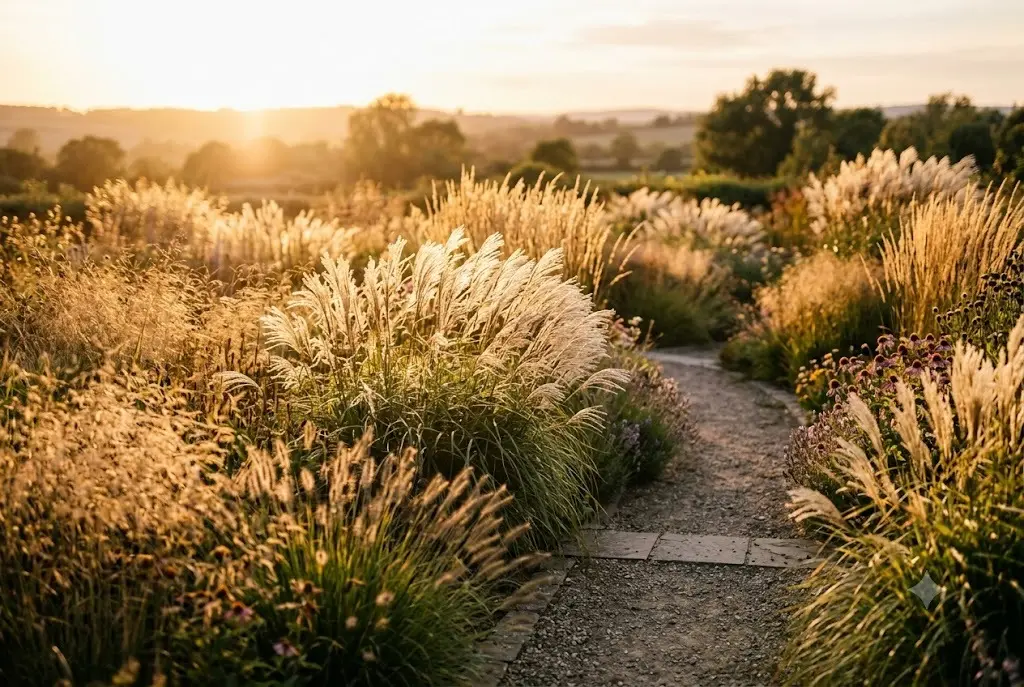
Grasses are the easiest drama in gardening - one cut a year, almost no pests, and movement no flower can match. Here are 21 profiles from ankle-high blue domes to four-meter plumes, each with honest notes on season, siting and the few that need an invasive-list check first. New to grasses? Start with the ornamental grasses primer.
The catalog 21
๐ŸŒพ Medium (0.9-1.5 m)

Feather Reed Grass

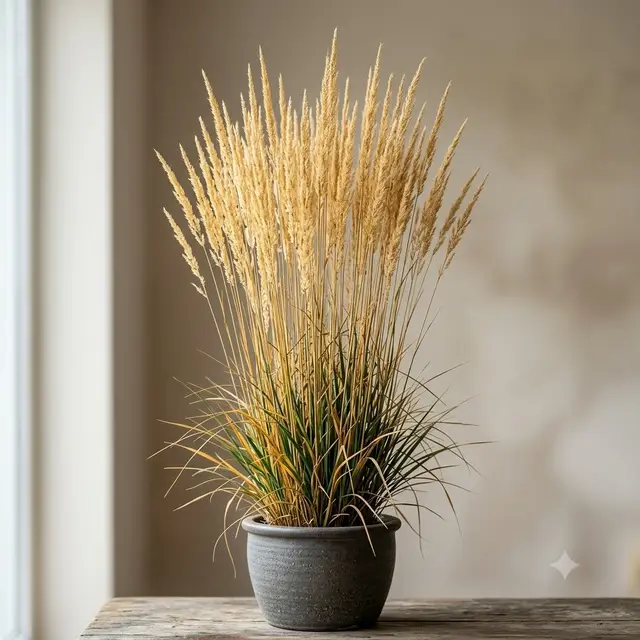
Feather Reed Grass 'Karl Foerster' is the exclamation mark of modern garden design - a strictly upright, early-blooming ornamental grass whose wheat-colored plumes stand like soldiers from June to February.
๐ŸŒพ Small (under 0.9 m)

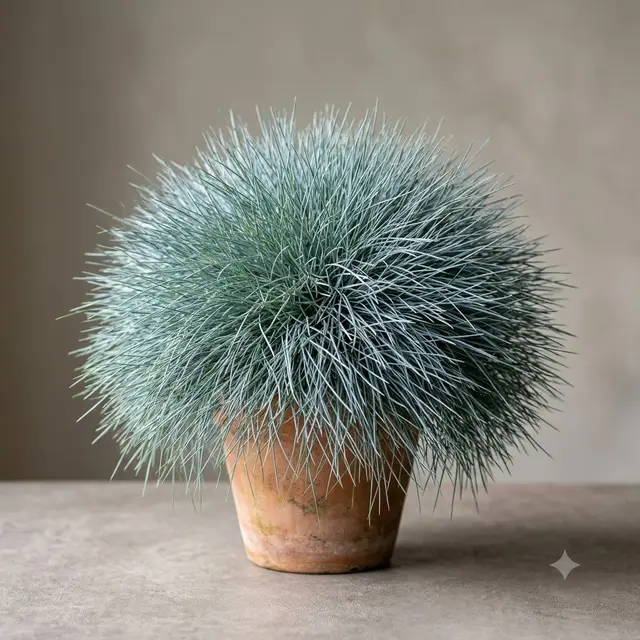
Blue Fescue

Blue Fescue is the pincushion of the grass world - a neat, silver-blue dome the size of a hedgehog that edges paths, fills gravel gardens and drops steel-blue color at ankle height where nothing else stays so tidy.
๐ŸŒพ Tall (1.5 m+)

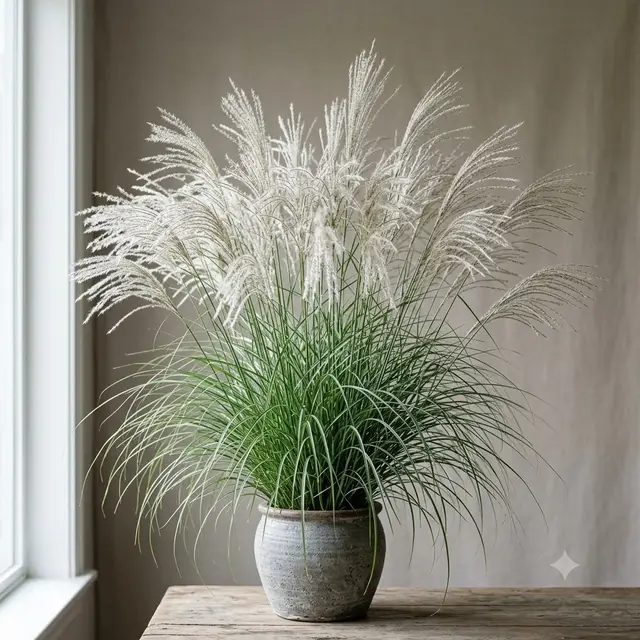
Maiden Grass (Miscanthus)
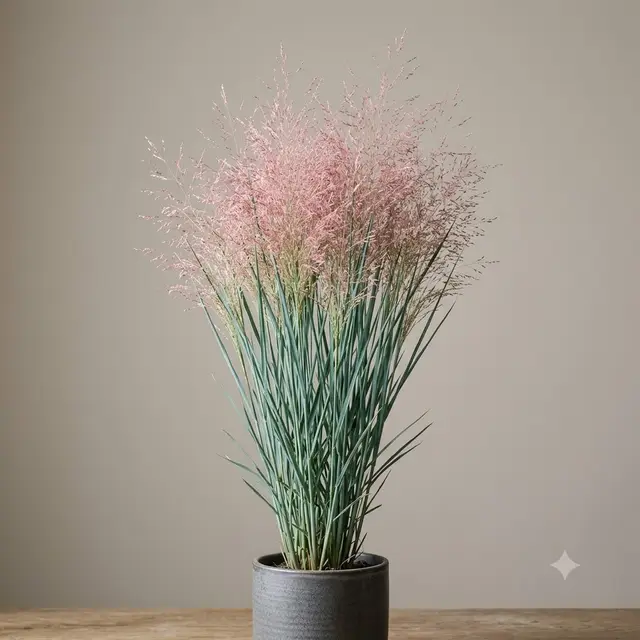
Maiden Grass is the grande dame of the autumn garden - a fountain of fine arching leaves that erupts in silvery, silky plumes just as everything else fades, then stands as bronze winter sculpture.
๐ŸŒพ Medium (0.9-1.5 m)

Switchgrass

Switchgrass is the prairie in a plant - an upright North American native whose airy seed clouds float above steel-blue or wine-red foliage, feeding songbirds, shrugging off drought, flood, salt and neglect.
๐ŸŒพ Small (under 0.9 m)

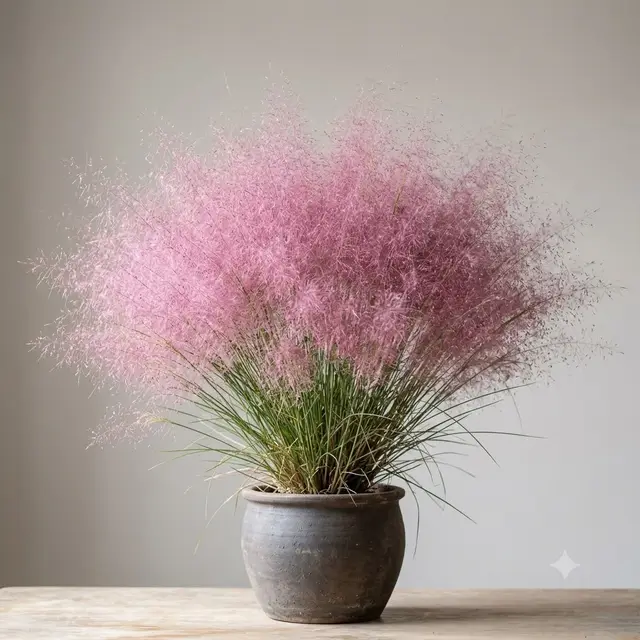
Pink Muhly Grass

Pink Muhly Grass performs the garden's best magic trick: an unassuming green tuft all summer that detonates in October into a knee-high cloud of cotton-candy pink so improbable that passers-by ask if it's real.
๐ŸŒพ Small (under 0.9 m)

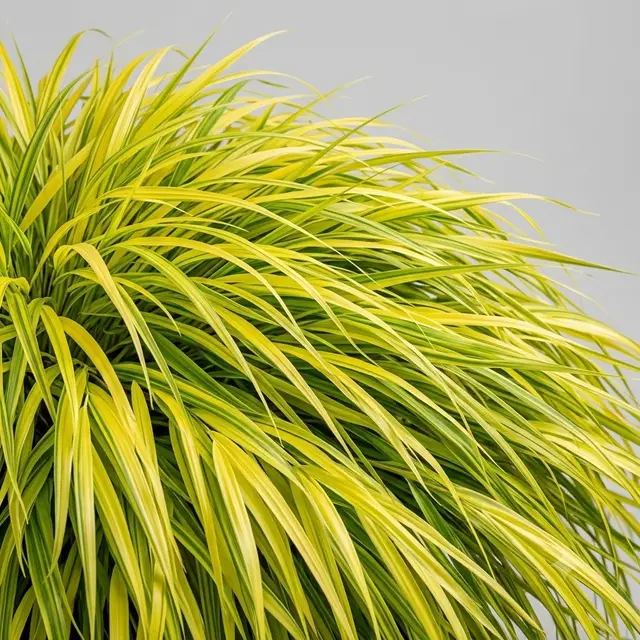
Japanese Forest Grass
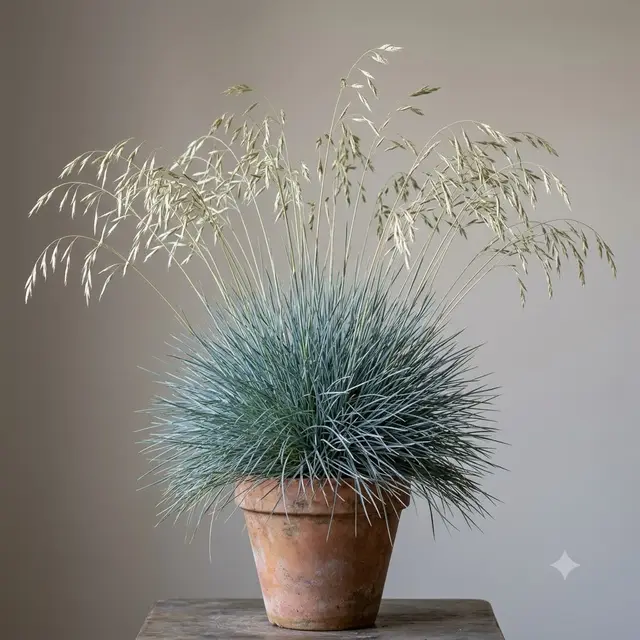
Japanese Forest Grass is the only great ornamental grass for SHADE - a slow, elegant cascade of bamboo-like leaves that pours over walls, pots and path edges like green (or gold) water.
๐ŸŒพ Small (under 0.9 m)

Blue Oat Grass

Blue Oat Grass is blue fescue's big brother - the same steel-blue needles scaled up into a stately half-meter urchin that never needs dividing, never runs, and sends elegant oat-like flower wands arching a meter high in early summer.
๐ŸŒพ Small (under 0.9 m)

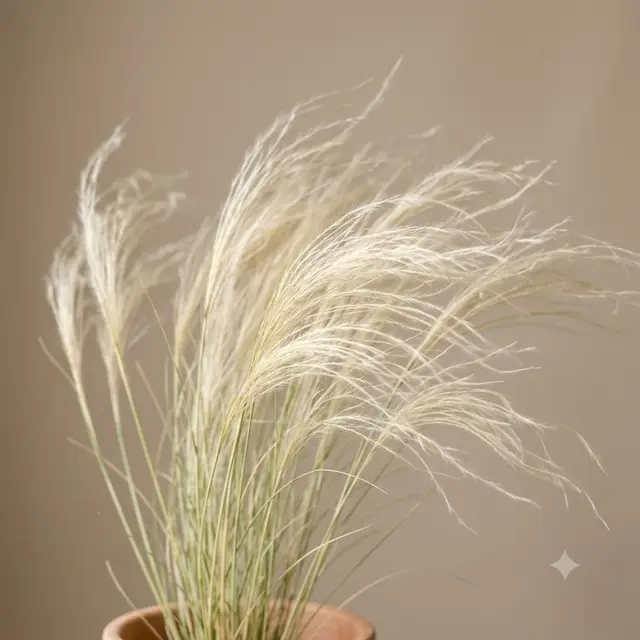
Mexican Feather Grass
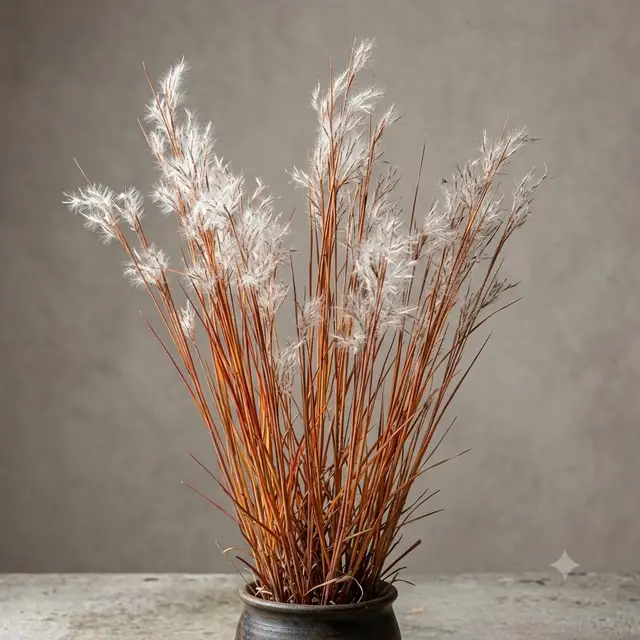
Mexican Feather Grass is pure motion - the finest-textured grass in cultivation, a blonde ponytail that ripples in air no other plant even notices.
๐ŸŒพ Medium (0.9-1.5 m)

Little Bluestem

Little Bluestem is the prairie's autumn fire - a knee-high native whose blue-green summer stems ignite into copper, wine and scarlet after frost and burn that way all winter.
๐ŸŒพ Small (under 0.9 m)

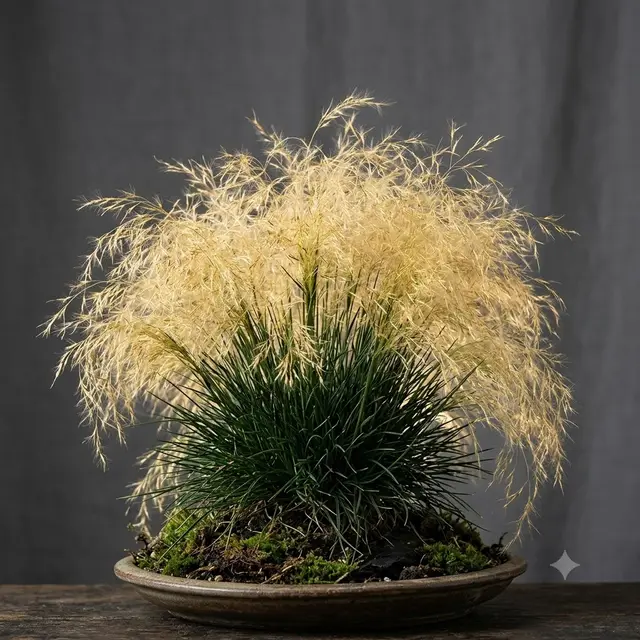
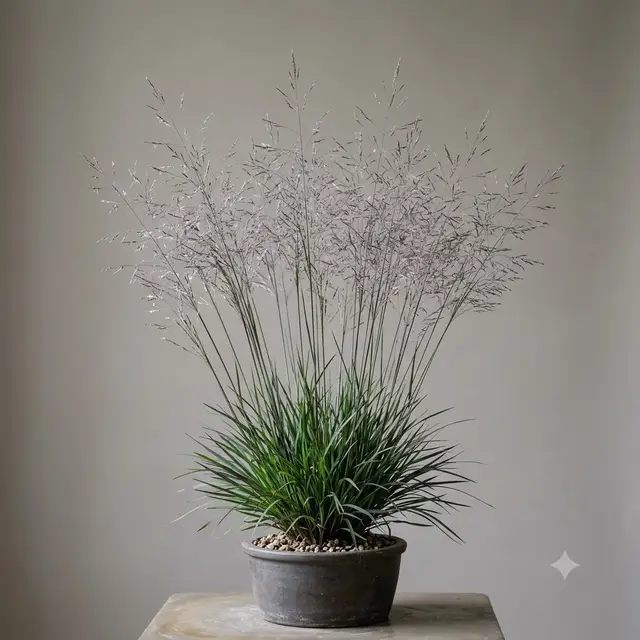
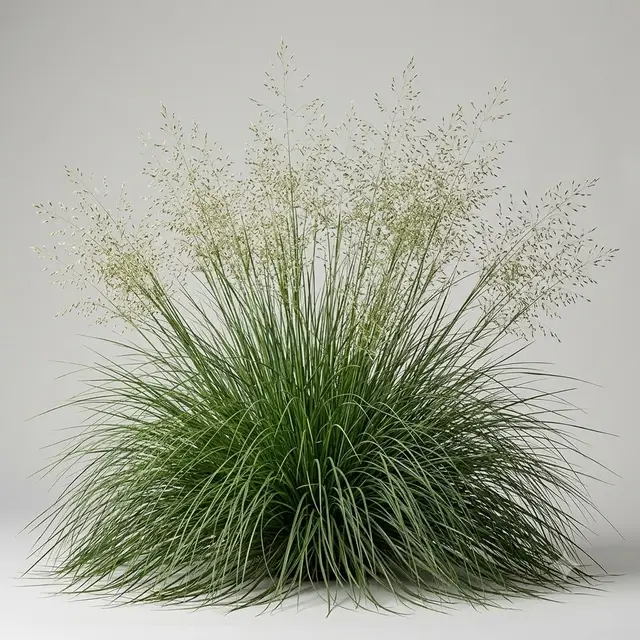
Tufted Hair Grass

Tufted Hair Grass throws the garden's finest veil - a dark evergreen tussock that erupts in early summer into a meter-wide shimmer of gold-green flowers so airy they read as light rather than substance.
๐ŸŒพ Medium (0.9-1.5 m)

Purple Moor Grass

Purple Moor Grass is the see-through grass - transparent curtains of wiry stems that rise one to two meters yet hide nothing behind them, swaying like a beaded screen and turning pure butter-gold in autumn.
๐ŸŒพ Small (under 0.9 m)

Prairie Dropseed

Prairie Dropseed is the connoisseur's groundcover grass - a fountain of emerald hair-fine leaves, famously scented seed heads (buttered popcorn, honestly), and a lifespan measured in generations.
๐ŸŒพ Small (under 0.9 m)

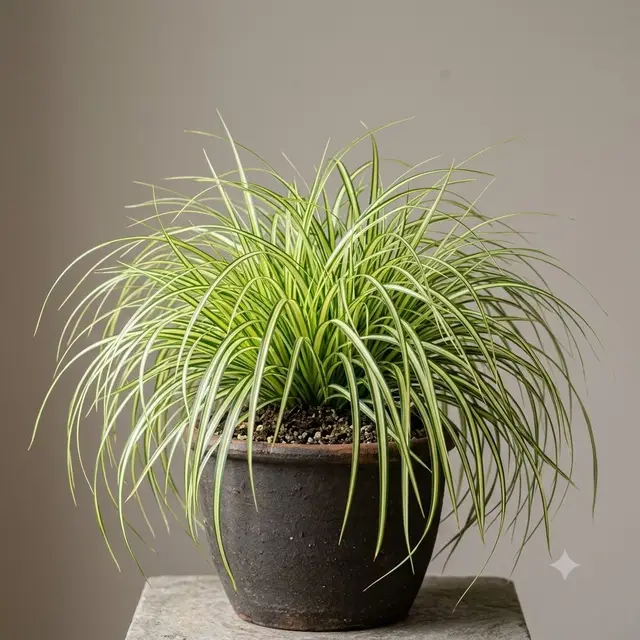
Japanese Sedge

Japanese Sedge is the grass-look for places grasses refuse: dry shade under trees, north-facing pots, dark entryways.
๐ŸŒพ Small (under 0.9 m)

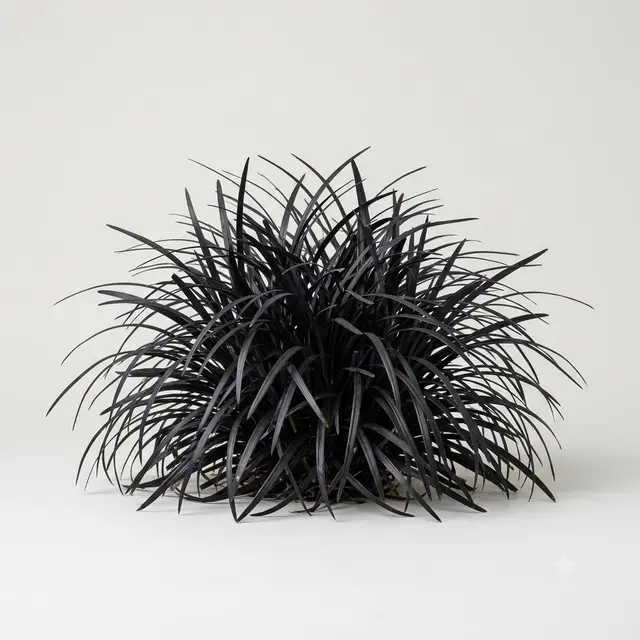
Black Mondo Grass

Black Mondo Grass is the darkest plant in horticulture - genuinely near-black, strappy evergreen tufts that make every neighbor look brighter and every designer reach for it like punctuation.
๐ŸŒพ Small (under 0.9 m)

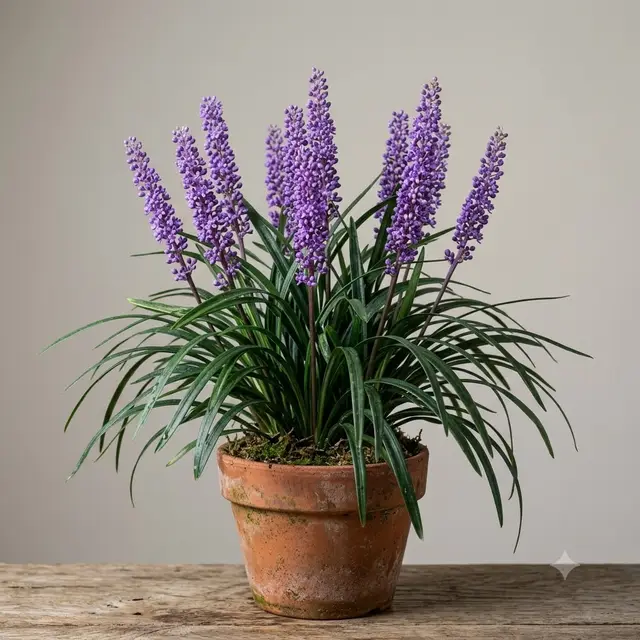
Liriope (Lilyturf)
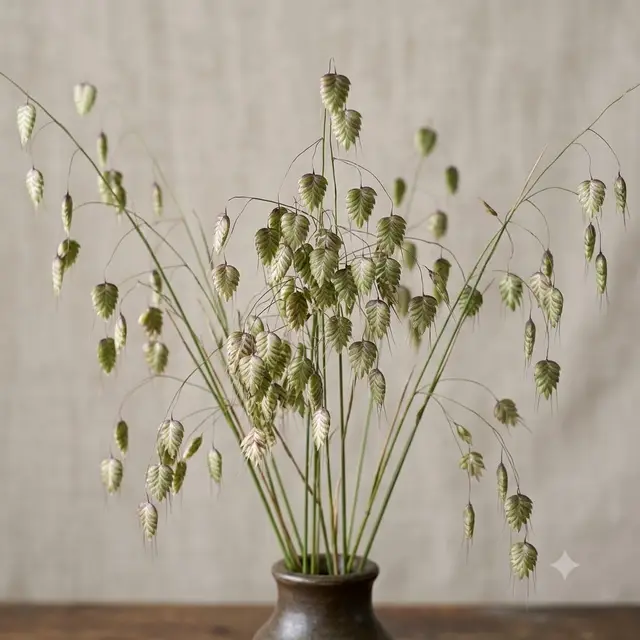
Liriope is the workhorse 'grass' of shade edging - evergreen strappy tufts that flower like tiny purple grape-hyacinths in August, shrug off drought, root competition and neglect, and outline a path for twenty years without complaint.
๐ŸŒพ Small (under 0.9 m)

Quaking Grass

Quaking Grass is the garden's wind chime - dangling heart-shaped seed lockets that tremble audibly in the slightest breeze and dry into everlasting arrangements.
๐ŸŒพ Small (under 0.9 m)

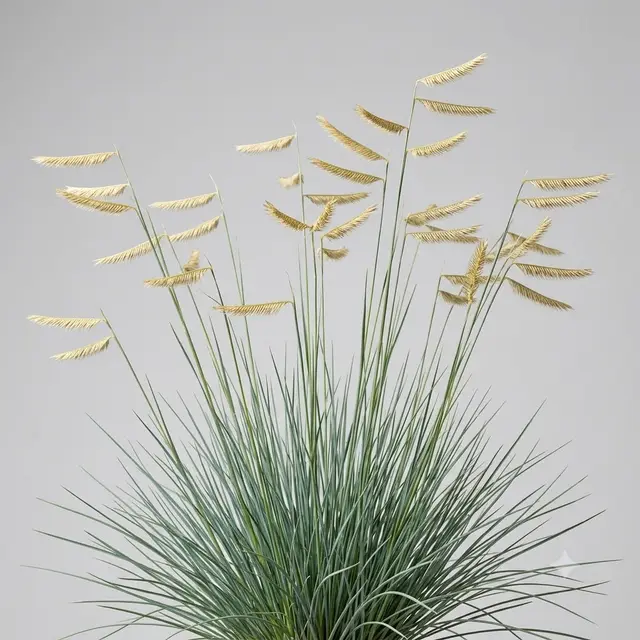
Blue Grama Grass

Blue Grama is the grass with eyelashes - its seed heads hang sideways like tiny combs or false lashes, hovering over a tough shortgrass native that survives on ten inches of rain a year.
๐ŸŒพ Small (under 0.9 m)

Pheasant's Tail Grass
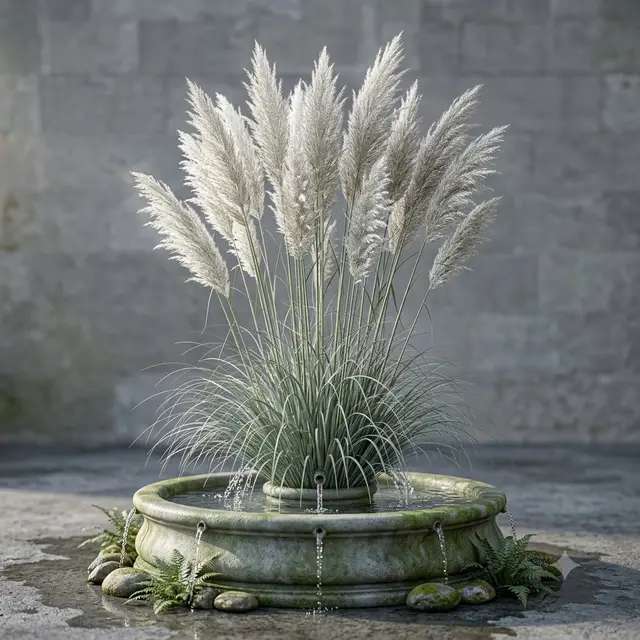
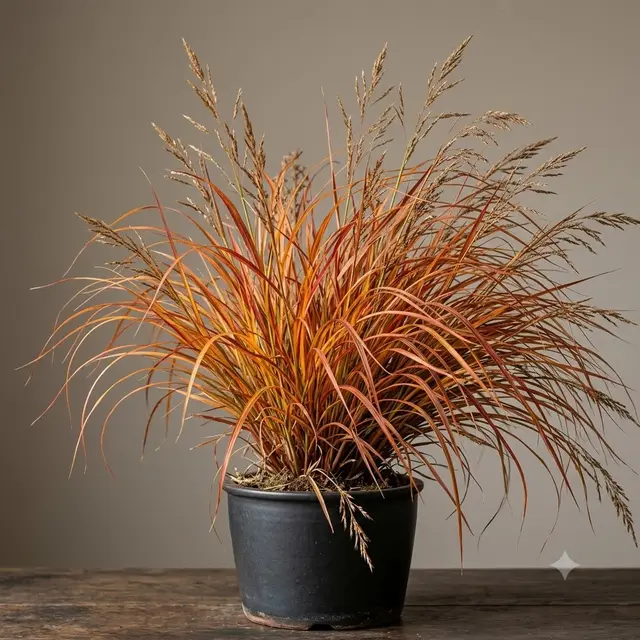
Pheasant's Tail Grass is the sunset in foliage form - an arching New Zealand evergreen whose olive blades streak orange, amber and red year-round, intensifying with cold and stress into a permanent autumn.
๐ŸŒพ Tall (1.5 m+)

Ravenna Grass

Ravenna Grass is the giant for cold climates - 'hardy pampas' that rockets silvery plumes three to four meters into the October sky where true pampas would die at the first zone-6 winter.
Pampas Grass (Cortaderia selloana) Tall (1.5 m+)

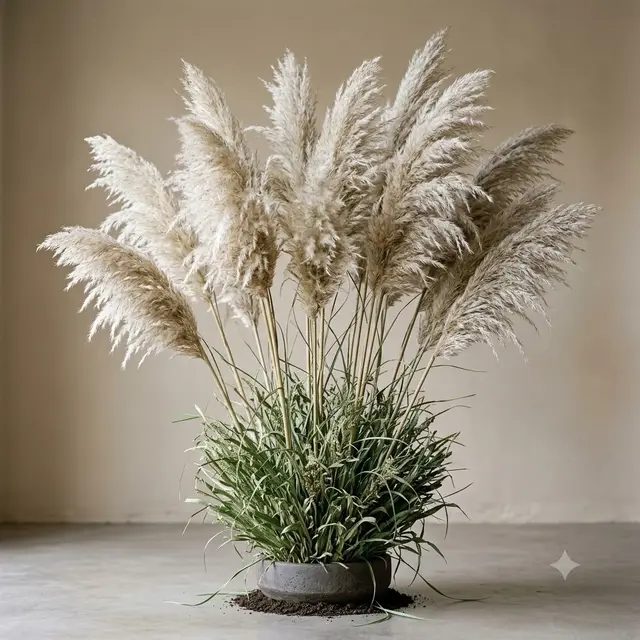
Pampas Grass (Cortaderia selloana)
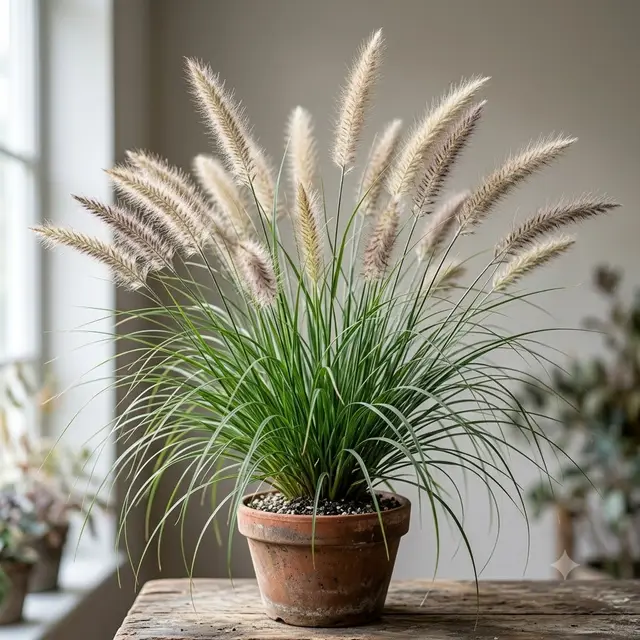
Pampas grass is one of the most dramatic ornamental grasses you can grow - a huge clump of arching foliage topped with towering, feathery plumes that can reach 2-3 m or more.
Fountain Grass (Pennisetum) Medium (0.9-1.5 m)

Fountain Grass (Pennisetum)

Fountain grass is one of the most graceful and popular ornamental grasses for the garden, grown for its arching, fountain-like mounds of fine foliage and its soft, fuzzy, bottlebrush flower plumes.

Grass care in six rules

โ˜€๏ธ

Sun first, almost always

Nearly every flopping, sparse or bloom-less grass is a shade problem. Full sun is the default; the shade exceptions are Japanese forest grass, sedges, liriope and mondo - plant those where true grasses fail.

โœ‚๏ธ

One cut a year (know your season)

Deciduous grasses get one hard cut to 10-15 cm in late winter, before new growth. Evergreen types (fescue, blue oat, sedges, pheasant's tail) are never hard-cut - comb the dead out with gloved fingers instead.

๐ŸŒก๏ธ

Warm-season vs cool-season

Cool-season grasses (feather reed, fescue, tufted hair) green up early and bloom by June. Warm-season ones (miscanthus, switchgrass, muhly, bluestem) sit dormant until late spring - don't declare them dead in May.

๐Ÿช“

Divide in spring, rarely

Most grasses need dividing only when centers hollow out - every 4-8 years. Do it in spring as growth resumes; autumn division risks winter rot in cold climates.

๐Ÿ‚

Leave them standing in winter

Plumes and stems are half the point: winter structure, frost displays, bird seed and crown protection. The cleanup happens in late winter, not fall.

โš ๏ธ

Check invasive lists before planting

Mexican feather grass and ravenna grass are listed invasive in some regions, and old miscanthus cultivars self-seed in warm climates. A two-minute check of your regional invasive list beats years of pulling seedlings - when in doubt, native switchgrass, bluestem and dropseed are safe picks.

๐ŸŒฑ
Lawn, meadow or border?

For walkable green space see the lawn & grass hub (blue grama even doubles as a no-mow eco-lawn). For beds and borders, pick from the catalog above - and check bloom timing against the bloom calendar.

Grow with us - weekly.

Every week, one plant or one problem, explained without the fluff. Unsubscribe whenever; we won't chase you.

๐ŸŒฑ
๐Ÿชด
๐ŸŒฟ