Little Bluestem
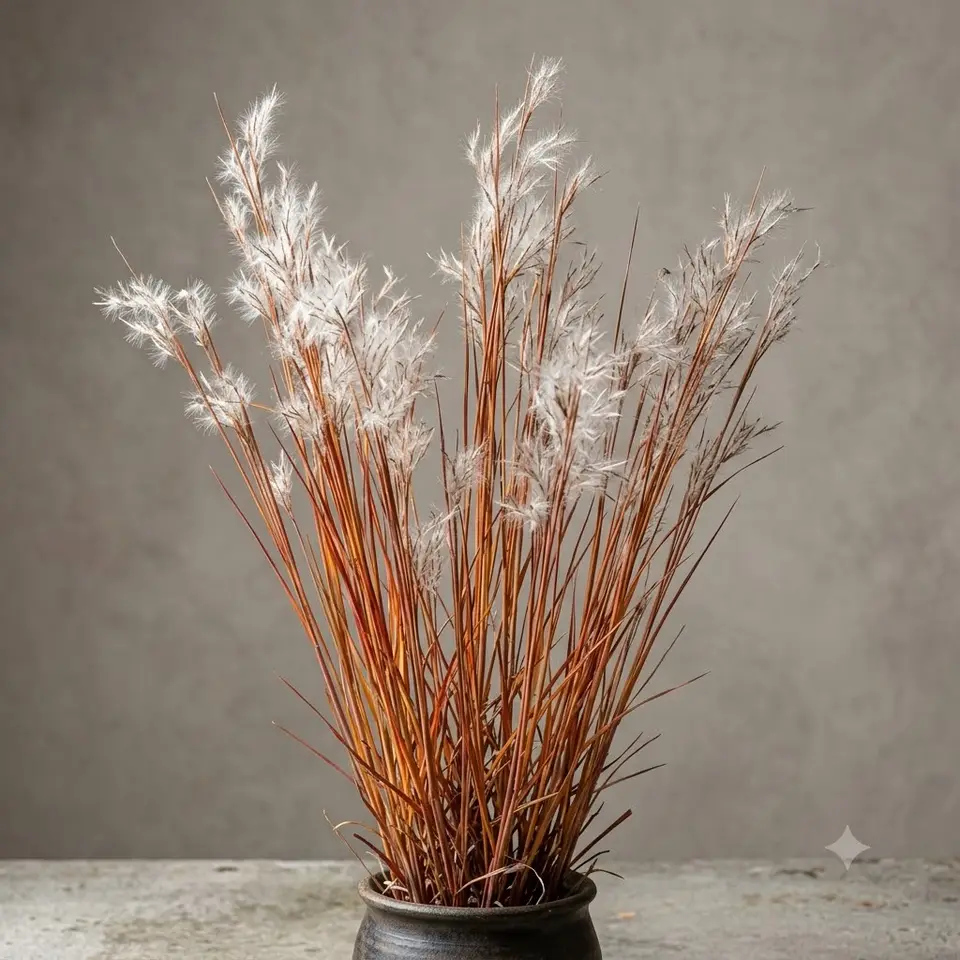
Little Bluestem is a knee-high North American prairie grass whose blue-green summer stems turn copper, wine and scarlet after frost and stay that way all winter.
Last reviewed: October 2026
 AI illustration
 Overview
Little Bluestem is a knee-high North American prairie grass whose blue-green summer stems turn copper, wine and scarlet after frost and stay that way all winter. Among small grasses nothing else offers this color arc, this wildlife value, or this tolerance for the worst soil on the property. (Schizachyrium scoparium.)
Origin & Natural Habitat
The heart of the North American prairie, most of the 48 contiguous states into Canada; the signature grass of dry upland grassland. Hardy zones 3-9.
Appearance
Strictly upright stems 60-120 cm; powder-blue at the base in summer, then the famous fall burn to russet-scarlet with silvery tufted seed heads glinting along the stems.
Why People Grow It - Qualities & Benefits
- The best fall-to-winter color of any small grass
- Bone-hardy native (zone 3!) with deep wildlife value
- Thrives in dry, poor, sandy, shallow soil
- Upright architecture at friendly scale
Care
Light: Full sun, period - shade flops it immediately.
Water: Low; deep roots laugh at drought. Wet rich soil is the one failure mode (flop + rot).
Soil: Poor, dry, sandy, rocky - genuinely PREFERS bad soil; skip the compost.
Temperature & Hardiness: Zones 3-9; warm-season with the usual late spring start.
Feeding: Never - fertility is the enemy of uprightness.
Maintenance: Leave standing all winter (color + bird seed + larval overwintering), cut to 10 cm in early spring. Cultivars 'The Blues', 'Standing Ovation', 'Twilight Zone' intensify blue and stiffness.
Planting & Propagation
Species from seed (easy, cheap, meadow-scale); cultivars by spring division. Self-sows politely into open ground - in a native planting that's a feature.
Common Problems & Pests
- Flopping in rich or damp soil (the only real complaint: fix the site, or plant 'Standing Ovation')
- Late emergence
- Rust occasionally, cosmetic
Toxicity & Safety
Non-toxic; a larval host for several skipper butterflies - an ecological plus most ornamentals can't claim.
Pros & Cons
Pros
- Unmatched autumn-winter color
- Ultra-hardy native
- Loves poor dry soil
- Butterfly host + bird seed
Cons
- Demands sun and lean soil
- Flops if pampered
- Modest until August
Best Suited For
- Native meadows and prairie gardens
- Hell-strips and dry banks
- Winter-interest mass plantings
- Pollinator and bird habitat
FAQ
Why is mine floppy?
You were too kind: rich soil, irrigation or part shade all flop it. Lean, dry, sunny - or choose the stiff cultivar 'Standing Ovation'.
When is the color best?
After first frosts - October's copper deepens to wine-red and holds vividly through snow; plant where low winter sun backlights it.
Is it good for wildlife?
Exceptional: skipper butterfly host, songbird seed, and standing winter cover - a one-plant habitat program.
Gear for growing little bluestem
Links go to Amazon or a partner store (such as Adagio Teas) and may earn us a commission at no extra cost to you. As an Amazon Associate we earn from qualifying purchases. We link gear types, not sponsors' picks: you choose the exact product.