Plant care checked against published sources Plant profiles, care guides and free tools Pictures are AI illustrations
Home/Plants/Carnivorous plants

Carnivorous plants, trap by trap.

Plants that eat animals run on three rules: pure water only (rain/distilled - tap kills), nutrient-free peat mixes, and real light. Obey those and the menagerie opens - snapping flytraps, glittering sundews, drowning pitchers, millisecond bladder-vacuums. Here are 11 guides from the beginner sundew to the tepui grails, difficulty-rated without romance.
Carnivorous Plants
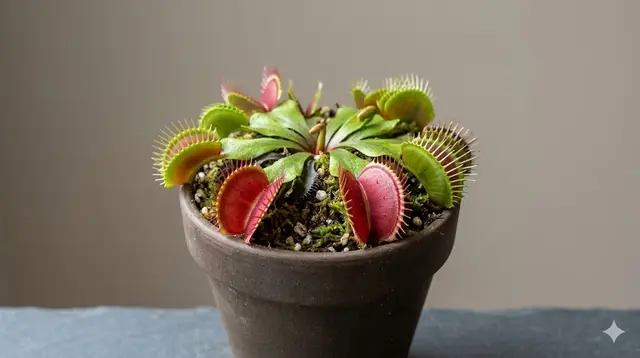
Venus Flytrap (Dionaea muscipula) Intermediate

Venus Flytrap (Dionaea muscipula)
The Venus Flytrap is a carnivorous plant that catches and digests insects in hinged leaf traps.
Cape Sundew Beginner

Cape Sundew

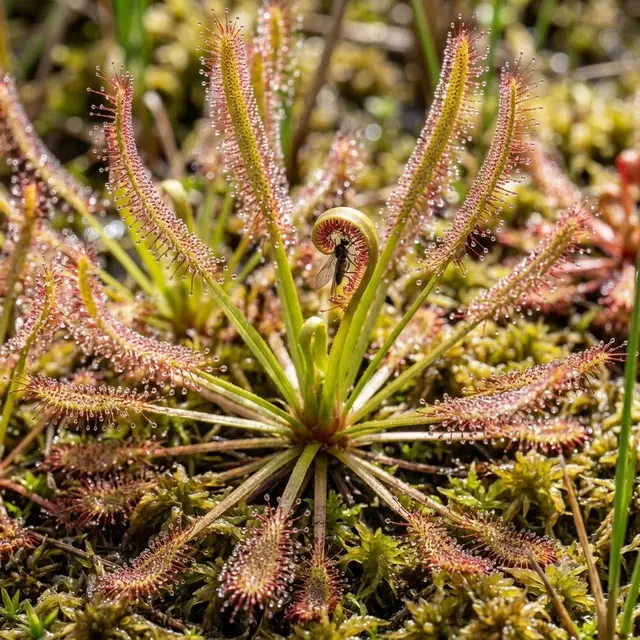
The Cape sundew has glistening tentacles that visibly bend toward a stuck gnat within minutes, then curl the whole leaf around it over the following hours; this South African species is so forgiving it self-sows around collections.
Spoonleaf Sundew Beginner

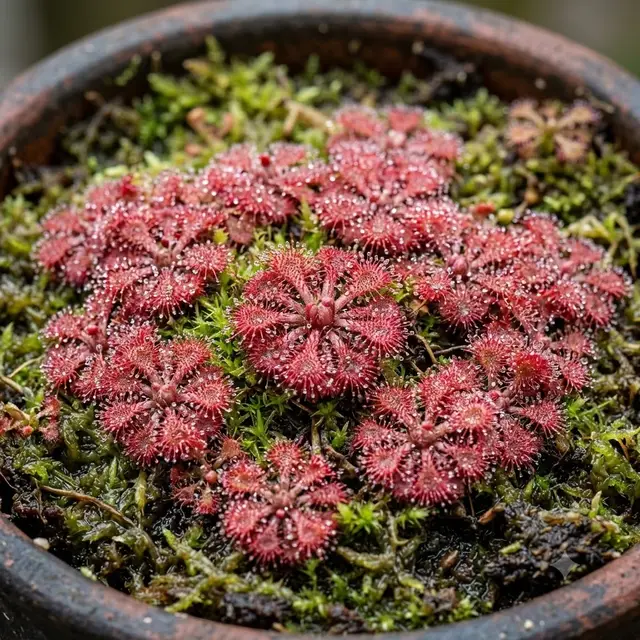
Spoonleaf Sundew

The spoonleaf sundew forms coin-sized rosettes of spoon-shaped tentacled leaves that colonize pots, bloom pink, and ask for nothing but light and pure water.
Mexican Butterwort Beginner

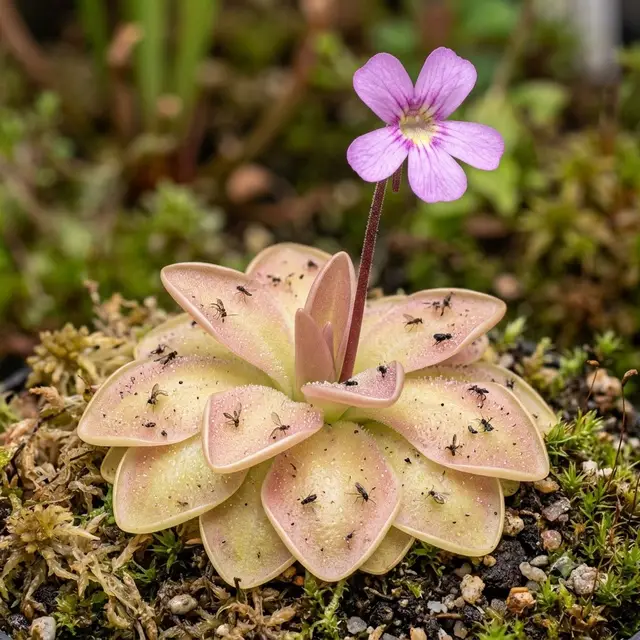
Mexican Butterwort

Mexican butterworts form pastel rosettes whose greasy leaves are lethal flypaper for gnats, crowned with orchid-pink blooms half the year.
Bladderwort Beginner

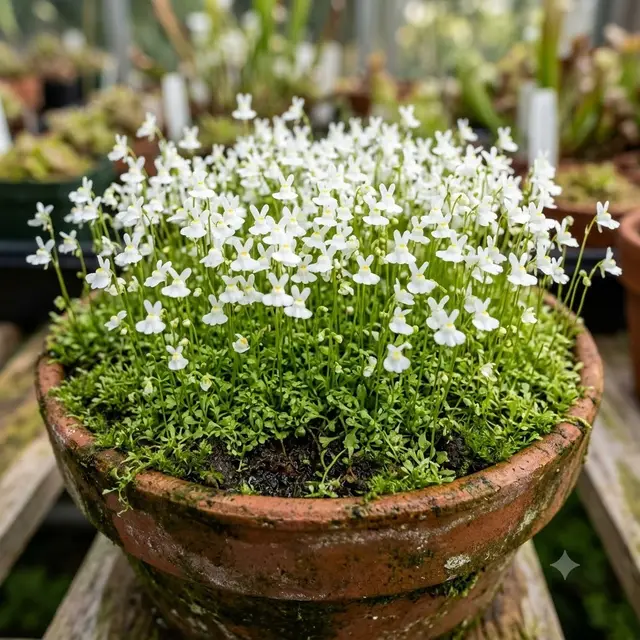
Bladderwort

Bladderworts run the fastest traps in the plant kingdom (underground/underwater bladders that vacuum prey in under a millisecond), while the surface shows only grassy leaves and disproportionately lovely orchid-like flowers.
Sarracenia (American Pitcher Plant) Intermediate

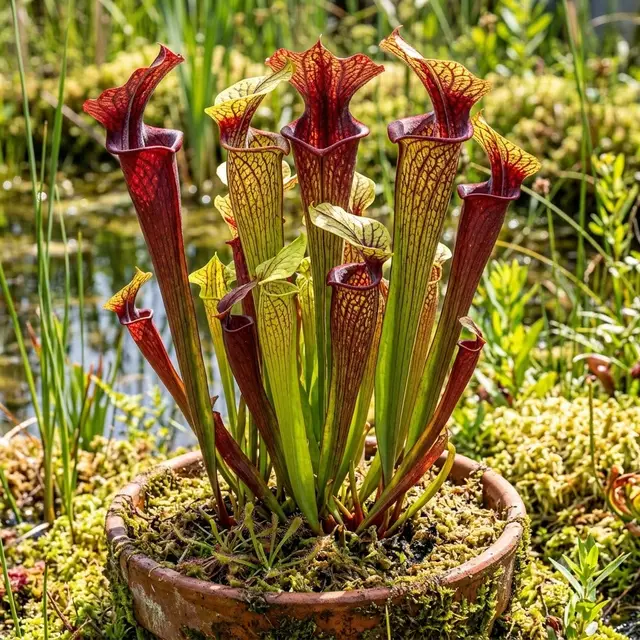
Sarracenia (American Pitcher Plant)
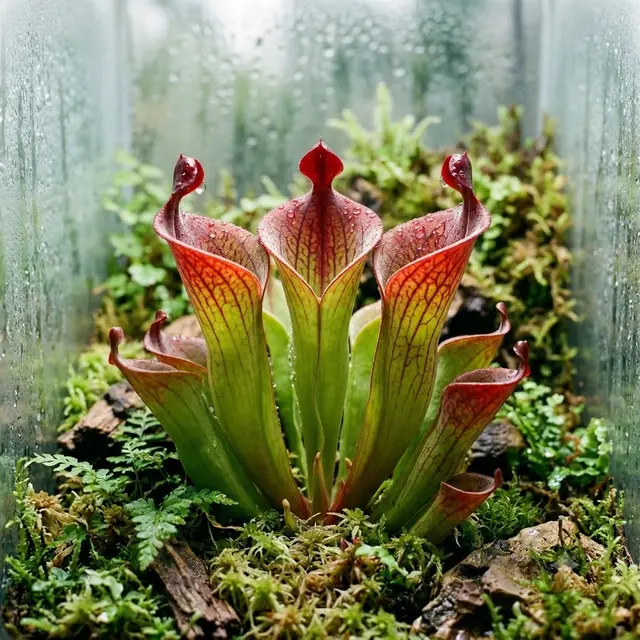
Sarracenias, the trumpet pitchers of American bogs, are tall nectar-baited funnels that drown insects by the thousand, in wine-reds, chartreuse and white-laced patterns that out-decorate most flowers.
Nepenthes (Tropical Pitcher Plant) Intermediate

Nepenthes (Tropical Pitcher Plant)
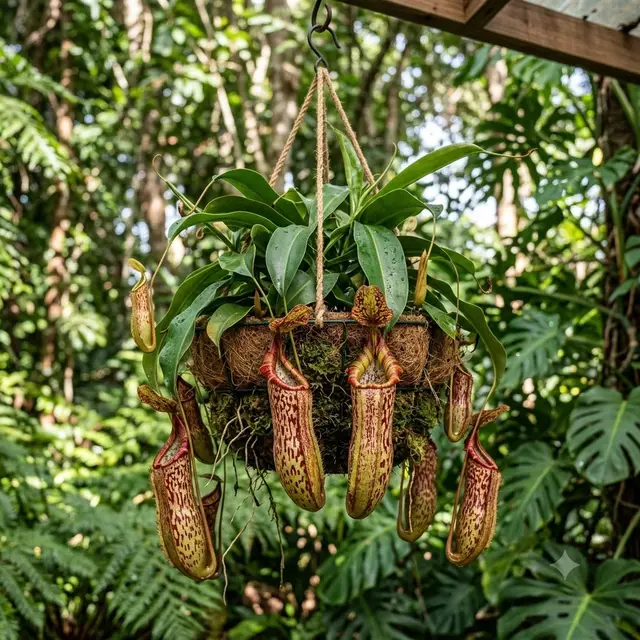
Nepenthes are tropical vining plants whose leaf-tips swell into fluid-filled pitchers, from highland jewels to giant pitchers that have occasionally drowned small rodents.
Cephalotus (Albany Pitcher Plant) Advanced

Cephalotus (Albany Pitcher Plant)
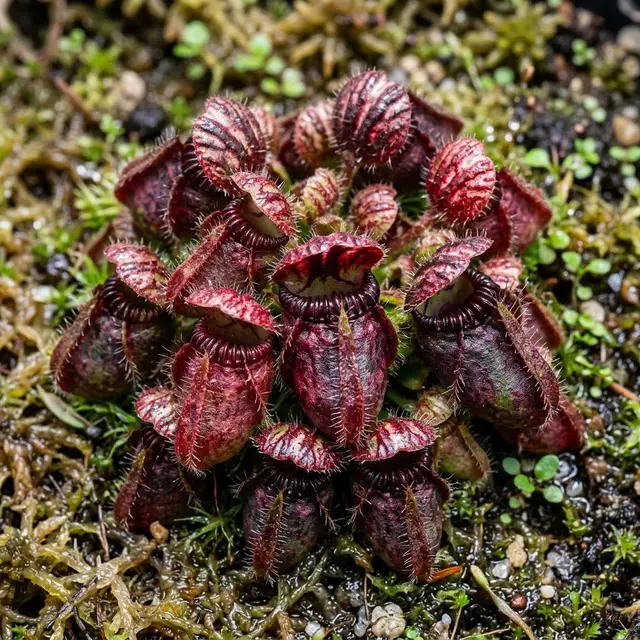
Cephalotus is the only species of its family: a palm-sized West Australian that grows fanged, ribbed, moustached pitchers like tiny monster boots.
Heliamphora (Sun Pitcher) Advanced

Heliamphora (Sun Pitcher)

Heliamphoras are pitcher plants from the tepuis (cloud-swept Venezuelan table mountains): simple, elegant funnels with a nectar spoon that grow in cool, misty conditions.
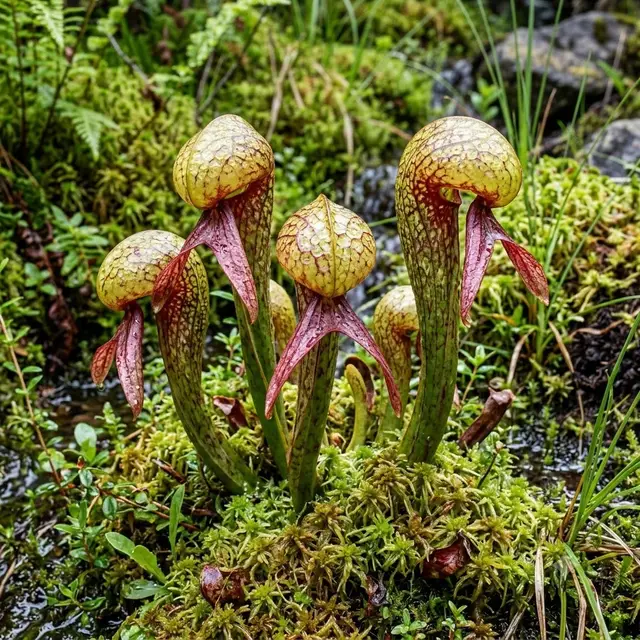
Darlingtonia (Cobra Lily) Advanced

Darlingtonia (Cobra Lily)

The cobra lily rears from Oregon mountain seeps like a striking snake - hooded, forked-tongued pitchers with translucent false-exit windows that exhaust trapped insects to death.
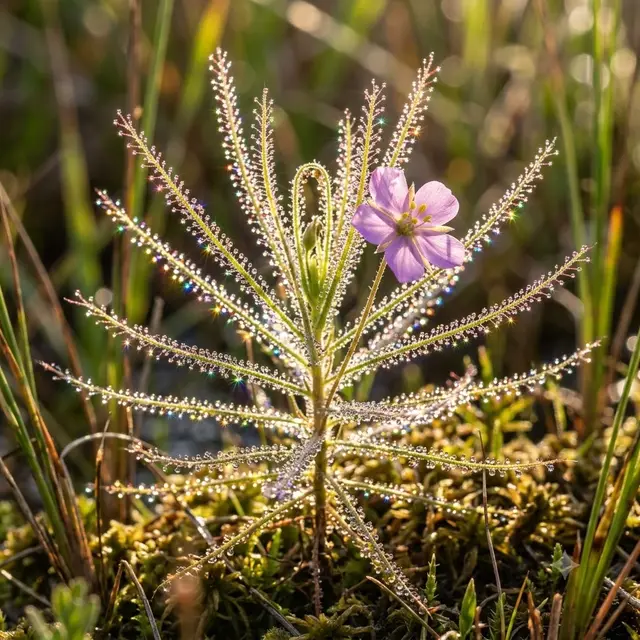
Byblis (Rainbow Plant) Intermediate

Byblis (Rainbow Plant)

Byblis, the rainbow plant, is a haze of thread-fine leaves beaded in glue that splits sunlight into prisms, dotted with mauve flowers.
The three laws (never break them)

1. Pure water only - rain, distilled or RO; tap minerals kill within months. 2. No fertilizer, no potting soil - peat+perlite/sand, hunger is the design. 3. Light - most want more sun than you think. Master these on a Cape sundew, then climb toward Cephalotus.

Join and get our free plant toolkit.

Subscribe and put our printable watering calendar and care log to work today - then one plant or problem, explained in plain words, every week. Unsubscribe whenever; we won't chase you.