Sarracenia (American Pitcher Plant)
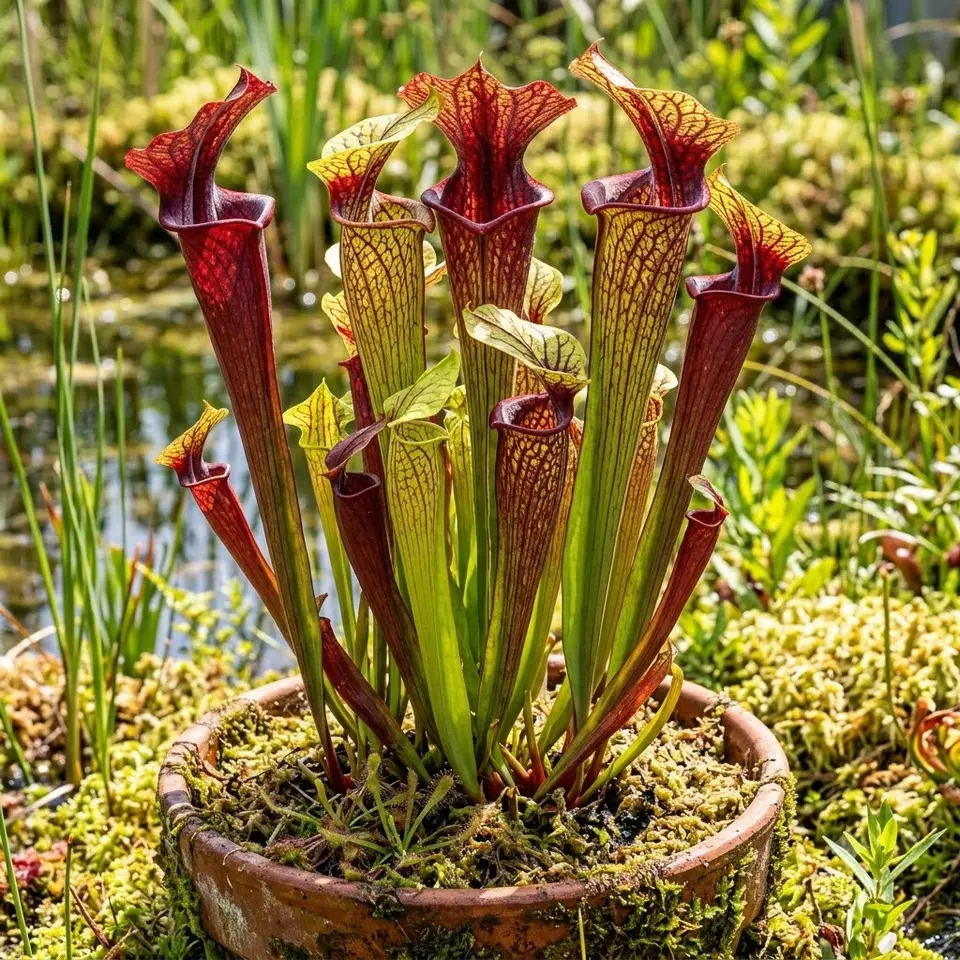
Sarracenias, the trumpet pitchers of American bogs, are tall nectar-baited funnels that drown insects by the thousand, in wine-reds, chartreuse and white-laced patterns that out-decorate most flowers.
Last reviewed: October 2026
 AI illustration
 Overview
Sarracenias, the trumpet pitchers of American bogs, are tall nectar-baited funnels that drown insects by the thousand, in wine-reds, chartreuse and white-laced patterns that out-decorate most flowers. They're also, surprisingly, HARDY perennials: outdoor bog-pot plants, not terrarium pets. (Sarracenia.)
Origin & Natural Habitat
Peat bogs of the eastern USA and Canada - full sun, wet feet, real winters. Several species are threatened by bog drainage; buy nursery-propagated only.
Appearance
Upright pitchers 20-90 cm by species (purpurea squat, flava and leucophylla towering), veined and hooded, plus strange parasol flowers in spring. Traps ARE the leaves, all season.
Why People Grow It - Qualities & Benefits
- Spectacular architectural pitchers
- Genuinely effective wasp/fly control on patios
- HARDY (many to zone 5-6): a permanent outdoor bog
- Spring flowers as odd as the traps
Care
Light: FULL SUN - the most sun-hungry carnivore; 6+ hours outdoors. Windowsills produce floppy, colorless pitchers.
Water: Rain, distilled or RO water ONLY - tap-water minerals poison carnivorous roots within months. The tray method (pot standing in 1-2 cm of pure water) is standard.
Soil: Nutrient-FREE mix: sphagnum peat + perlite/silica sand (roughly 1:1). Never potting soil, never fertilized media - fertility burns their roots.
Temperature & Dormancy: Hardy perennials NEEDING winter dormancy: pitchers brown and die back in fall (normal!), crowns rest cold (many take zone 5-6 frozen in mulched bog pots). No dormancy = decline in 2-3 years.
Feeding: They feed themselves outdoors - no fertilizer, no hand-feeding needed; a summer Sarracenia fills with prey to the brim.
Propagation
Rhizome division in late winter; species from stratified seed (slow). Divisions establish fast in sun and pure water.
Common Problems & Pests
- Kept as houseplants (they're garden plants: the #1 mistake)
- Skipped dormancy = slow death
- Tap water mineral burn
- Cutting off fall's brown pitchers too early (let them feed the rhizome)
Toxicity & Safety
Non-toxic to cats, dogs and people - carnivorous plants digest insects, not pets; the only real risk runs the other way (cats batting the traps).
Pros & Cons
Pros
- Hardy, permanent, spectacular
- Real pest control
- Easy in a sunny bog pot
Cons
- Needs outdoor sun + winter
- Fills with 'ugh' (prey) by August
- Browns messily each fall (by design)
Best Suited For
- Patio bog pots and mini-bogs
- Zone 5-9 outdoor gardens
- Wasp-plagued decks
- Collectors starting hardy carnivores
FAQ
Can I grow one on a windowsill?
Poorly - Sarracenia wants full outdoor sun and a cold winter rest. A plastic bog pot on a sunny patio beats any windowsill tenfold.
The pitchers are full of dead bugs - clean them?
No - that's dinner, digesting. Full pitchers are a healthy plant's trophy case; they'll brown normally in fall.
Gear for growing sarracenia (american pitcher plant)
Links go to Amazon or a partner store (such as Adagio Teas) and may earn us a commission at no extra cost to you. As an Amazon Associate we earn from qualifying purchases. We link gear types, not sponsors' picks: you choose the exact product.