Everyday things you can make from plants.
Long before the shelves were full of bottles, people reached for the garden: a cooling gel for sun-warmed skin, a fragrant rinse, a sachet to freshen a drawer. Here are simple, well-known household and skincare uses of common plants - the gentle, everyday kind you can try at home.
Soothing on the skin
Gentle, external uses people reach for at home. Cosmetic and cooling - patch-test a small area first, every time.
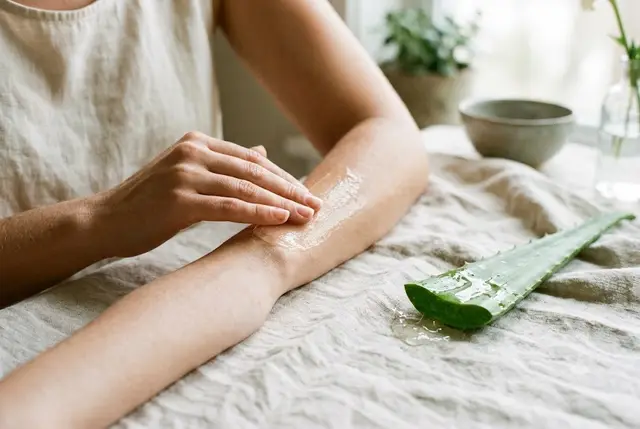
The clear gel from inside a cut leaf is the classic thing to smooth onto skin after a day in the sun - cool, light and moisturising.
Use only the clear inner gel, never the yellow layer just under the skin. Patch-test first.
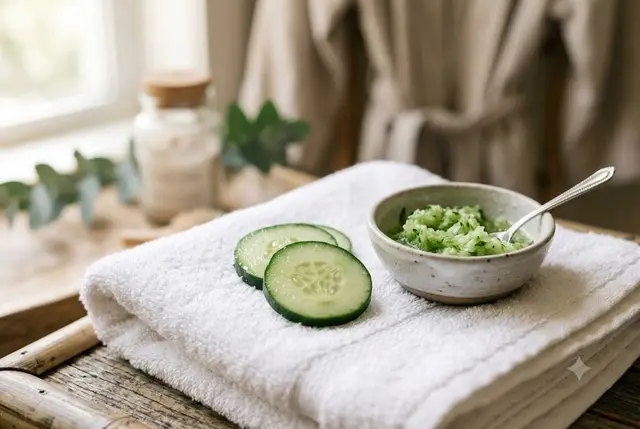
Chilled slices laid over closed eyes, or gently grated onto the face, are an old cooling refresher for tired, puffy-looking eyes.
Purely cooling and cosmetic - rinse off afterwards.
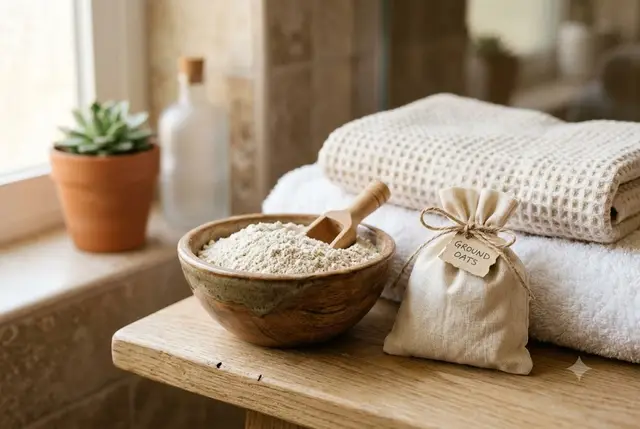
Finely ground oats stirred into a warm bath, or mixed into a soft paste, are a long-loved, gentle way to pamper dry-feeling skin.
Patch-test a little on the inner arm before a full bath.
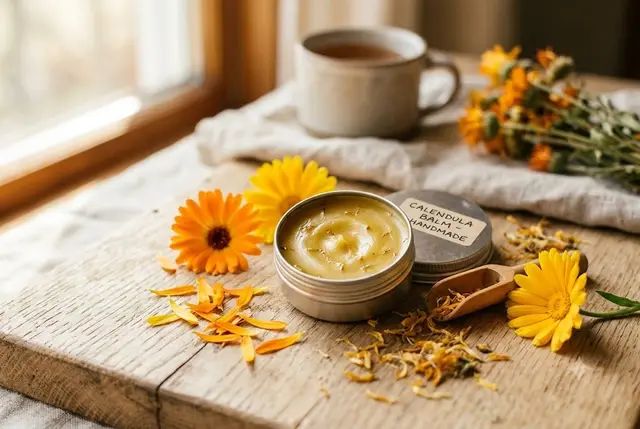
Petals steeped in a mild carrier oil make a soft, golden balm many people massage into rough, dry patches.
Skip it if you react to daisy-family plants (ragweed, marigolds). Patch-test.
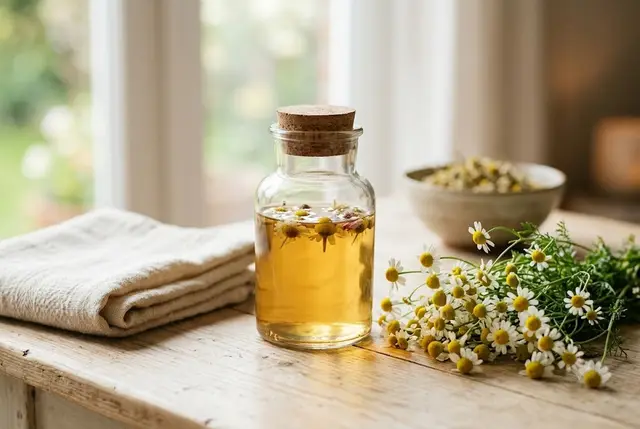
A cooled, strong chamomile brew makes a mild rinse for hair or a gentle cool compress.
Daisy-family allergy applies here too - patch-test first.
Face, hair & fragrance
Rinses, mists and scents from the garden - nothing you swallow, just things you spritz, rinse or hang up.
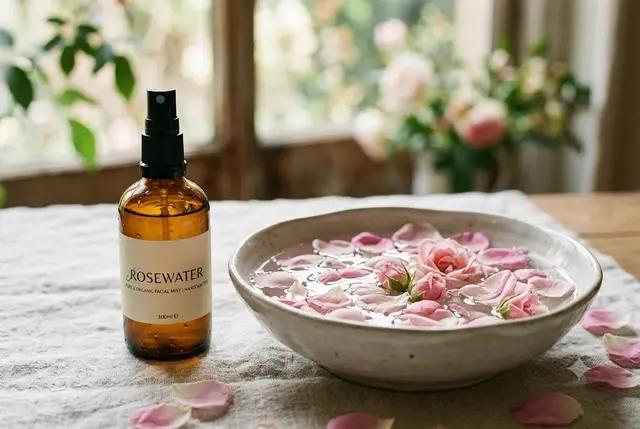
Petals gently simmered in water and strained make fragrant rosewater - a light facial mist or cooling toner.
Cool it fully before use, and keep it in the fridge.
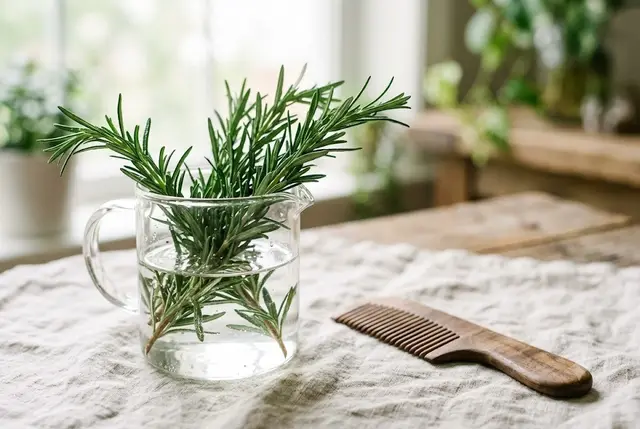
A cooled rosemary infusion is a classic final hair rinse; a pot of sprigs simmered with citrus peel fills the kitchen with scent.
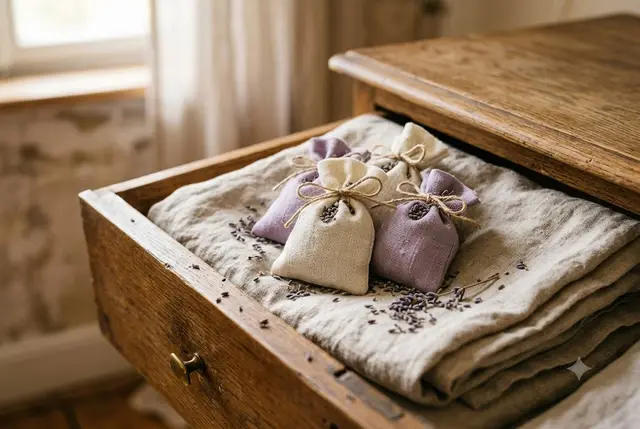
Dried buds in a little cloth bag scent drawers and wardrobes and are said to keep moths away; a few in the linen cupboard keep it fresh.
Keep sachets away from pets that like to chew.
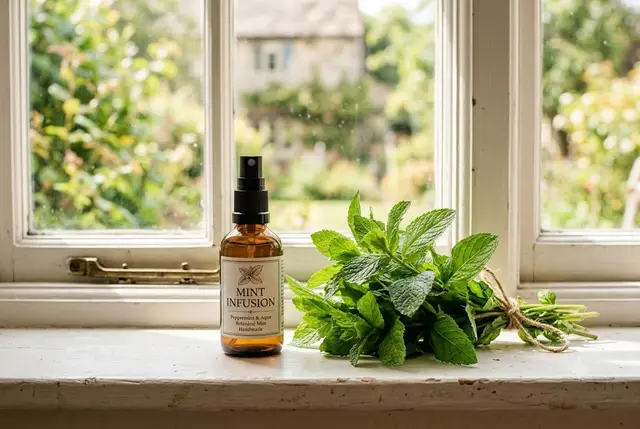
A strong mint infusion wiped along a windowsill or skirting board is a traditional, plant-based way to discourage ants from a trail.
Concentrated mint oils are strong around cats - use the plain infusion, not neat oil.

A small bundle of fresh eucalyptus tied near the showerhead releases a fresh, spa-like scent in the steam.
Eucalyptus is toxic to cats and dogs - hang bundles well out of their reach.
Around the home & kitchen
Plant-based ways to freshen, clean and scent a home - all external, none of it food.
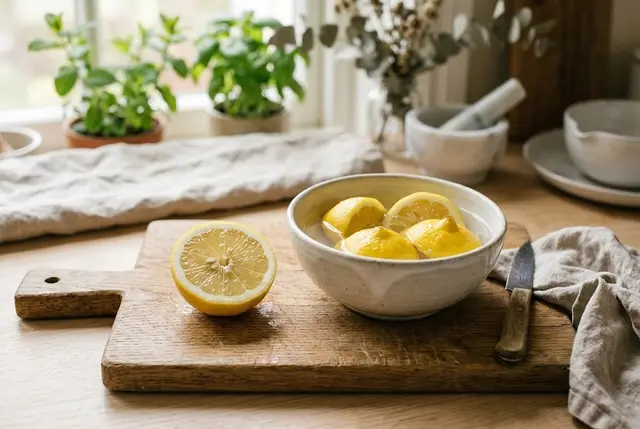
Half a spent lemon rubbed over a wooden board (then rinsed) freshens it; lemon halves simmered in water help clear cooking smells.
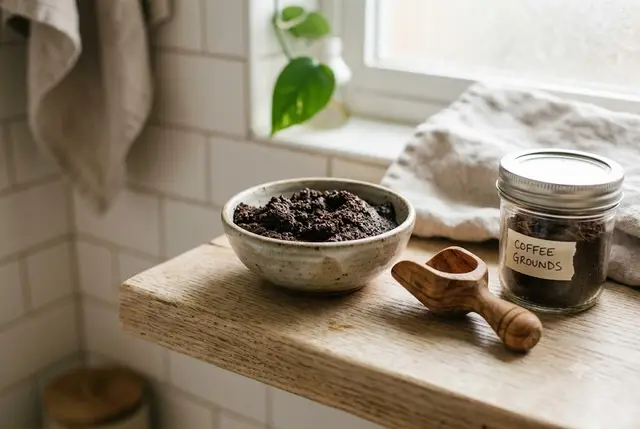
Cooled used grounds make a gritty hand or body scrub, sit in an open jar to soak up fridge odours, and enrich a compost heap.
Scrub gently - grounds are abrasive on delicate skin.
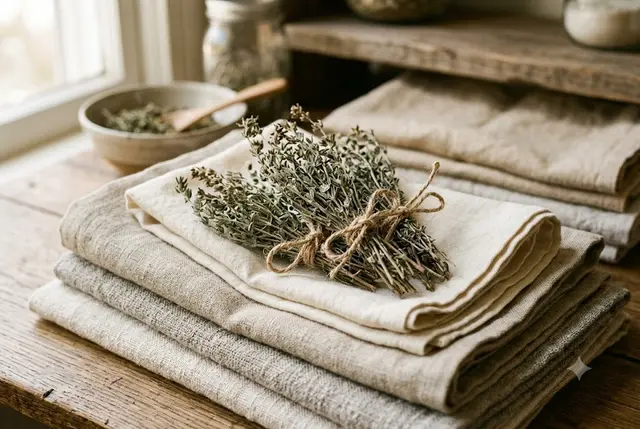
Dried sprigs tucked into a linen cupboard or tied into a little bundle add a clean, herby scent.
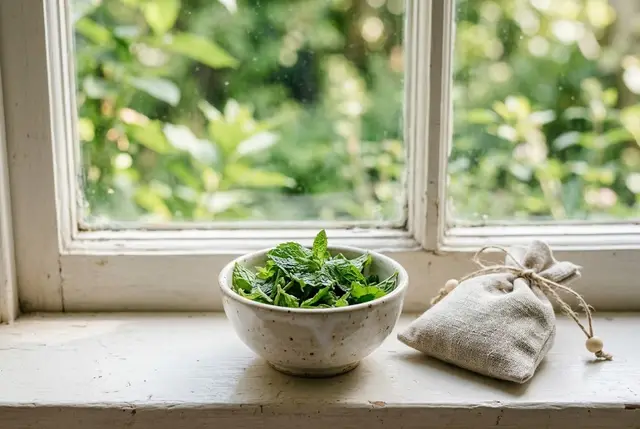
A bowl of lightly crushed leaves quickly freshens a room; dried mint in a sachet scents a drawer.
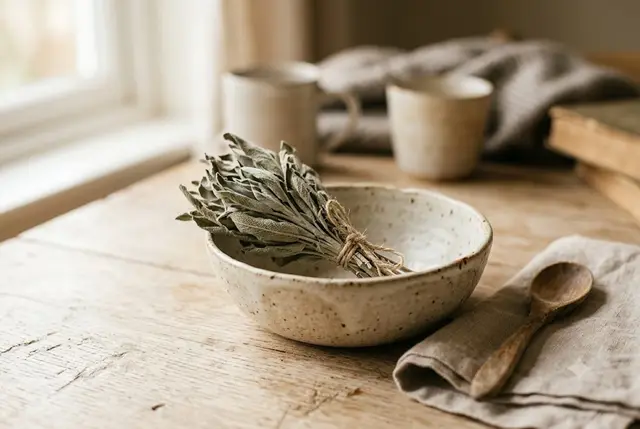
A small bundle of dried sage sitting in a bowl is a simple, smoke-free way to add a warm, herby scent to a room.
Natural cleaning
Plant-based ways to clean and freshen - all household use, nothing you'd put on skin or eat.
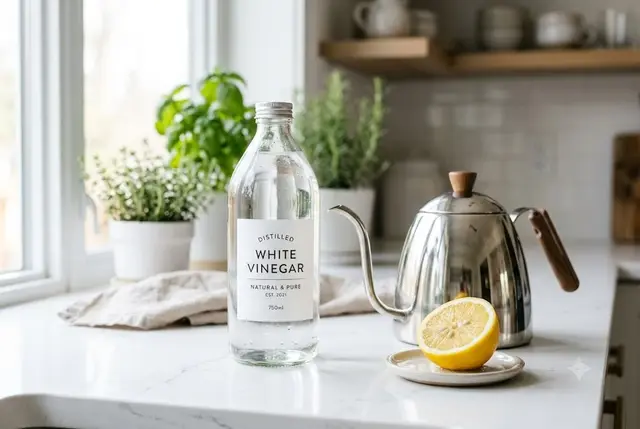
Diluted with water it cuts through limescale in a kettle and leaves glass streak-free; a spent lemon added in scents it.
Never use it on natural stone or marble - the acid etches them. Test first.
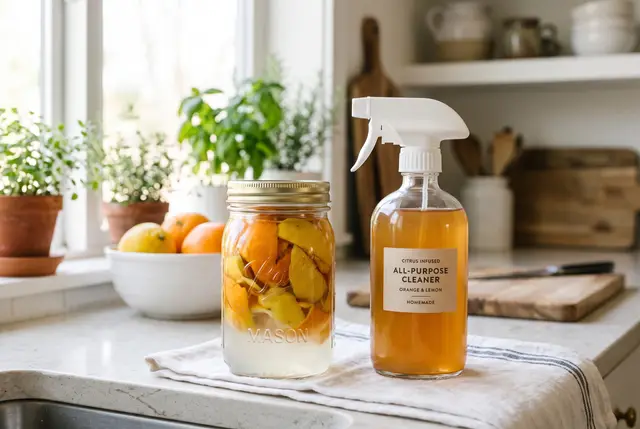
Lemon or orange peels steeped in a jar of vinegar for a fortnight make a bright, scented all-purpose spray; peels sent down the disposal freshen it.
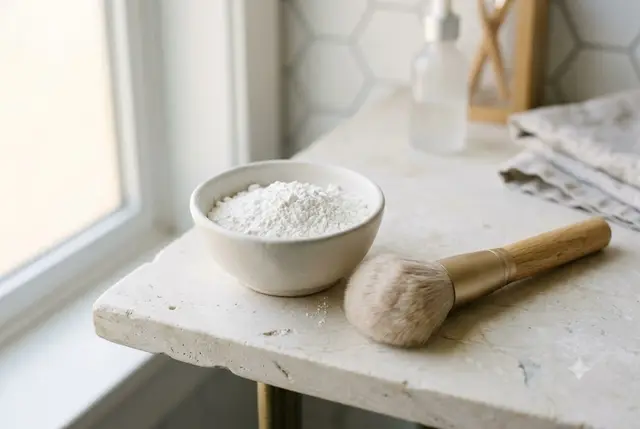
Dabbed into hair roots it works as a quick dry shampoo, and sprinkled on a fresh grease mark it draws the oil out before washing.
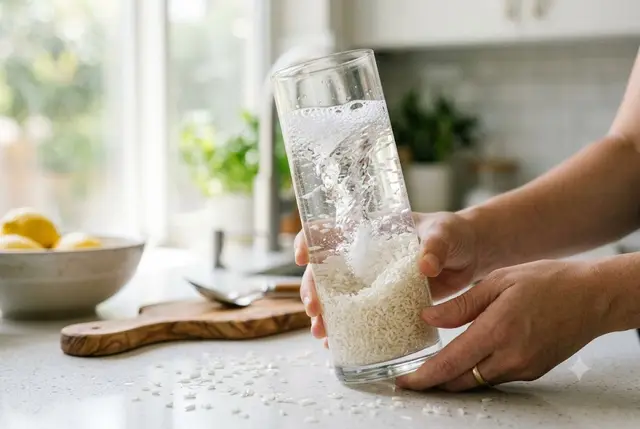
A handful of dry rice with a little soapy water, swirled hard, scrubs the inside of narrow vases and bottles you can't reach.
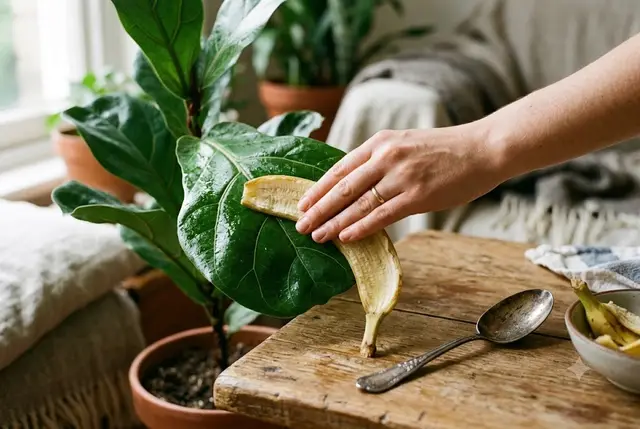
The soft inside of a peel buffs shine back into dull leather and tarnished silver, and the peel itself is great for the compost.
Natural dyes & crafts
Colours straight from the kitchen for fabric, paper, eggs and rainy-day projects. Fun, but they stain - protect surfaces and hands.
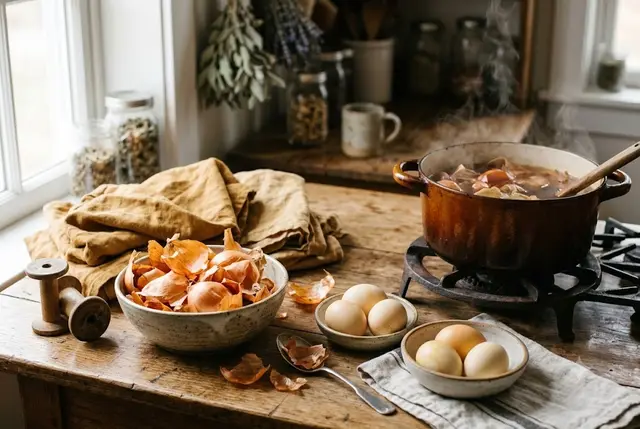
The dry papery skins simmered in water give a rich golden-brown dye, lovely on cloth or for colouring eggs.
It stains - use an old pot and wear gloves.
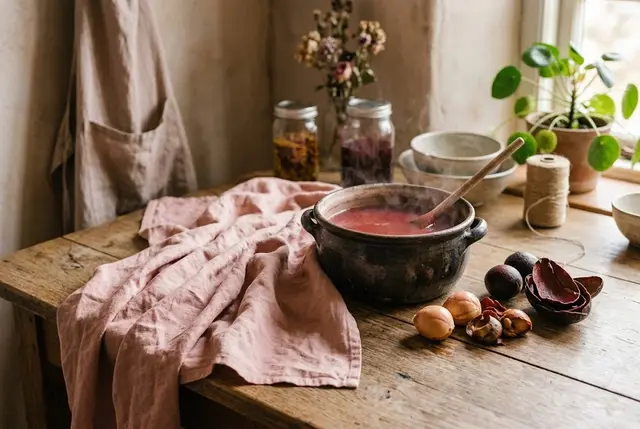
Simmered pits and skins release a surprising soft dusty-pink dye for natural fabrics.
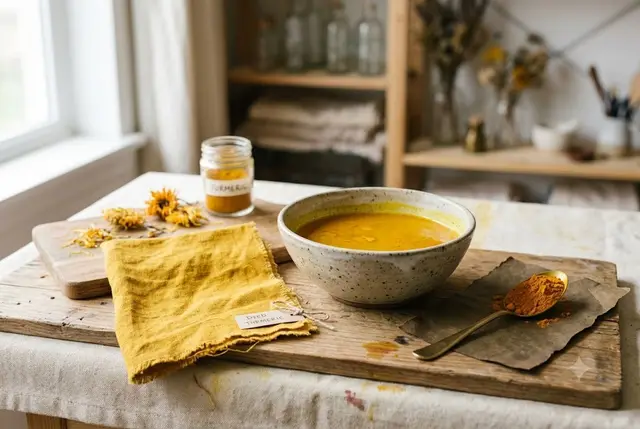
A spoonful in warm water makes a vivid sunshine-yellow dye for cloth, paper or play-dough.
It stains everything it touches, skin included - cover your workspace.
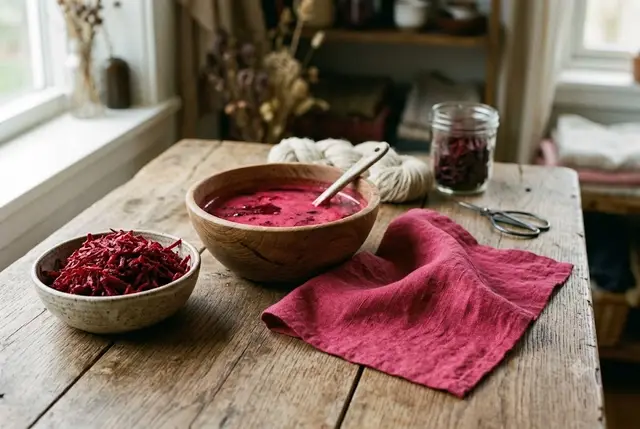
Grated and simmered, it lends a warm pink-red tint to fabric and paper (it softens as it ages).
Staining - protect clothes and counters.
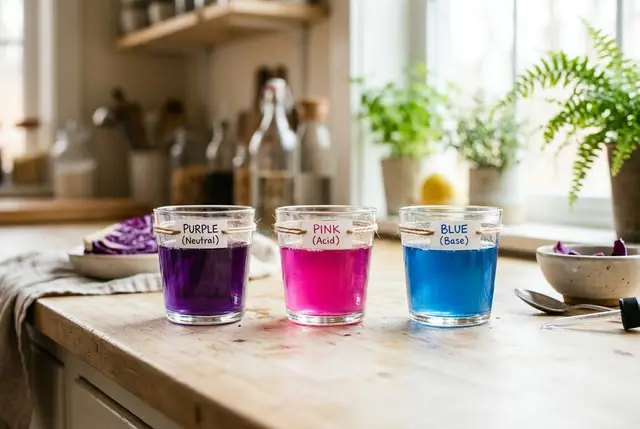
Boiled cabbage water is a colour-changing dye: add a little vinegar and it turns pink, a little bicarb and it turns blue - a classic kitchen science project.
Kitchen oils for skin & hair
Gentle, food-grade oils and fruits people use on skin and hair. External and cosmetic only - patch-test first.
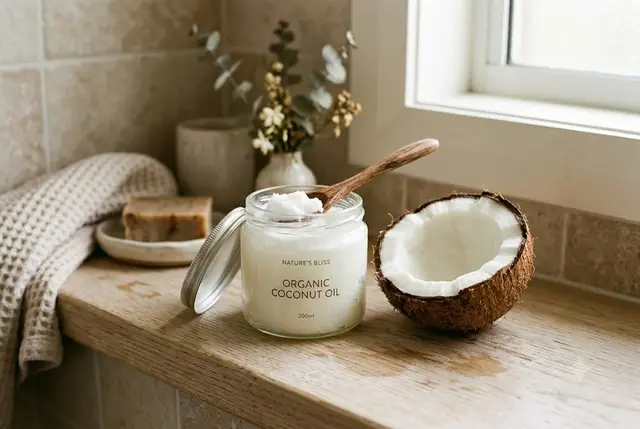
A little melted between the fingers is a rich moisturiser, a gentle eye-makeup remover and a weekend hair mask.
It can clog pores on some faces - patch-test, and use sparingly.
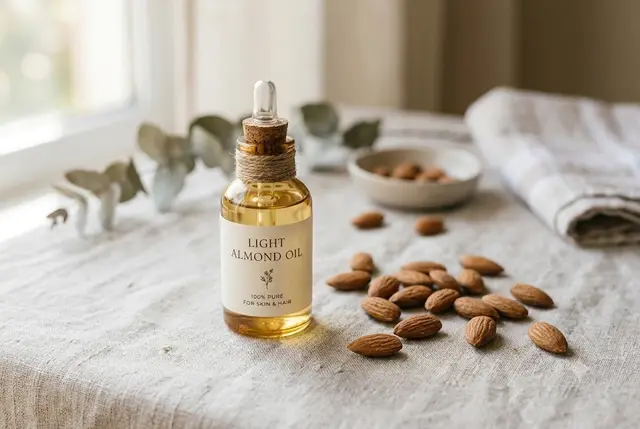
A light, slippery oil people smooth onto dry cuticles, elbows and as a simple massage oil.
Skip it if you have a nut allergy. Patch-test.
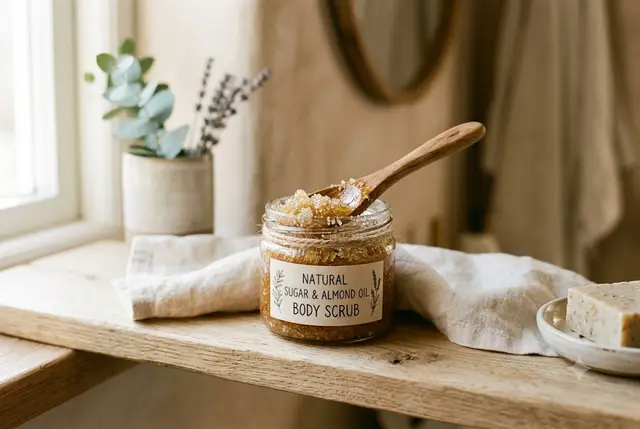
Plain sugar stirred into a spoon of oil makes a quick body scrub for rough knees and elbows in the shower.
Scrub gently and never on the face - sugar crystals are sharp.
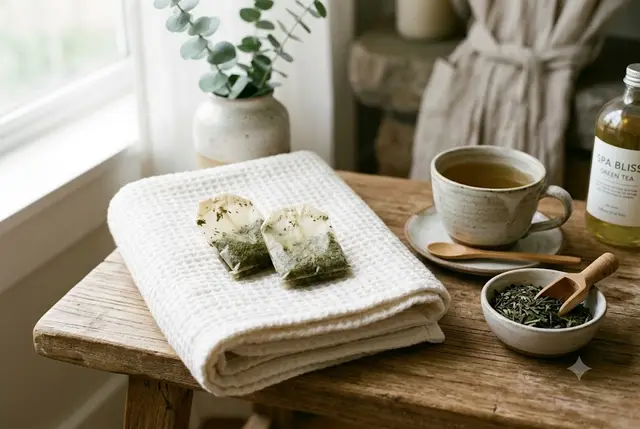
Cooled, used tea bags laid on closed eyes are a soothing refresher, and a cold brew makes a final hair rinse.
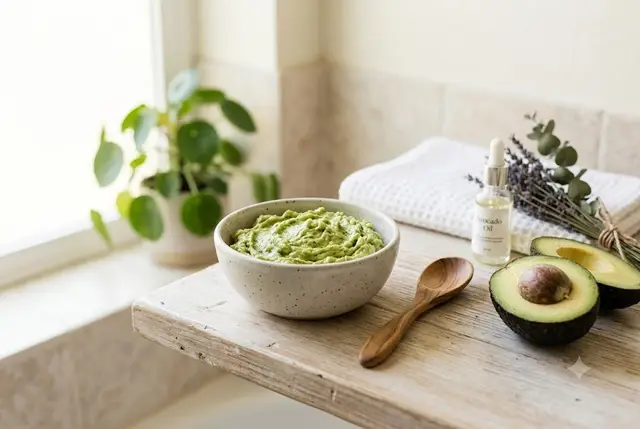
Mashed to a paste it's a rich, old-fashioned hair and face mask, rinsed off after ten minutes.
Patch-test, and rinse well - it's heavy.
Home scent & natural moth-keepers
Warm kitchen spices and aromatic wood used to scent a home and, by long tradition, to make cupboards less inviting to moths and pantry bugs. All external - none of it goes in food.
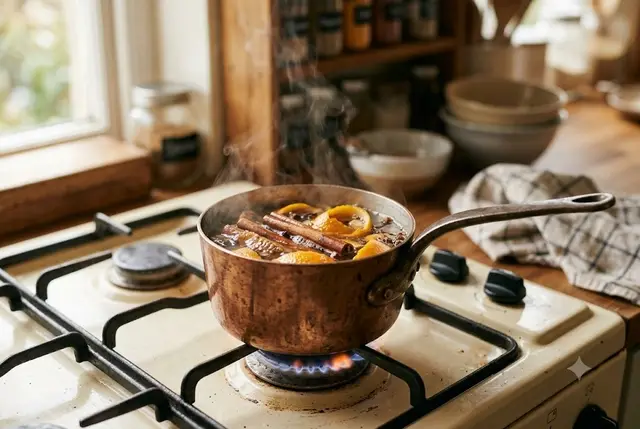
A few sticks simmered with orange peel and cloves fill the house with a warm, festive scent; a line of the ground spice along a windowsill is a traditional way to discourage an ant trail.
Concentrated cinnamon is an irritant - keep the powder off skin and away from pets' noses.
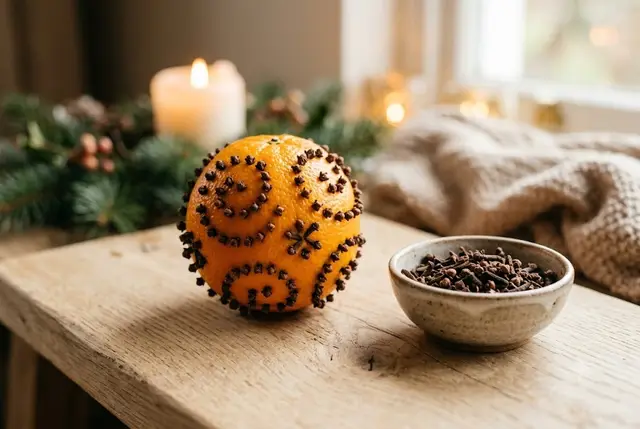
Whole cloves pressed into an orange make a pomander that scents a wardrobe for weeks, and a small dish of them is an old-fashioned drawer freshener said to keep moths off.
Clove oil is strong - use the whole dried buds, not neat oil, around pets.
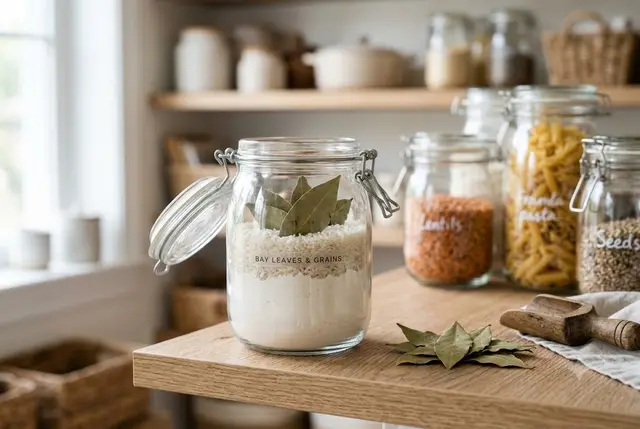
A couple of dried bay leaves tucked into a jar of flour, rice or oats is a classic pantry trick some swear keeps weevils away - and they scent a linen drawer nicely too.
Bay leaves are for scenting, not eating whole - lift them out before cooking.
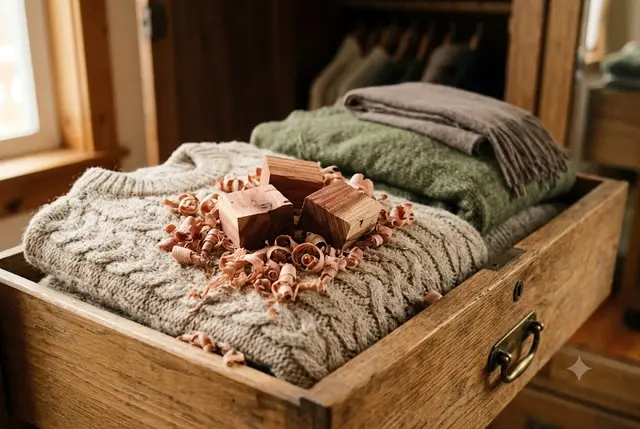
Cedar blocks or a handful of shavings in a wardrobe are the classic wood-scented alternative to mothballs; a light sanding refreshes the smell when it fades.
Cedar oil can bother cats - keep blocks where pets can't gnaw them.
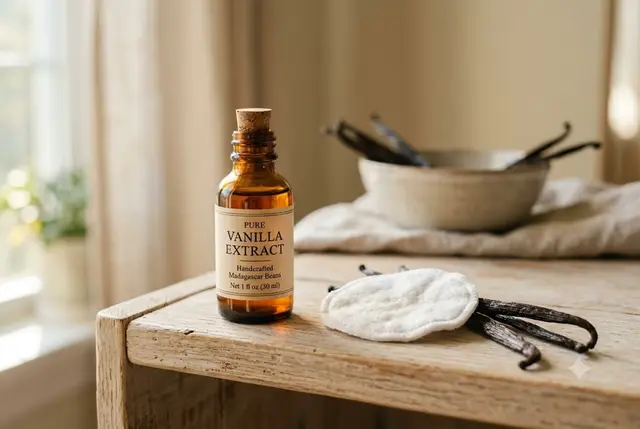
A cotton pad dabbed with a little real vanilla, tucked at the back of a shelf or in the car, is a simple, sweet natural air-freshener.
Use real vanilla extract sparingly - a drop or two is plenty.
Helpers for the garden
Plant matter given back to plants - gentle homemade feeds, compost boosters and companion flowers. Outdoor and garden use only, and always well diluted.
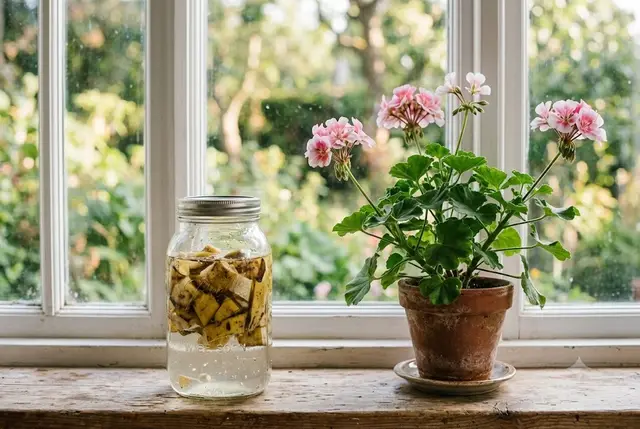
Chopped into a planting hole or soaked in water for a few days, banana skins give a mild potassium-rich drink that flowering and fruiting plants enjoy; whole, they go straight on the compost.
Dilute the soaking water well and use it fresh - it turns before long.
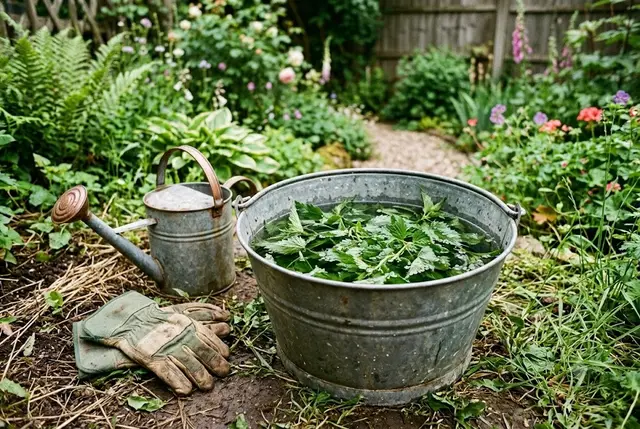
A bucket of nettle tops left to steep in water for a couple of weeks makes a classic free, nitrogen-rich liquid feed for leafy growth - strained and heavily diluted before use.
Wear gloves picking them, and stand the bucket downwind - the brew smells powerful.
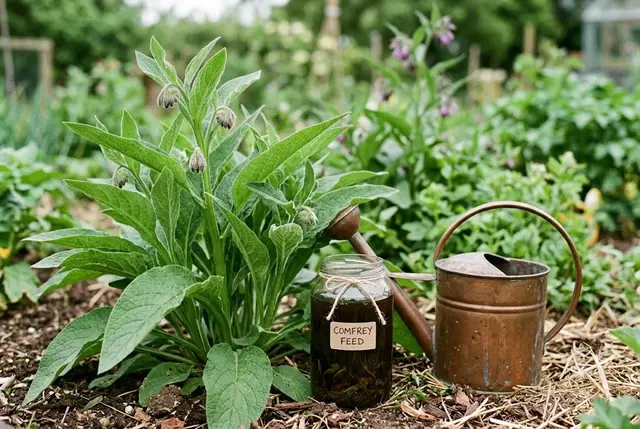
Comfrey leaves rotted down in water make a potassium-rich 'tea' many gardeners swear by for tomatoes and other fruiting crops.
It's strong-smelling and only for the garden - keep it well away from food and skin.
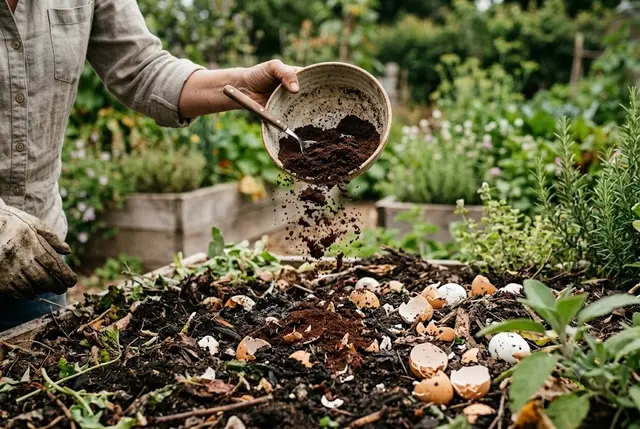
Used grounds dug thinly into the compost heap add nitrogen and help it break down; a light scatter on the soil surface is a gentle, slow feed.
Use them thinly - a thick layer cakes and repels water. Best composted first.
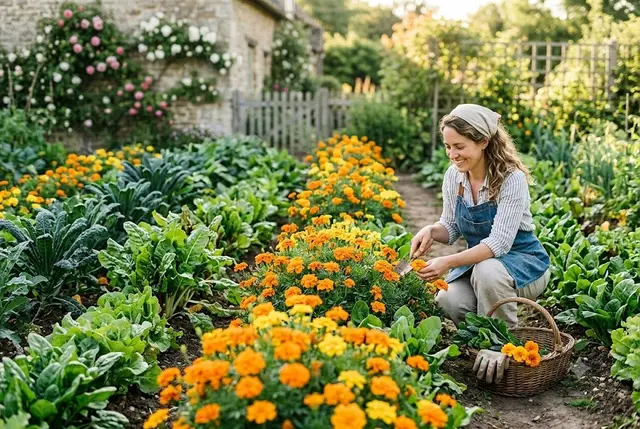
Planted among vegetables, marigolds are the classic companion flower - their scent confuses some pests and the blooms pull in hoverflies and bees.
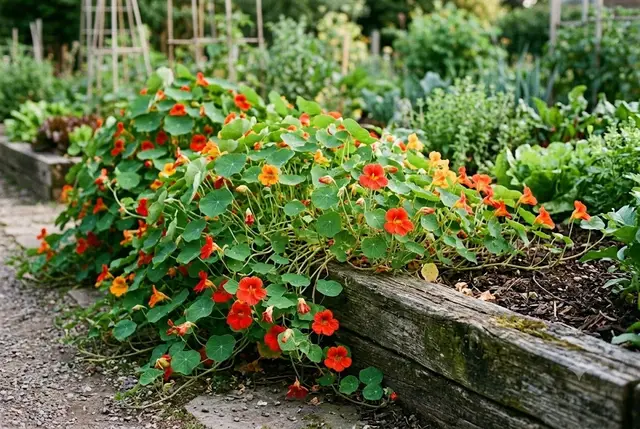
Grown near beans and brassicas, nasturtiums act as a 'sacrificial' plant that draws aphids onto themselves and away from the crop, while their sprawl shades the soil.
They self-seed enthusiastically - snip the seed pods if you'd rather they didn't take over.
Want to grow the plants first? Browse the plant library, mix a cup in herbal tea blends, or check what's safe around animals on the pet-safe houseplants list.
A reading guide to traditional, everyday uses - not remedies, and not medical, veterinary or cosmetic advice. Plants vary in strength and some people react to even gentle ones. Use only plants you have identified with certainty, keep everything external, patch-test first, and stop at once if skin becomes irritated. For anything to do with a health condition, a wound, a child or a pet, talk to a qualified professional - we don't advise on those.