Plants as decor.
The difference between a few houseplants and a room that feels alive is mostly in the arranging. You don't need more plants - you need to place the ones you have with a little intent. Here are the simple styling moves that make greenery look considered rather than scattered.
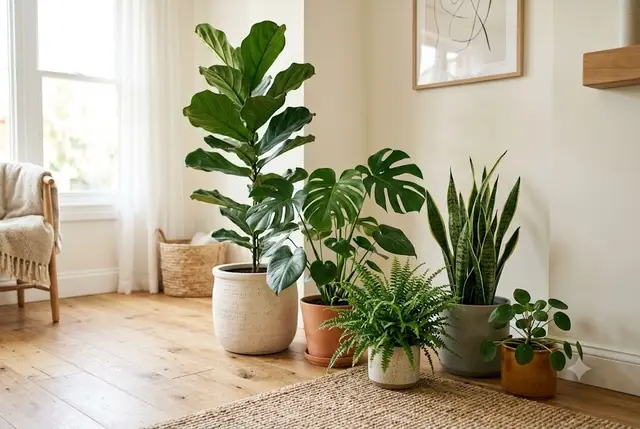
Three or five plants clustered at different heights read as a lush little scene, where the same plants dotted around a room read as clutter. Vary the leaf shapes and pot sizes for contrast.
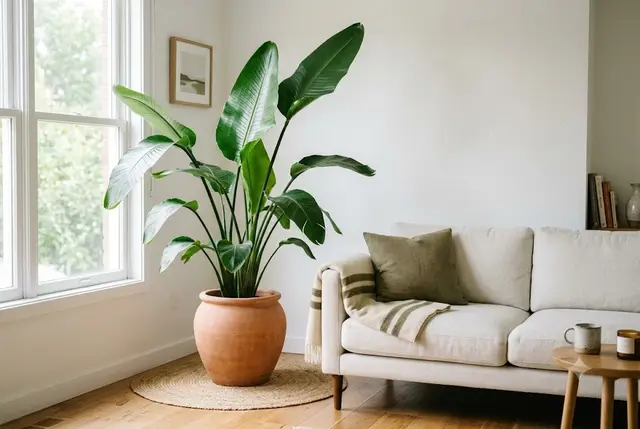
A single large plant - a fiddle-leaf fig, a bird of paradise, a tall dracaena - anchors an empty corner better than a dozen small ones. Give it space and let it be the star.
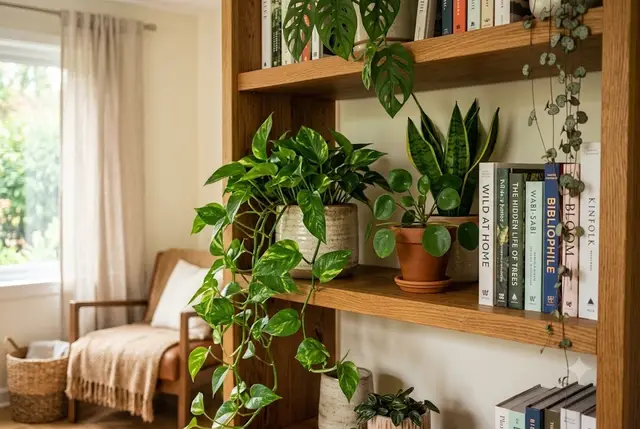
Mix uprights, a trailing vine spilling off the edge, and a book or two between them. Leave breathing room - a shelf that's 70% full looks styled, 100% full looks crammed.
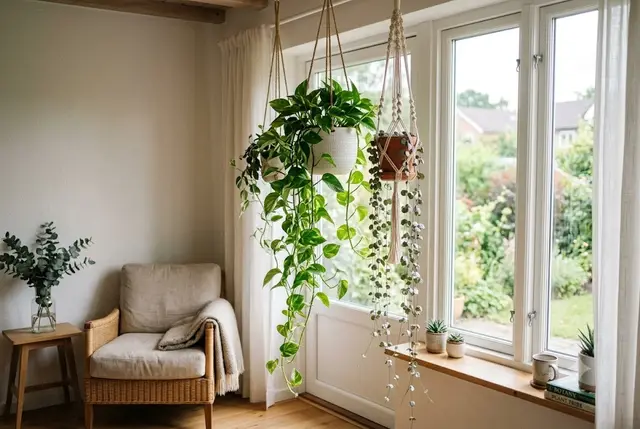
Hanging planters and high trailing plants use empty vertical space, soften hard corners and add height a room often lacks - especially good in small flats where floor space is tight.
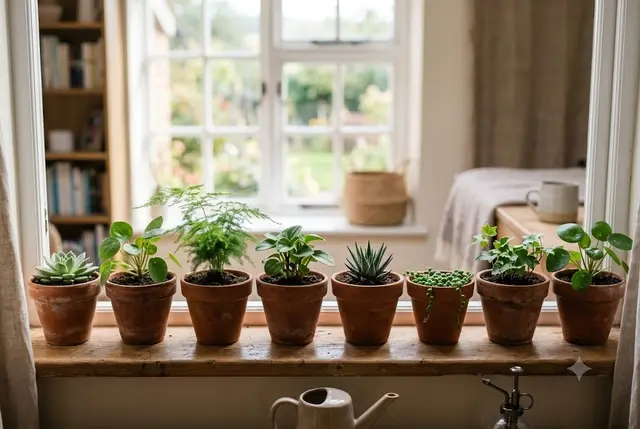
A row of matching pots along a sill gives a calm, considered rhythm. Keep the pots one family (all terracotta, all white) and let the plants provide the variety.
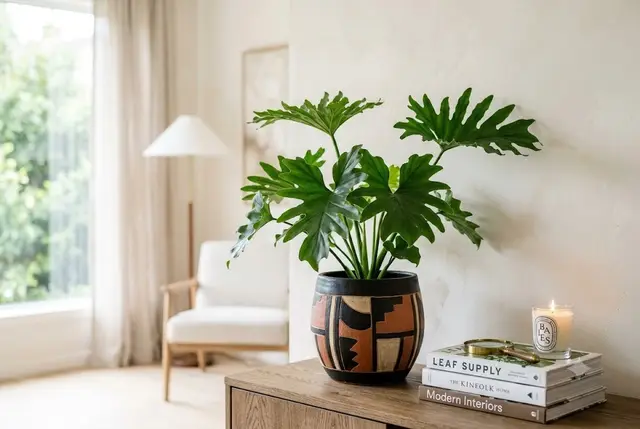
The pot is half the look. Match a wild trailing plant with a plain pot so it doesn't fight; give a simple, architectural plant a bolder pot. And keep pots roughly in your room's palette.
A plant for every room
- Living room - a big statement plant + a styled shelf.
- Bathroom - humidity-lovers thrive; go trailing and lush.
- Bedroom - calm, easy plants; nothing you'll fuss over.
- Kitchen - a herb line-up on the sill, within reach of the pan.
- Desk - one compact plant that copes with indirect light.
Whatever the spot, match the plant to the light first - a plant that's happy where you put it always looks better than one that's slowly sulking.
Get the light right with the plant finder, pick pieces that suit the spot from statement plants or trailing plants, and try a project like a terrarium for a real centrepiece.
Styling ideas for inspiration - always put a plant's actual needs (light, humidity, and safety around pets and children) ahead of the look. A thriving plant in a slightly-less-perfect spot beats a struggling one that photographs well.