Cape Sundew
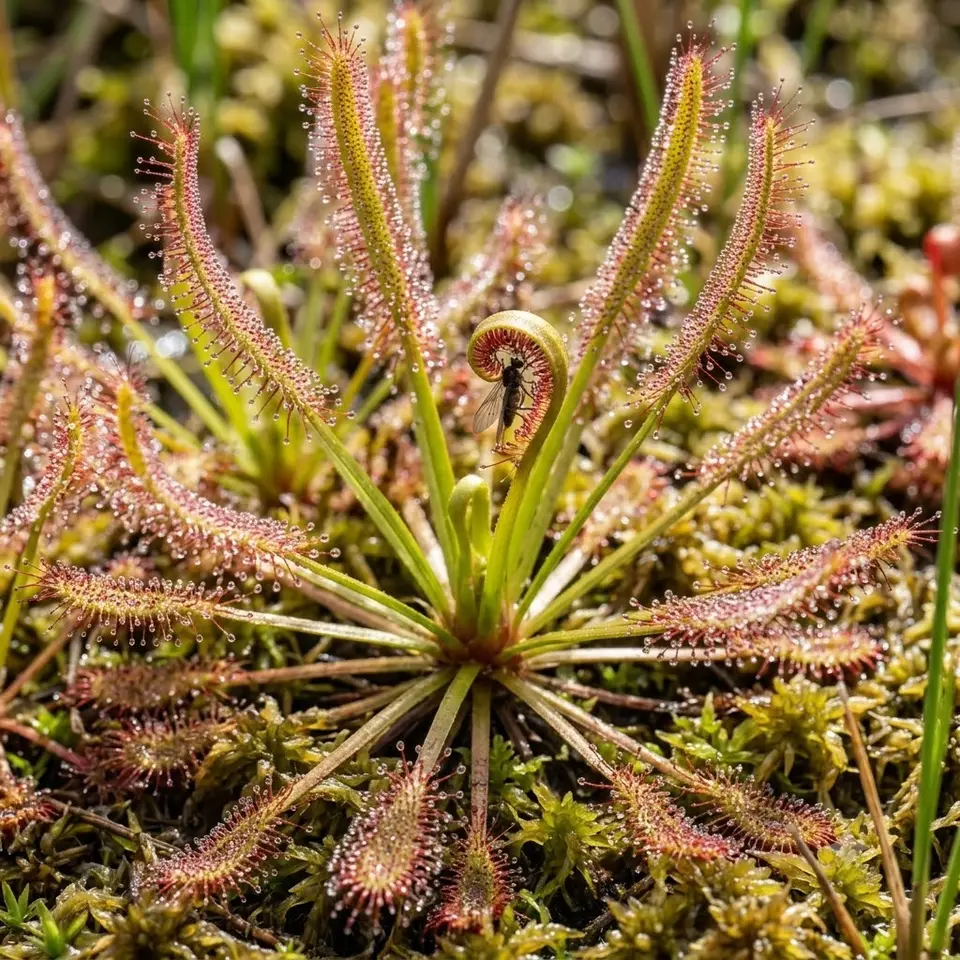
The Cape sundew has glistening tentacles that visibly bend toward a stuck gnat within minutes, then curl the whole leaf around it over the following hours; this South African species is so forgiving it self-sows around collections.
Last reviewed: October 2026
 AI illustration
 Overview
The Cape sundew has glistening tentacles that visibly bend toward a stuck gnat within minutes, then curl the whole leaf around it over the following hours; this South African species is so forgiving it self-sows around collections. If a household's first meat-eater isn't a flytrap, it should be this. (Drosera capensis.)
Origin & Natural Habitat
Streamsides of South Africa's Cape - mild, moist, sunny; the cosmopolitan weed (affectionately) of carnivorous horticulture.
Appearance
Rosettes of strap leaves 5-15 cm long, fringed in red tentacles tipped with glue droplets that spark in sun; leaves fold over prey in slow motion; pink flower wands self-seed freely.
Why People Grow It - Qualities & Benefits
- Visible ACTION: leaves curl around catches
- The most forgiving carnivore in the hobby
- Gnat control that actually works
- Self-sows spares for every friend
Care
Light: Bright: sunny windowsill (some direct sun) or grow light; dew sparkles fullest in strong light.
Water: Rain, distilled or RO water ONLY - tap-water minerals poison carnivorous roots within months. The tray method (pot standing in 1-2 cm of pure water) is standard.
Soil: Nutrient-FREE mix: sphagnum peat + perlite/silica sand (roughly 1:1). Never potting soil, never fertilized media - fertility burns their roots.
Temperature & Dormancy: 16-28°C, ordinary rooms fine; NO true dormancy (mild winters slow it politely) - a genuine year-round windowsill plant.
Feeding: Catches fungus gnats and fruit flies solo; a rehydrated bloodworm speck monthly boosts growth if your house runs bug-free.
Propagation
Trivially: self-seed, leaf cuttings floated on pure water, root cuttings - it WANTS to multiply.
Common Problems & Pests
- Dew disappears = light or humidity dropped (or tap water damage)
- Aphids on flower stalks
- Basically nothing else: it forgives everything but tap water
Toxicity & Safety
Non-toxic to cats, dogs and people - carnivorous plants digest insects, not pets; the only real risk runs the other way (cats batting the traps).
Pros & Cons
Pros
- Easy, active, generous
- Real fungus-gnat control
- Windowsill-compatible year-round
Cons
- Self-seeds into neighbors' pots
- Modest size
- Sticky leaves collect dust in dead air
Best Suited For
- First carnivorous plant, full stop
- Kids' windowsills (endlessly watchable)
- Gnat-plagued houseplant shelves
- Terraria and bog bowls
FAQ
The dew vanished - is it dying?
Check the trinity: more light, pure water only, a touch more humidity - dew returns on new leaves within weeks. Tap water is the one unforgivable.
Do I need to feed it?
In most homes it feeds itself on gnats. Watching the tentacles bend in within minutes, and the leaf wrap the catch over the next hours, is the whole show.
Gear for growing cape sundew
Links go to Amazon or a partner store (such as Adagio Teas) and may earn us a commission at no extra cost to you. As an Amazon Associate we earn from qualifying purchases. We link gear types, not sponsors' picks: you choose the exact product.