Byblis (Rainbow Plant)
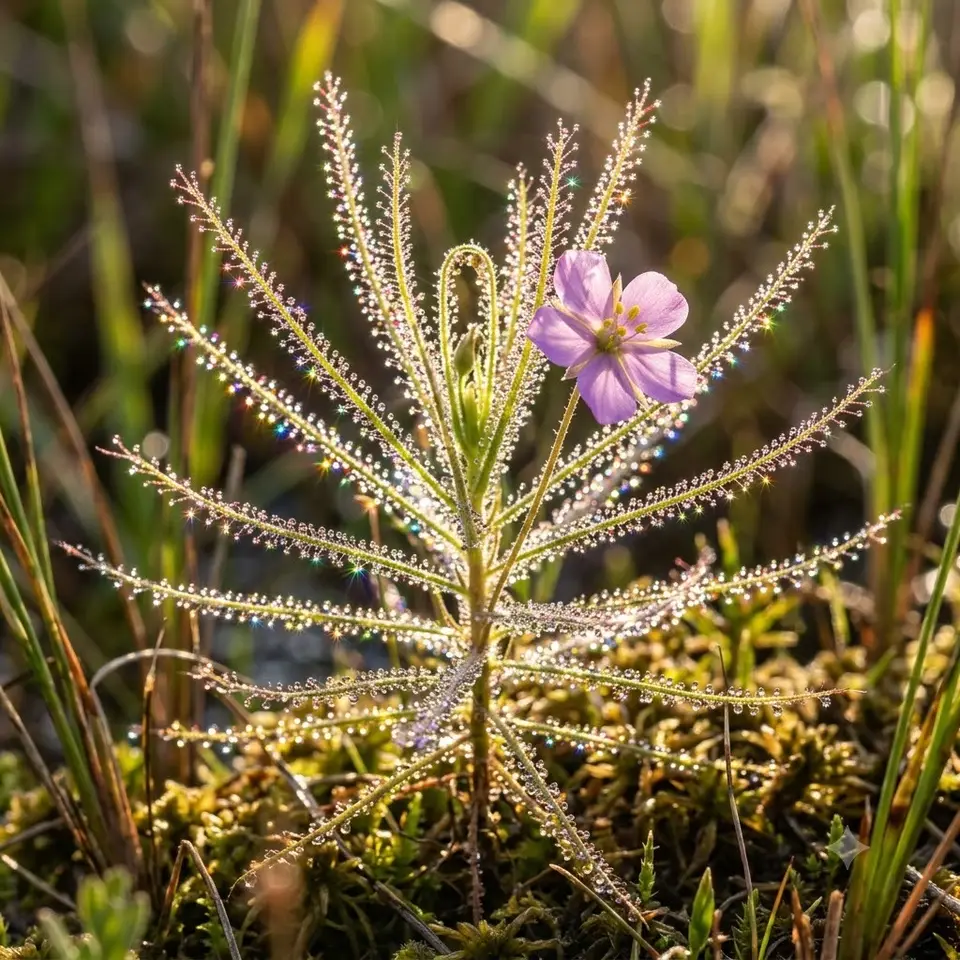
Byblis, the rainbow plant, is a haze of thread-fine leaves beaded in glue that splits sunlight into prisms, dotted with mauve flowers.
Last reviewed: October 2026
 AI illustration
 Overview
Byblis, the rainbow plant, is a haze of thread-fine leaves beaded in glue that splits sunlight into prisms, dotted with mauve flowers. The commonly grown annual species live fast: seed to sparkling half-meter bush to seed again in a year: flypaper as a delicate glittering annual. (Byblis.)
Origin & Natural Habitat
Sandy seasonal wetlands of northern Australia - annual species (liniflora and kin) sprint through the wet season; rarer perennials in the southwest.
Appearance
Feathery uprights 15-60 cm, every thread-leaf beaded with sticky prisms - backlit plants literally rainbow; simple 5-petal mauve/violet blooms all season.
Why People Grow It - Qualities & Benefits
- The sparkle: no plant glitters like backlit Byblis
- Fine-textured contrast to chunky pitchers
- Season-long violet flowering
- An annual's speed: sowing to spectacle in months
Care
Light: Bright with real sun - the sparkle IS light; grow lights serve well.
Water: Rain, distilled or RO water ONLY - tap-water minerals poison carnivorous roots within months. The tray method (pot standing in 1-2 cm of pure water) is standard. Moist tray culture through the season.
Soil: Sandier blend: peat + majority silica sand - their native seep-sand analog.
Temperature & Dormancy: Warm season 18-30°C; the common annuals then flower, seed and die on schedule - collect seed, repeat. (Not failure; life cycle.)
Feeding: Gnats and midges self-stick; light misting of tiny prey optional.
Propagation
Seed - the whole strategy: collect from spent plants, sow warm (liniflora germinates readily; some kin want smoke treatment: use smoke discs), enjoy the annual rhythm.
Common Problems & Pests
- Mourning an annual's natural death (plan the seed cycle)
- Damp-off of seedlings in stale air
- Aphids hiding below the glue line
- Support for lanky glitter (a twig suffices)
Toxicity & Safety
Non-toxic to cats, dogs and people - carnivorous plants digest insects, not pets; the only real risk runs the other way (cats batting the traps).
Pros & Cons
Pros
- Unique prismatic beauty
- Fast and generous from seed
- Continuous bloom
Cons
- Common species are annuals: by design
- Fragile stems
- Seed logistics each year
Best Suited For
- Backlit windowsills (east/west magic)
- Photographers of plants
- Seed-cycle enjoyers
- Texture collectors
FAQ
My rainbow plant died after flowering heavily - what went wrong?
Nothing - B. liniflora is a true annual: it sprinted, sparkled, seeded and finished. The seeds in your tray are next year's plant; the cycle is the plant.
Is it a sundew?
Convergent cousin, different family - passive flypaper without the sundew's moving tentacles; the prey sticks, the glands digest, the leaves never curl.
Gear for growing byblis (rainbow plant)
Links go to Amazon or a partner store (such as Adagio Teas) and may earn us a commission at no extra cost to you. As an Amazon Associate we earn from qualifying purchases. We link gear types, not sponsors' picks: you choose the exact product.