Nepenthes (Tropical Pitcher Plant)
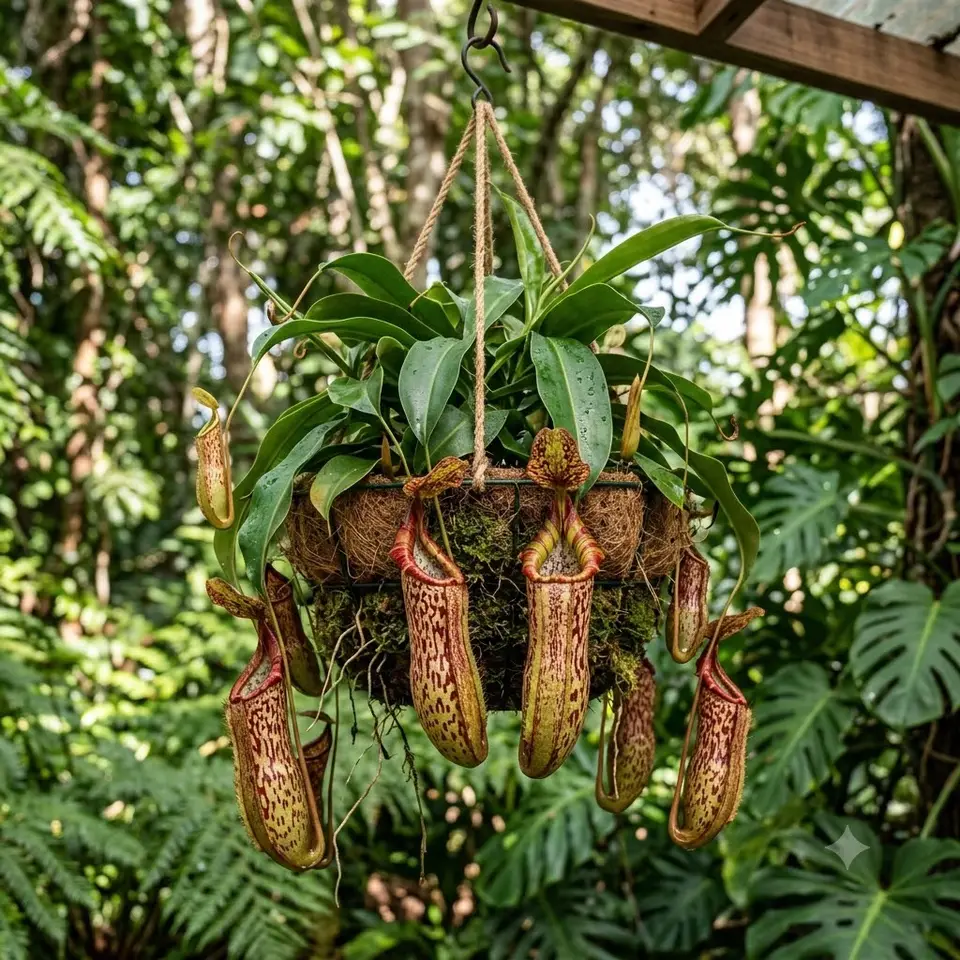
Nepenthes are tropical vining plants whose leaf-tips swell into fluid-filled pitchers, from highland jewels to giant pitchers that have occasionally drowned small rodents.
Last reviewed: October 2026
 AI illustration
 Overview
Nepenthes are tropical vining plants whose leaf-tips swell into fluid-filled pitchers, from highland jewels to giant pitchers that have occasionally drowned small rodents. The hanging-basket carnivore: no dormancy, no bog, just warmth, humidity and light: the houseplant-most of the whole guild. (Nepenthes.)
Origin & Natural Habitat
Southeast Asian tropics (Borneo, Sumatra, Philippines) - highland cloud ridges and lowland jungles; CITES-regulated in the wild, buy propagated.
Appearance
Vines 30 cm-3 m with pitchers dangling from leaf tendrils - green, speckled, blood-red, some toothed (villosa's fangs legendary); 'ventrata' the unkillable classic of garden centers.
Why People Grow It - Qualities & Benefits
- Hanging pitchers = living sculpture
- NO dormancy: year-round performer
- 'Ventrata' and hybrids are genuinely easy
- A deep collector ladder above the basics
Care
Light: Bright indirect with gentle sun - orchid-bright; deep shade = vines without pitchers.
Water: Pure water preferred (hybrids tolerate decent tap better than most carnivores); keep mix damp, never the tray-swamp of bog plants, since they're epiphyte-ish.
Soil: Airy: sphagnum moss + perlite/bark. Hanging baskets ideal.
Temperature & Dormancy: Warm 18-30°C for common hybrids (highland species want cool nights - research before buying); humidity 50%+ decides pitcher production more than anything.
Feeding: Pitchers catch their own indoors (the occasional fly wanders in); a dilute foliar orchid feed monthly is tolerated - unusual for carnivores. Never fertilize the soil.
Propagation
Stem cuttings of 2-3 nodes in damp sphagnum root in weeks - the vining habit begs for it.
Common Problems & Pests
- No pitchers = humidity or light, in that order
- Dried-out sphagnum killing fine roots
- Sudden cold drafts
- Highland species cooked in warm rooms (know your species)
Toxicity & Safety
Non-toxic to cats, dogs and people - carnivorous plants digest insects, not pets; the only real risk runs the other way (cats batting the traps).
Pros & Cons
Pros
- The easiest 'wow' carnivore indoors
- No winter logistics
- Propagates readily
Cons
- Humidity-dependent pitchering
- Vines need space/hanging
- Rare species get demanding fast
Best Suited For
- Bright bathrooms and kitchens
- Hanging-basket spots
- Carnivore beginners (via 'ventrata')
- Collectors climbing to highlands
FAQ
Why did pitchering stop indoors?
Dry air, almost always - mist, group plants or hang near the shower window; pitchers return with humidity. Second suspect: light.
Should I fill new pitchers with water?
They arrive with their own fluid; if one spills in transit, a splash of pure water restarts it. Never add 'food' liquids.
Gear for growing nepenthes (tropical pitcher plant)
Links go to Amazon or a partner store (such as Adagio Teas) and may earn us a commission at no extra cost to you. As an Amazon Associate we earn from qualifying purchases. We link gear types, not sponsors' picks: you choose the exact product.