Darlingtonia (Cobra Lily)
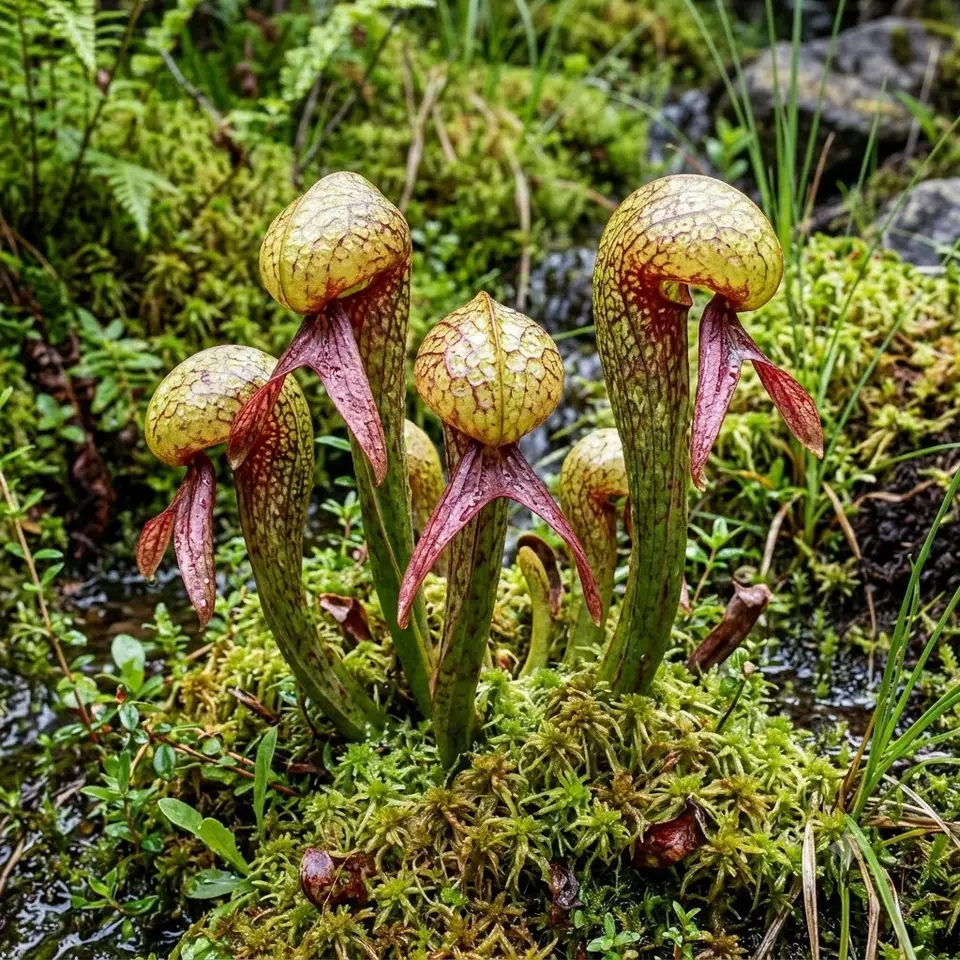
The cobra lily rears from Oregon mountain seeps like a striking snake - hooded, forked-tongued pitchers with translucent false-exit windows that exhaust trapped insects to death.
Last reviewed: October 2026
 AI illustration
 Overview
The cobra lily rears from Oregon mountain seeps like a striking snake - hooded, forked-tongued pitchers with translucent false-exit windows that exhaust trapped insects to death. Its secret and its challenge are the same: COLD RUNNING WATER at the roots; warm stagnant pots are fatal. (Darlingtonia californica.)
Origin & Natural Habitat
Serpentine seeps and streamsides of N. California/S. Oregon mountains - snowmelt-chilled root runs under bright sun; a one-species genus.
Appearance
Twisted cobra-hooded pitchers 20-80 cm with puffed translucent heads and forked 'tongues'; green netted with white windows, sun-flushing red - a snake-garden en masse.
Why People Grow It - Qualities & Benefits
- The most theatrical pitcher silhouette in the world
- False-window trap engineering
- Hardy (zone 6-9) with the water trick mastered
- Conversation plant of any collection
Care
Light: Full-to-bright sun on the pitchers - while roots stay COLD; morning-sun/bright-shade compromises where summers roast.
Water: Rain, distilled or RO water ONLY - tap-water minerals poison carnivorous roots within months. The tray method (pot standing in 1-2 cm of pure water) is standard. The species rule: cool, oxygenated, MOVING moisture: flush pots daily in heat (some keepers drop ice-water tops in heatwaves); never warm stagnant trays.
Soil: Lean and airy: live sphagnum + perlite/pumice; wide shallow pots that flush freely.
Temperature & Dormancy: Cool-rooted hardy: tolerates frost (mulched) to zone 6; the killer is root-zone above ~20°C for long - climate-match or engineer (shade the pot, flush, elevate).
Feeding: Self-catching outdoors; nothing needed.
Propagation
Stolons - it runners into colonies; sever rooted daughters in spring.
Common Problems & Pests
- Warm stagnant roots: the singular cause of death
- Impatience (slow to establish, then stoloning happily)
- Wrong climates without engineering (hot-summer + warm-night regions)
Toxicity & Safety
Non-toxic to cats, dogs and people - carnivorous plants digest insects, not pets; the only real risk runs the other way (cats batting the traps).
Pros & Cons
Pros
- Unreal looks, hardy bones
- Colony-forming generosity
- Outdoor-capable drama
Cons
- The cold-root logistics
- Slow start
- Struggles in hot-night climates
Best Suited For
- Cool-summer temperate gardens (PNW-like)
- Dedicated flushing-tray keepers
- Hardy-bog builders (shaded, flushed corner)
- Snake-plant pun enthusiasts
FAQ
Why do trapped flies die inside?
They enter under the hood, then beat against the bright false windows of the dome - the real exit is dark below. Exhaustion drops them into the tube. No lid ever moves.
How do I keep roots cold in July?
Shade the POT (not the pitchers), flush morning and evening with cool pure water, top with light-reflecting live sphagnum - the daily ritual of cobra keepers everywhere.
Sources
Pet toxicity: checked against the ASPCA Animal Poison Control Center lists of toxic and non-toxic plants for cats and dogs, entry "California Pitcher Plant" (Darlingtonia californica): non-toxic to cats and dogs. Lists read on 10 October 2026.
Gear for growing darlingtonia (cobra lily)
Links go to Amazon or a partner store (such as Adagio Teas) and may earn us a commission at no extra cost to you. As an Amazon Associate we earn from qualifying purchases. We link gear types, not sponsors' picks: you choose the exact product.