Cephalotus (Albany Pitcher Plant)
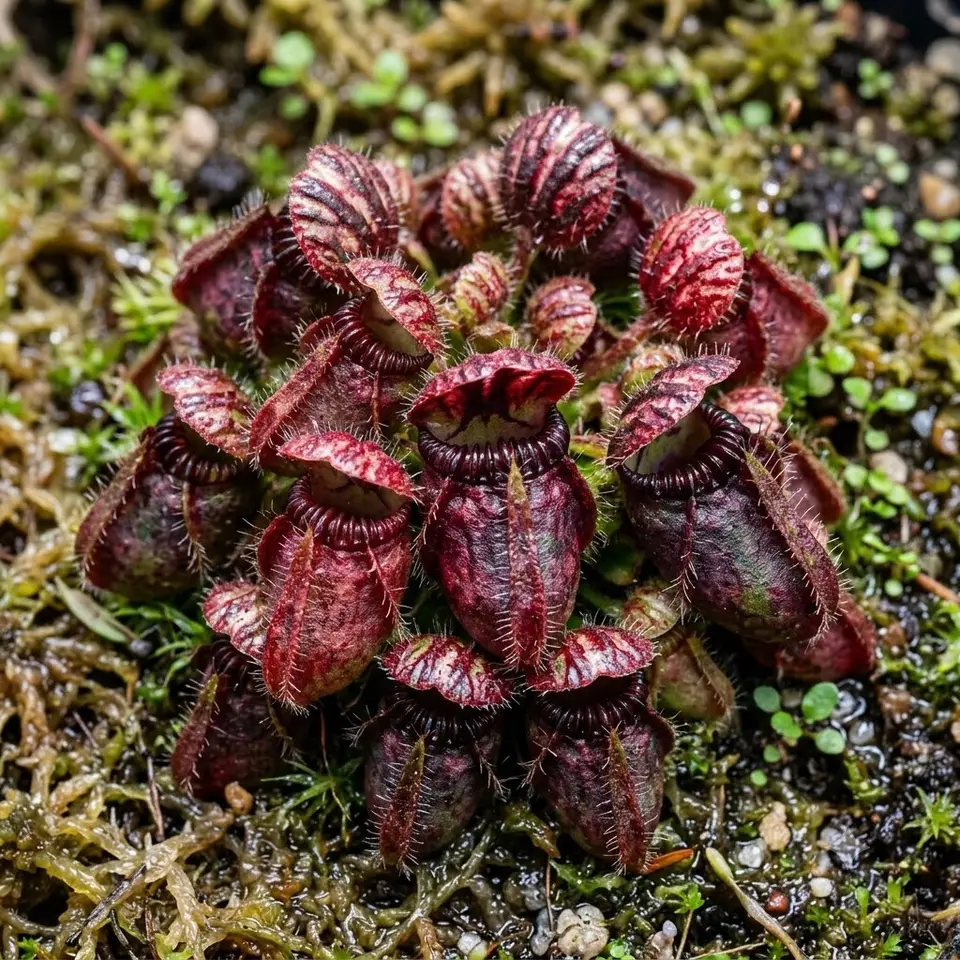
Cephalotus is the only species of its family: a palm-sized West Australian that grows fanged, ribbed, moustached pitchers like tiny monster boots.
Last reviewed: October 2026
 AI illustration
 Overview
Cephalotus is the only species of its family: a palm-sized West Australian that grows fanged, ribbed, moustached pitchers like tiny monster boots. Slow, prized, and less difficult than its price suggests: the plant carnivore keepers graduate TO. (Cephalotus follicularis.)
Origin & Natural Habitat
A sliver of coastal southwest Australia (near Albany) - mild, humid seeps; one species, one genus, one family, one place.
Appearance
Clustered pitchers 2-5 cm (ribbed, toothed, moustache-lidded) green in shade, port-wine in sun, beside plain flat 'winter' leaves; whole plants span a hand.
Why People Grow It - Qualities & Benefits
- The most coveted carnivore under 10 cm
- Sun-blushed burgundy fangs in miniature
- Single-species mystique
- Compact: a collection fits a tray
Care
Light: Bright with gentle sun - color and compactness follow light; shade-grown stays green and lax.
Water: Rain, distilled or RO water ONLY - tap-water minerals poison carnivorous roots within months. The tray method (pot standing in 1-2 cm of pure water) is standard. Middle path on moisture: damp, never swampy (tray briefly, then drain): soggy crowns rot, the classic loss.
Soil: Nutrient-FREE mix: sphagnum peat + perlite/silica sand (roughly 1:1). Never potting soil, never fertilized media - fertility burns their roots. Extra perlite/sand for drainage. It likes airier feet than bog plants.
Temperature & Dormancy: Mild: 10-27°C; cool winters slow it (fine) - no hard dormancy, no frost. Hates sudden heat spikes at wet roots.
Feeding: Catches ants and small flies outdoors/self-serve; occasional micro-feeding optional. Never fertilize.
Propagation
Leaf pullings (both leaf types work!) and division of clumps - slow but reliable; a pulled leaf is a one-year project to a plantlet.
Common Problems & Pests
- Crown rot from swampy warmth: the killer combo
- Sudden collapse from repot stress (disturb rarely, gently)
- Slow growth misread as sickness (years, not months)
- Price of impatience: buy established, not tissue-culture babies, first time
Toxicity & Safety
Non-toxic to cats, dogs and people - carnivorous plants digest insects, not pets; the only real risk runs the other way (cats batting the traps).
Pros & Cons
Pros
- Iconic, adorable, prestigious
- Small-space collectible
- Hardy-ish constitution when respected
Cons
- SLOW: patience is the currency
- Rot-sensitive to overwatering
- Costs more per centimeter than any plant here
Best Suited For
- Experienced carnivore keepers levelling up
- Windowsill/grow-light tray collections
- Patient, gentle-handed growers
- Miniature-plant devotees
FAQ
Is Cephalotus really hard?
Overstated: bright light, pure water, damp-not-wet, cool-ish, and above all LEAVE IT ALONE - most losses are overcare (soggy trays, needless repots), not neglect.
Why does mine have two leaf types?
By design: flat photosynthesis leaves (autumn-winter) and pitcher leaves (spring-summer) alternate seasonally - both are healthy, and both propagate from pullings.
Gear for growing cephalotus (albany pitcher plant)
Links go to Amazon or a partner store (such as Adagio Teas) and may earn us a commission at no extra cost to you. As an Amazon Associate we earn from qualifying purchases. We link gear types, not sponsors' picks: you choose the exact product.