Plants that dye and build.
Long before plants were decor, they were the supply store: every colour in historical cloth, most rope, many roofs and all baskets. Some of those craft plants grow happily in an ordinary garden - and the crafts themselves are very much alive.
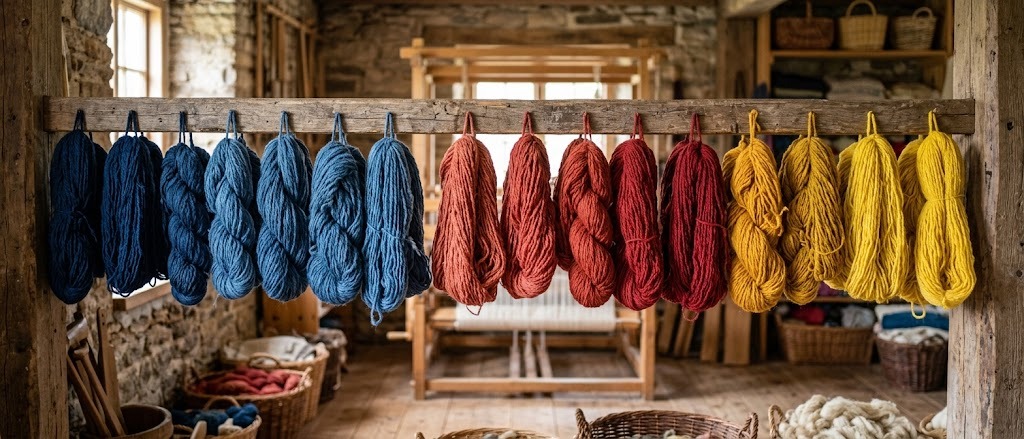
🎨 The dye garden
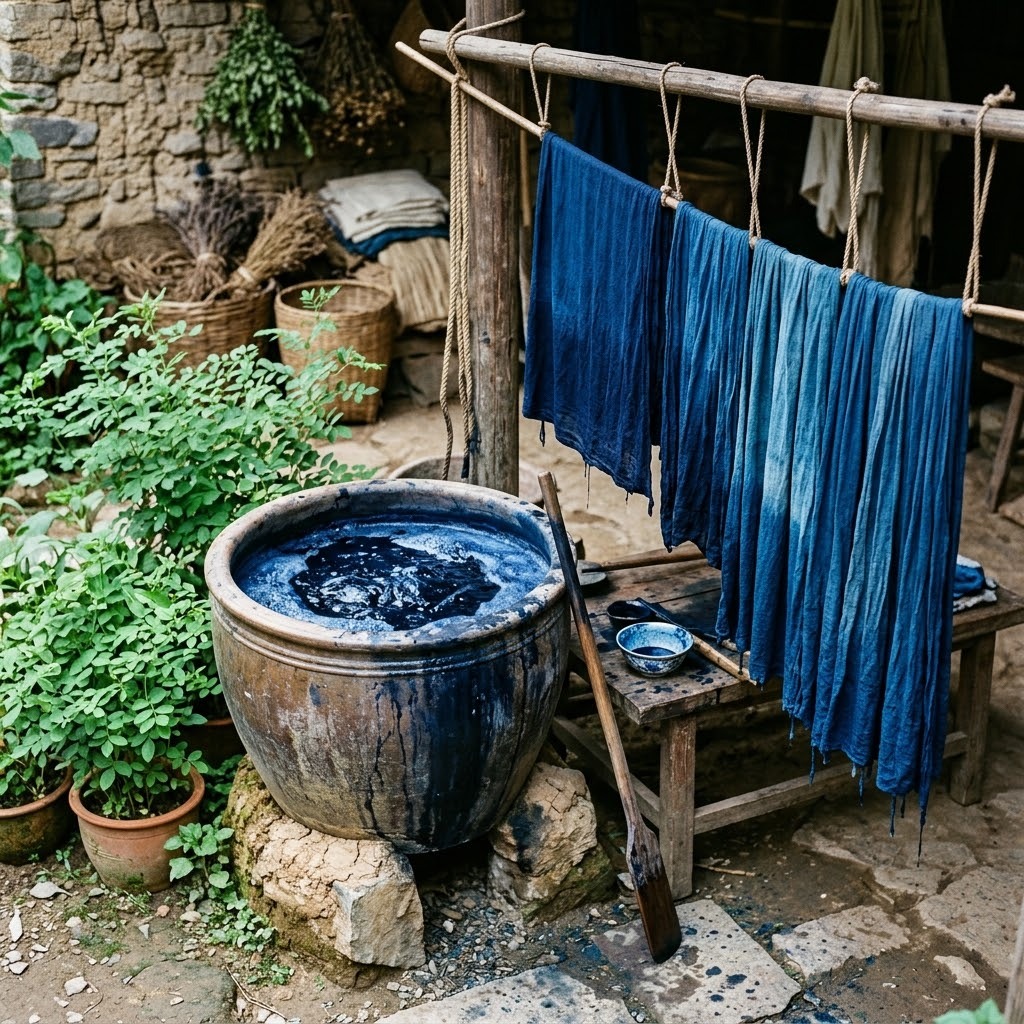
Indigo & woad
The world's great blue dyes. True indigo (Indigofera tinctoria) and Europe's woad (Isatis tinctoria) both carry the same pigment, extracted by fermenting the leaves in a dye vat. Every pair of blue jeans descends from this plant chemistry. Woad grows easily in temperate gardens as a biennial.
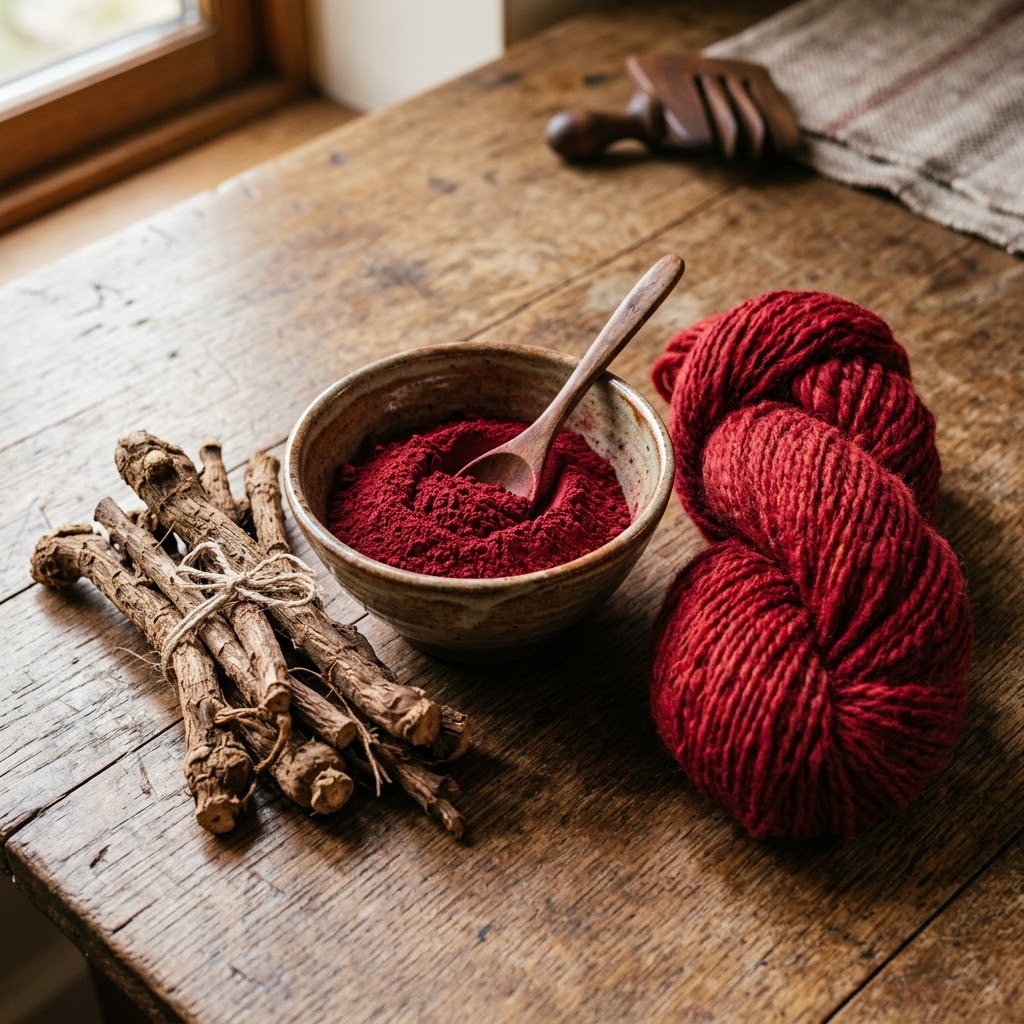
Madder root
Rubia tinctorum roots, dug in their third year, dye the famous 'turkey red' that coloured uniforms and Persian carpets for centuries. A patient crop - but the roots keep for years once dried, and a small bed yields a lot of dye.
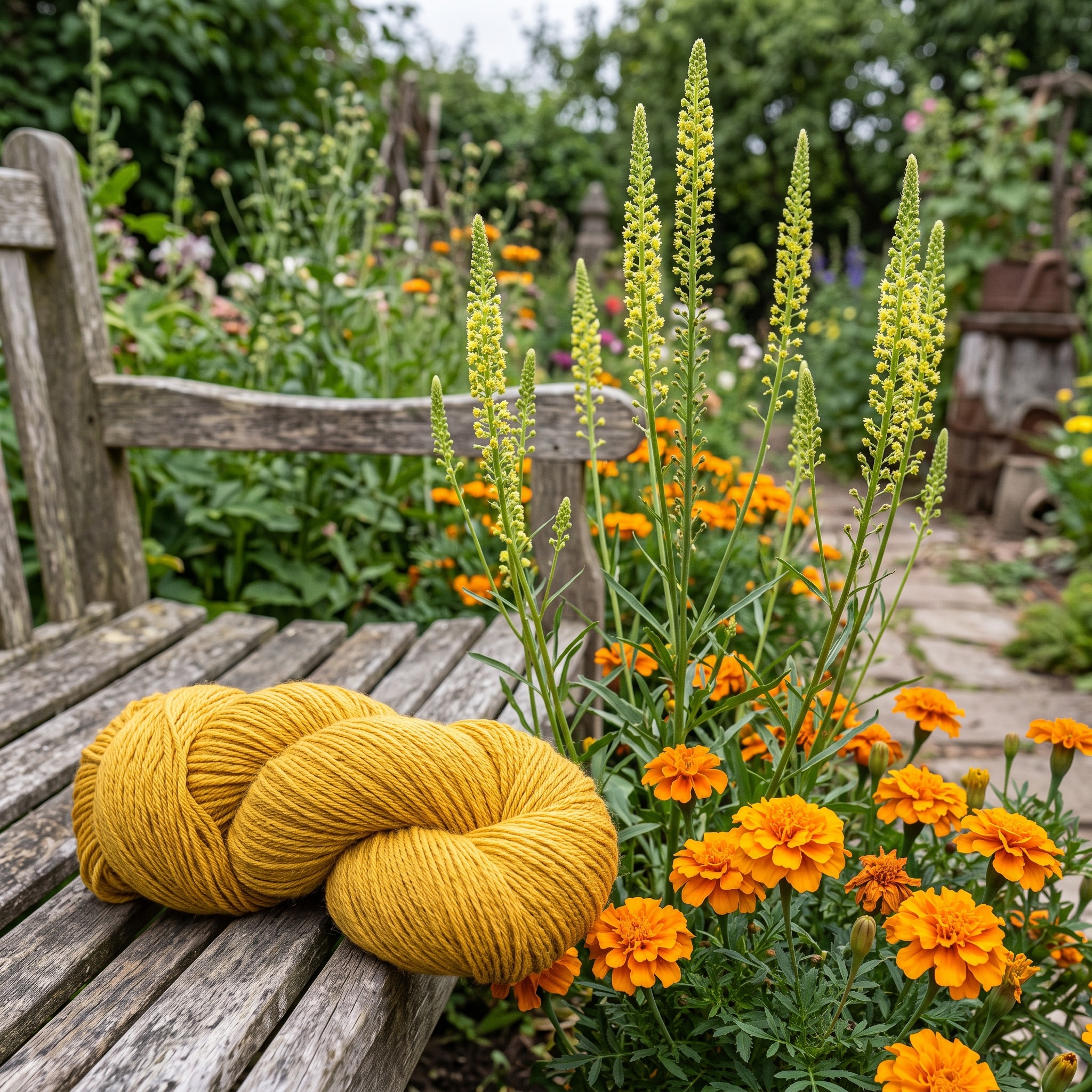
Weld, marigold & onion skins
Weld (Reseda luteola) is the most lightfast plant yellow known - used with indigo it makes the classic 'Lincoln green'. Easier still: marigold heads and plain onion skins from the kitchen give generous golds with no growing required at all.
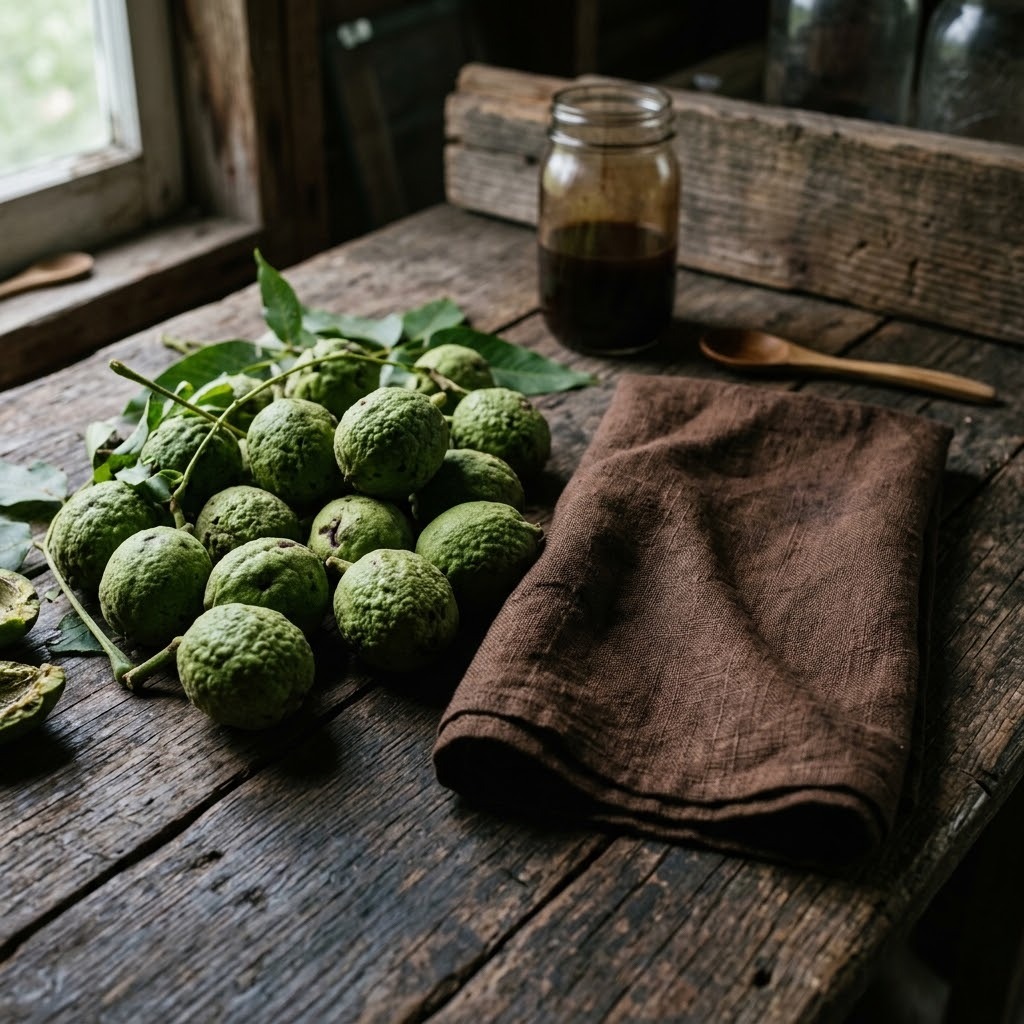
Black walnut & oak galls
Green walnut hulls dye deep, permanent browns with no mordant needed - they will dye your hands just as permanently, so wear gloves. Oak galls plus iron made the iron-gall ink that wrote most of Europe's manuscripts for a thousand years.
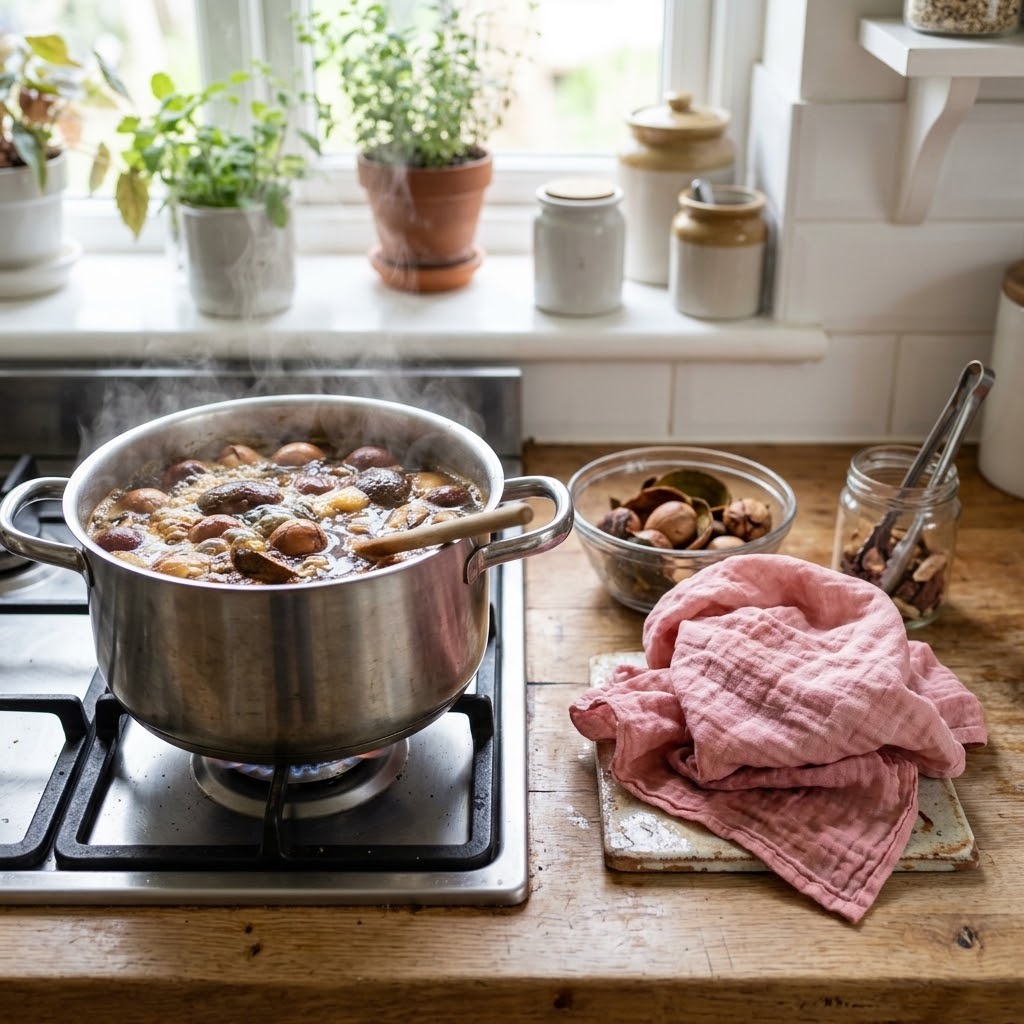
Avocado stones & skins
The modern classic: simmered avocado stones and skins release a tannin dye that turns wool and cotton a soft blush pink. Entirely kitchen-waste based - the gateway dye that gets most people hooked.
🏗️ Plants people build with
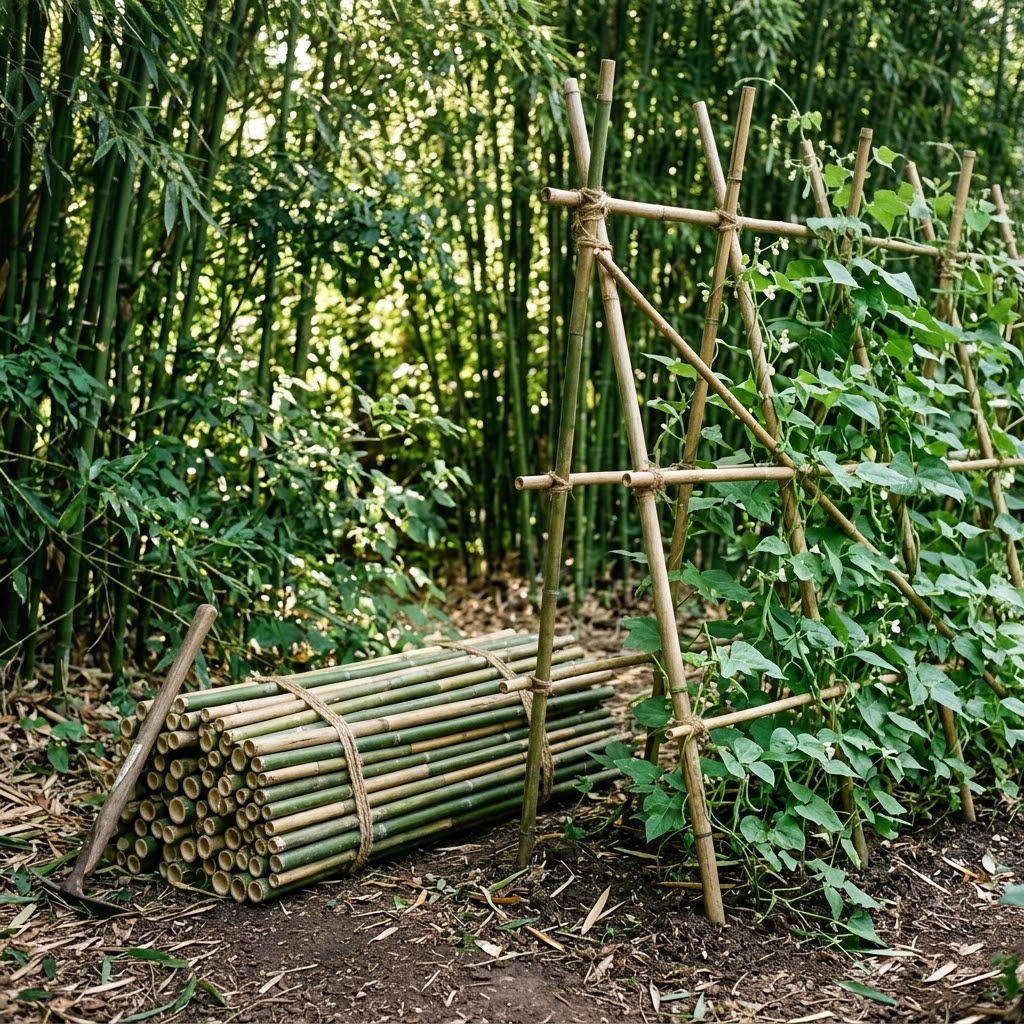
Bamboo
The fastest structural material on earth - scaffolding, flooring, furniture, garden canes and entire houses across Asia. Hardy running types can be grown in temperate gardens (with a root barrier, unless you want a grove), and home-grown canes stake next year's tomatoes.
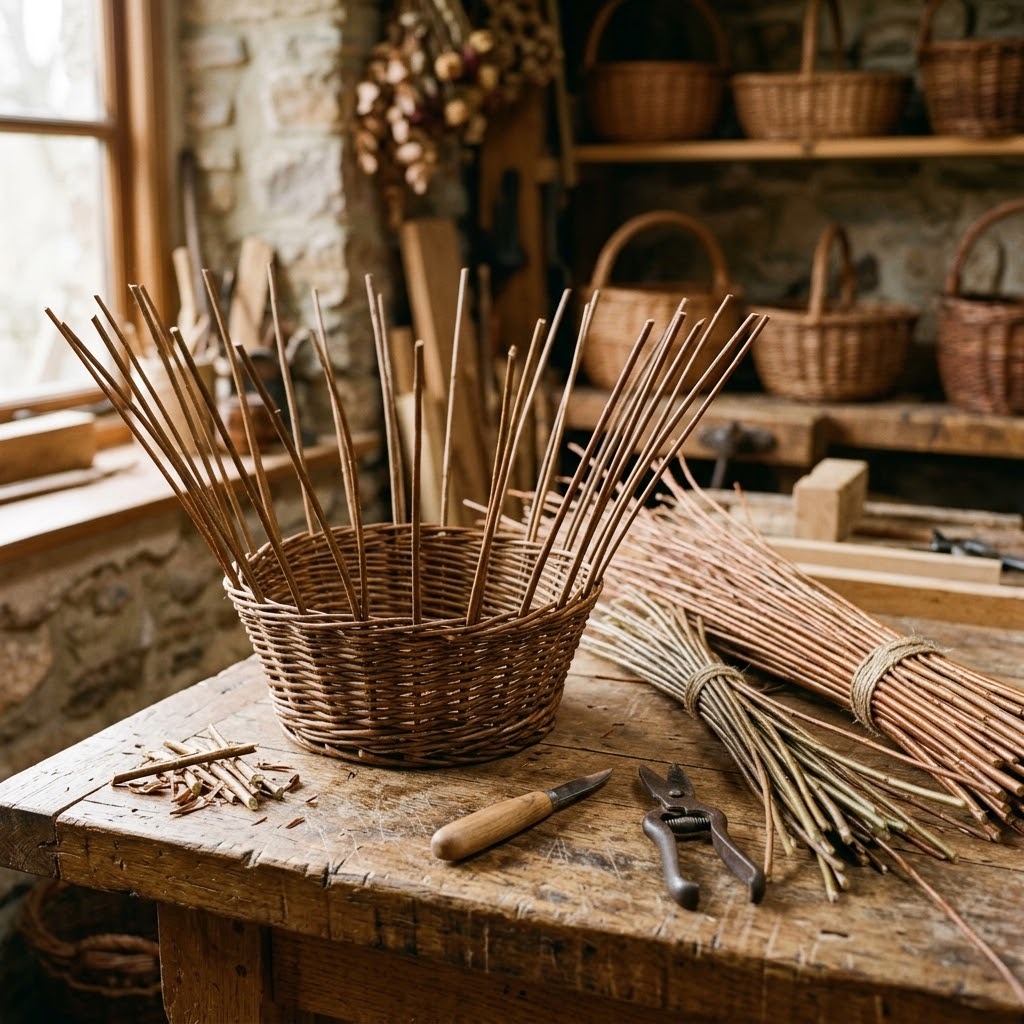
Willow
The basket plant. One-year willow rods (withies) weave into baskets, garden edging, plant supports and living structures - a willow dome grows into a leafy playhouse in two seasons. Cut rods regrow from the same stool for decades: coppicing is the original renewable harvest.
Plants for basket weaving →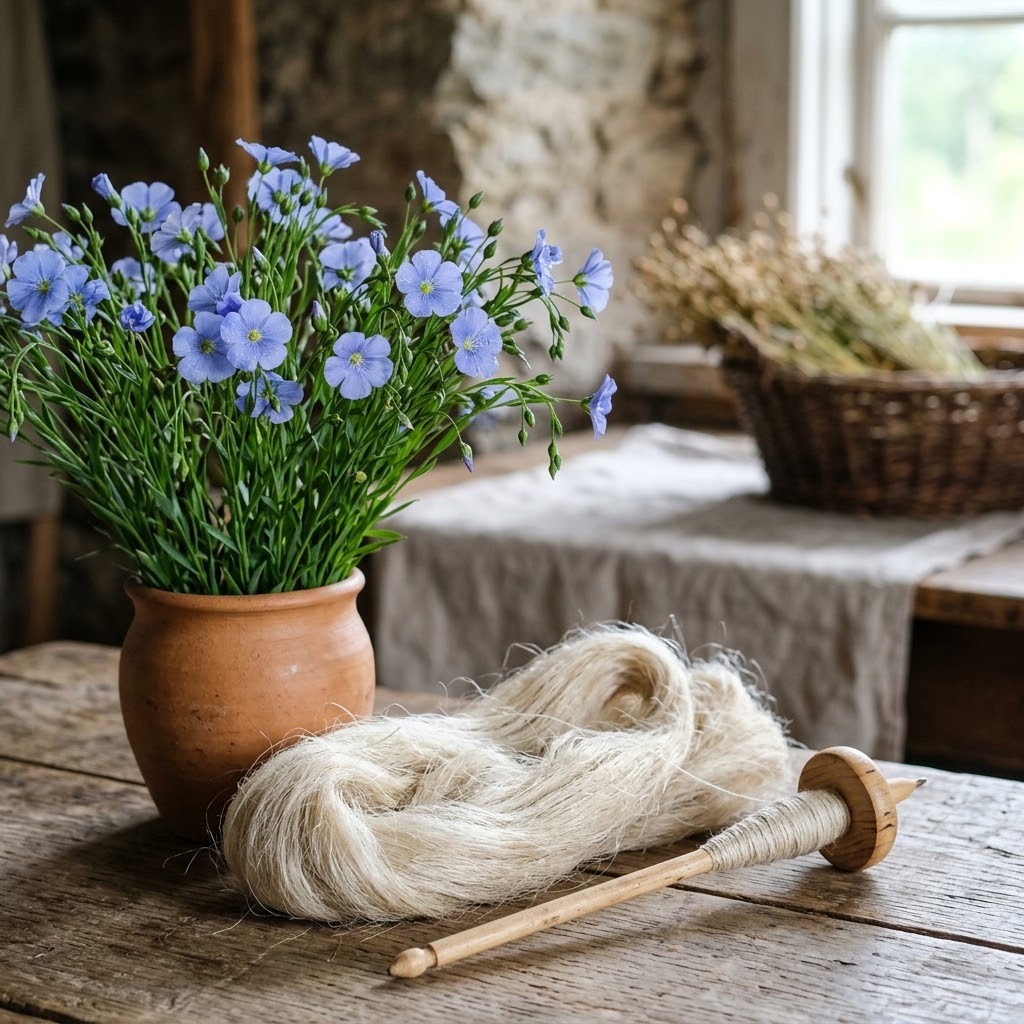
Flax & hemp
Fibre crops that clothed the world before cotton. Flax stems ret, break and comb into linen fibre; hemp does the same at field scale for rope and canvas. Growing a small patch of flax and processing a handful of fibre is a favourite living-history project - and the blue flowers are lovely.
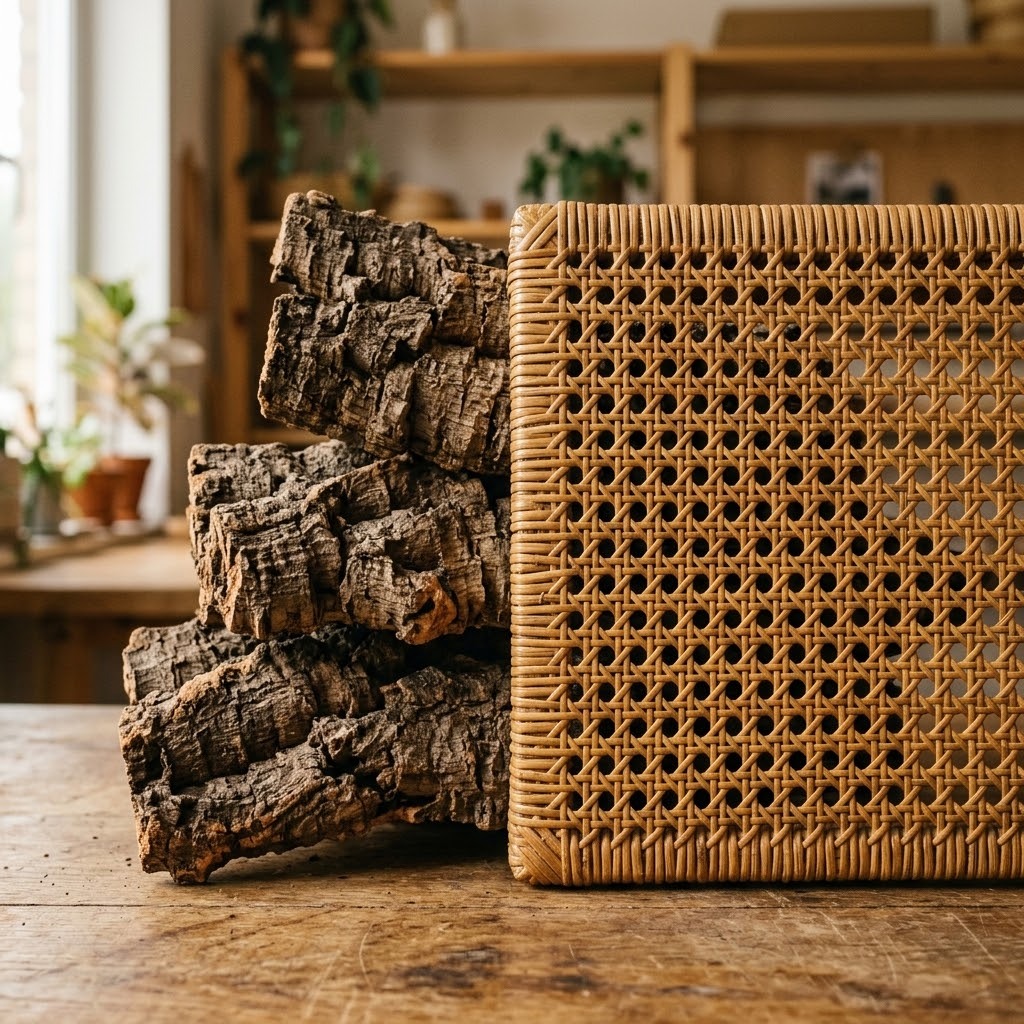
Cork oak & rattan
Two materials people rarely realise are plants: cork is the harvested bark of Quercus suber (stripped every nine years without felling the tree), and rattan furniture is a climbing palm. Neither is a garden crop in most climates, but both belong in any story of what plants build.
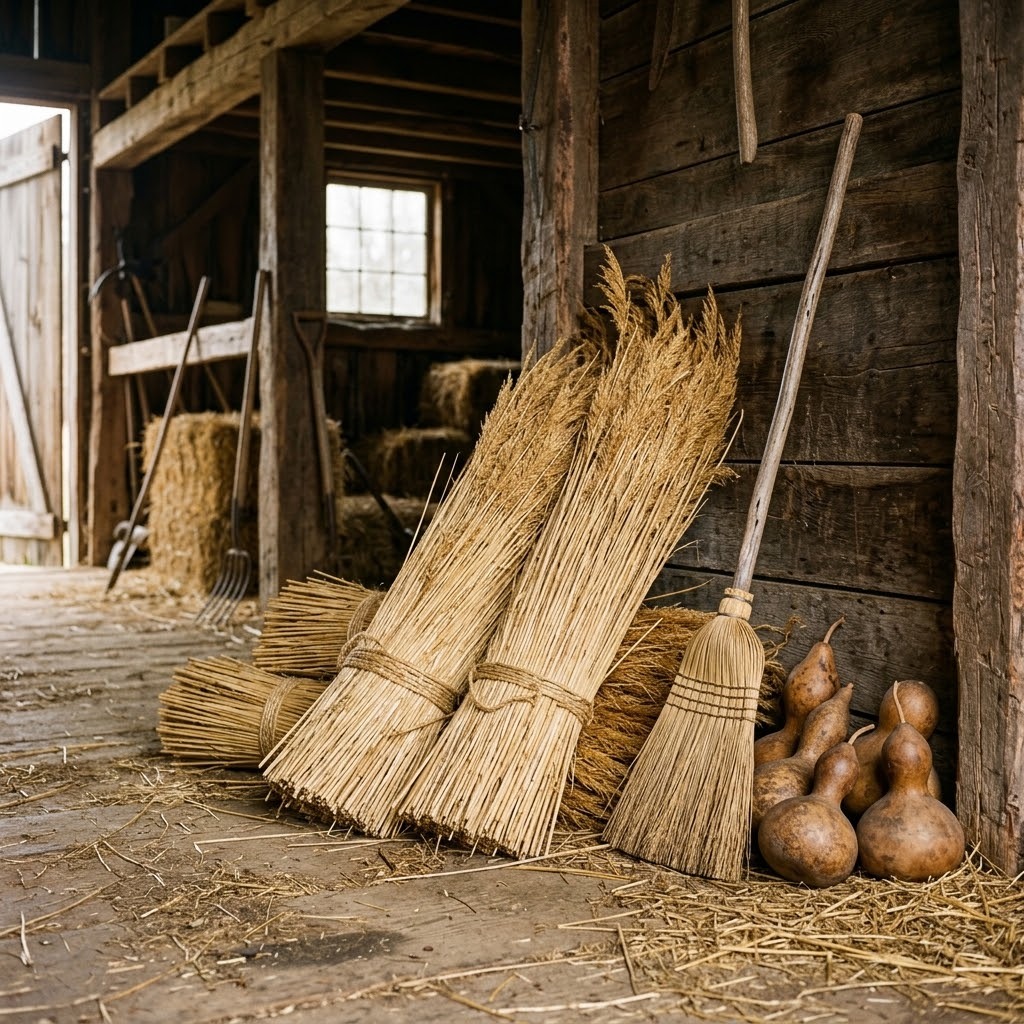
Reed, straw & broom corn
Water reed and wheat straw still roof houses after centuries of practice; straw bales build warm modern walls; and broom corn (a sorghum) is - as the name says - what real brooms are made of. Gourds round out the list: dried, they become bowls, birdhouses and instruments.
Growing & crafting gourds →