Spoonleaf Sundew
The spoonleaf sundew forms coin-sized rosettes of spoon-shaped tentacled leaves that colonize pots, bloom pink, and ask for nothing but light and pure water.
Last reviewed: October 2026
 AI illustration
 Overview
The spoonleaf sundew forms coin-sized rosettes of spoon-shaped tentacled leaves that colonize pots, bloom pink, and ask for nothing but light and pure water. Where the Cape sundew is the easy BIG one, spatulata is the easy SMALL one: terrarium carpet material. (Drosera spatulata.)
Origin & Natural Habitat
Astonishingly widespread - Japan to Australia to New Zealand bogs; the generalist gene of the sundew clan.
Appearance
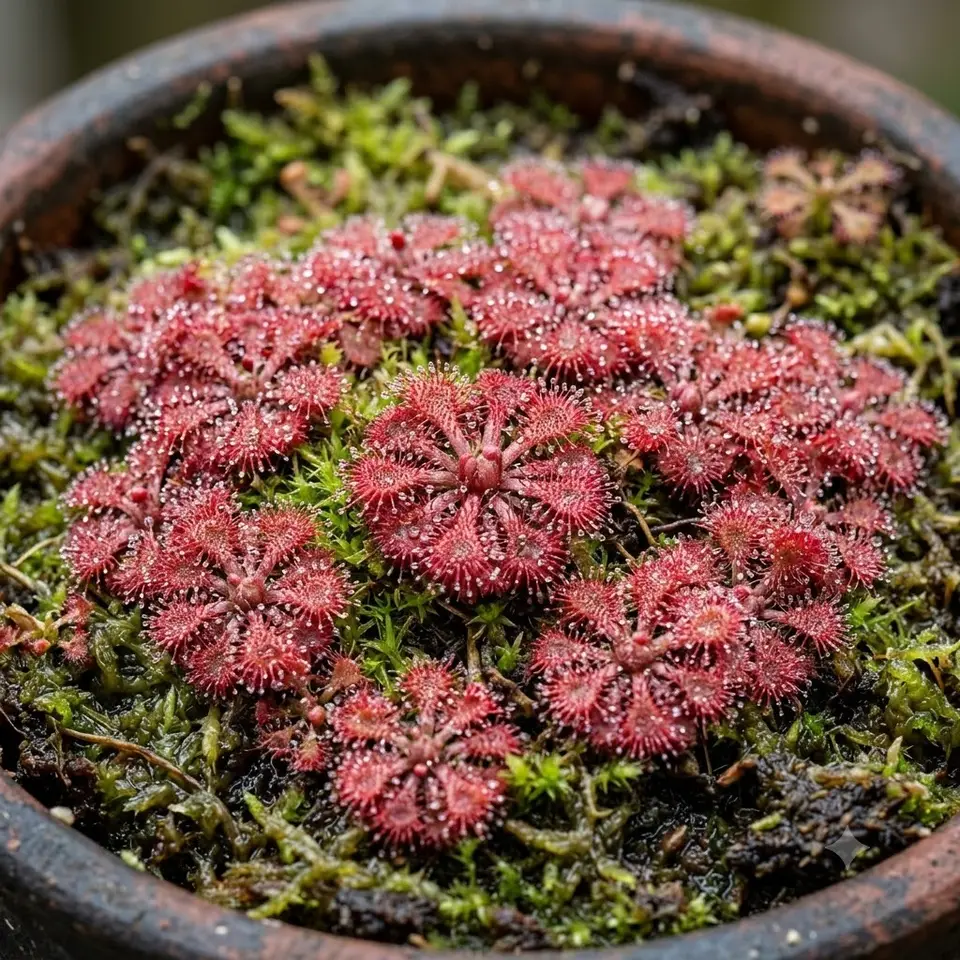
Flat rosettes 2-4 cm - spoon leaves rimmed with red glue tentacles, blushing fully crimson in sun; pink flower wands; self-sown colonies carpet trays.
Why People Grow It - Qualities & Benefits
- Fits ANY windowsill in multiples
- Full-crimson sun coloring
- No dormancy, no seasons, no fuss
- Self-seeding perpetual colony
Care
Light: Bright to sunny; redder = righter.
Water: Rain, distilled or RO water ONLY - tap-water minerals poison carnivorous roots within months. The tray method (pot standing in 1-2 cm of pure water) is standard.
Soil: Nutrient-FREE mix: sphagnum peat + perlite/silica sand (roughly 1:1). Never potting soil, never fertilized media - fertility burns their roots.
Temperature & Dormancy: 15-28°C rooms year-round - the tropical/subtropical forms sold never sleep.
Feeding: Micro-gnats self-serve; a dusting of crushed bloodworm quarterly if sterile-housebound.
Propagation
Self-seeds abundantly; leaf cuttings on water work as with capensis. Colonies happen TO you.
Common Problems & Pests
- Tap water, as ever, the only real assassin
- Shading by taller neighbors (it's tiny: front row seats)
- Effectively nothing else
Toxicity & Safety
Non-toxic to cats, dogs and people - carnivorous plants digest insects, not pets; the only real risk runs the other way (cats batting the traps).
Pros & Cons
Pros
- Cheapest, smallest, easiest entry
- Gem-red in sun
- Multiplies itself
Cons
- Small catch capacity (gnat-scale only)
- Easily overlooked visually
- Crowds its own pot in time
Best Suited For
- Terrarium and bog-bowl carpets
- Kids' first carnivore (with capensis)
- Desktop grow lights
- Colony aesthetics
FAQ
Spatulata or capensis first?
Both, honestly - a shared tray costs nothing: capensis for visible leaf-curling drama, spatulata for the glowing red carpet beneath. They thrive identically.
Why is mine green, not red?
Light dose - full sun or strong LEDs paint the crimson; bright-shade plants stay green and still healthy, just unlit.
Gear for growing spoonleaf sundew
Links go to Amazon or a partner store (such as Adagio Teas) and may earn us a commission at no extra cost to you. As an Amazon Associate we earn from qualifying purchases. We link gear types, not sponsors' picks: you choose the exact product.