Switchgrass
Switchgrass is an upright North American native whose airy seed clouds float above steel-blue or wine-red foliage, feeding songbirds, shrugging off drought, flood, salt and neglect.
Last reviewed: October 2026
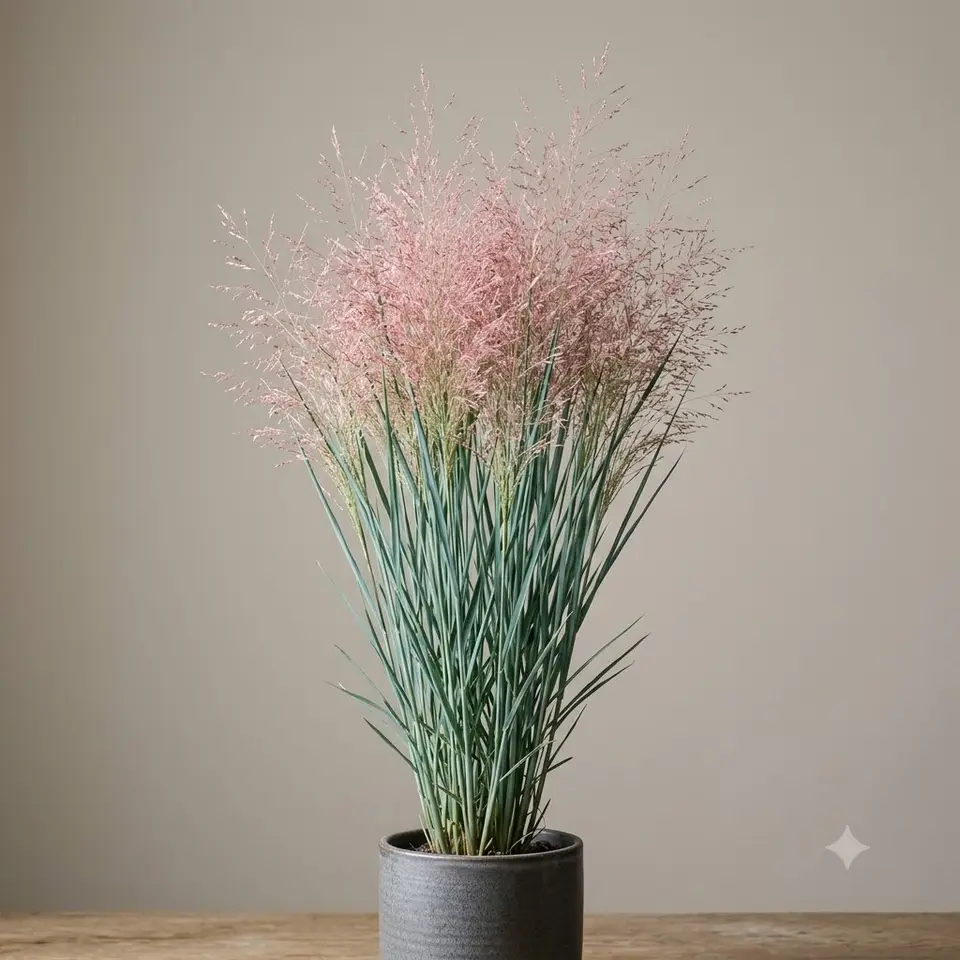 AI illustration
 Overview
Switchgrass is an upright North American native whose airy seed clouds float above steel-blue or wine-red foliage, feeding songbirds, shrugging off drought, flood, salt and neglect. It is the ecological workhorse among the big ornamental grasses. (Panicum virgatum.)
Origin & Natural Habitat
The North American tallgrass prairie, from Canada to Mexico - one of its four dominant grasses. Hardy zones 4-9 and adapted to nearly everything in between.
Appearance
Stiffly upright clumps 90-180 cm by cultivar; foliage blue ('Heavy Metal', 'Northwind'), green, or red-tipped ('Shenandoah'); August seed panicles open into a pink-tinged haze that ages to buff.
Why People Grow It - Qualities & Benefits
- Native ecology: songbird seed, larval host, habitat
- The airiest 'cloud' bloom of the uprights
- Outstanding cultivar color range: steel blue to burgundy
- Grows in drought, flood, salt, sand and clay alike
Care
Light: Full sun; shade means flop, simple as that.
Water: Anything - it's famously indifferent: established plants ride out drought AND periodic standing water.
Soil: Sand to clay to roadside salt splash; rich soil actually reduces stiffness.
Temperature & Hardiness: Zones 4-9; warm-season, late spring start.
Feeding: None - prairie plants resent luxury.
Maintenance: Late-winter cut to 10 cm. Leave standing through winter: the seeds feed juncos and finches, and frosted switchgrass is half the reason to grow it.
Planting & Propagation
Division in spring; species from seed (cultivars only by division to keep color). Deep prairie roots - divide young or bring the pickaxe.
Common Problems & Pests
- Flopping in shade or rich soil - 'Northwind' resists best
- Rust in stagnant humid spots
- Late emergence mistaken for death (annually, by everyone)
Toxicity & Safety
Non-toxic to dogs and cats; wildlife-positive from seed to shelter.
Pros & Cons
Pros
- Native, ecological, bird-feeding
- Ironclad site tolerance
- Beautiful haze bloom + fall color
- Strict verticals available
Cons
- Late spring start
- Can seed around modestly in bare soil
- Needs full sun to stand tall
Best Suited For
- Prairie, meadow and native plantings
- Rain gardens and swales
- Roadside and coastal exposure
- Winter wildlife gardens
FAQ
Which cultivar stays most upright?
'Northwind' - practically pillar-shaped and the standard where flop is unacceptable; 'Heavy Metal' close behind in steel blue.
Is it aggressive?
Clump-forming, not running. Light self-seeding in open mulch-free ground; deadhead or plant densely if that bothers you (birds vote you leave the seed).
Can it handle my wet clay corner?
Yes - flood-and-drought tolerance in one plant is switchgrass's party trick; it anchors rain gardens across its whole range.
Gear for growing switchgrass
Links go to Amazon or a partner store (such as Adagio Teas) and may earn us a commission at no extra cost to you. As an Amazon Associate we earn from qualifying purchases. We link gear types, not sponsors' picks: you choose the exact product.