Japanese Sedge
Japanese Sedge gives a grass-like look to places grasses refuse: dry shade under trees, north-facing pots, dark entryways.
Last reviewed: October 2026
 AI illustration
 Overview
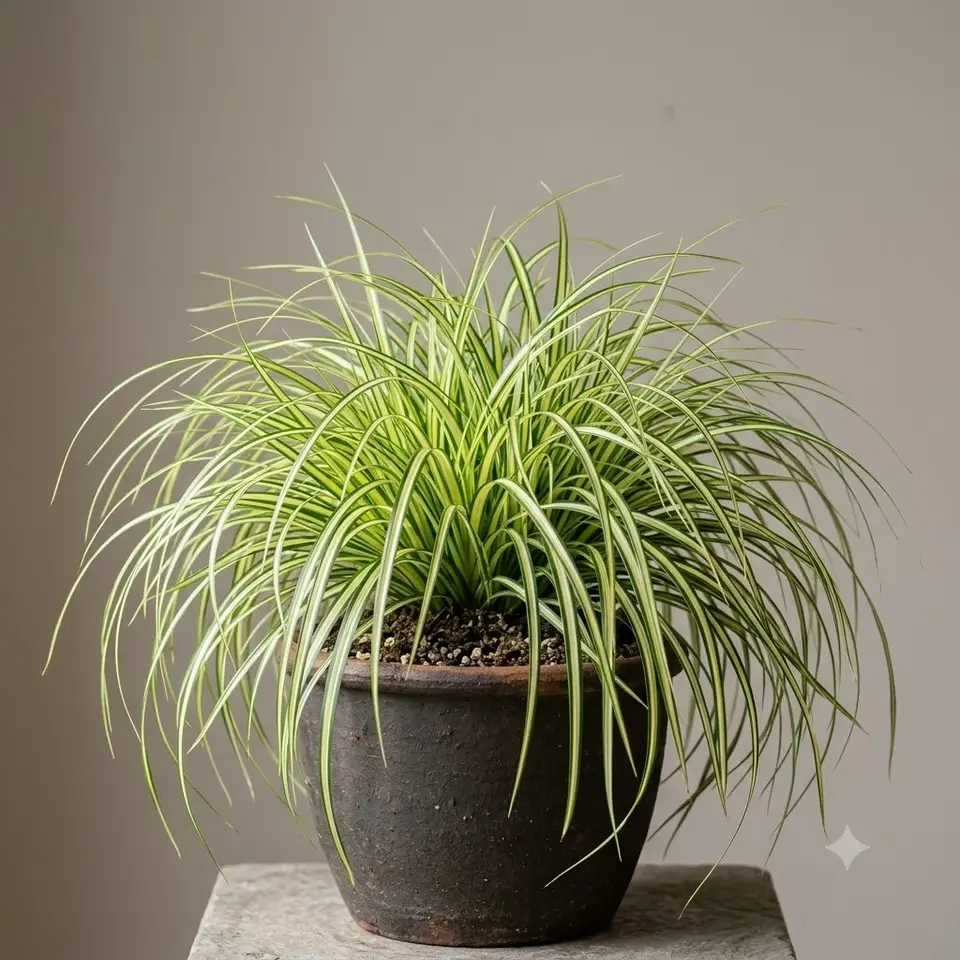
Japanese Sedge gives a grass-like look to places grasses refuse: dry shade under trees, north-facing pots, dark entryways. Botanically a sedge, it delivers neat evergreen striped cascades - 'Evergold' cream, 'Everest' white-edged - year-round, in conditions that would starve a fescue in a season. (Carex oshimensis.)
Origin & Natural Habitat
Rocky woods and slopes of Honshu, Japan; the 'Ever-' cultivar series conquered garden centers worldwide. Hardy zones 5-9.
Appearance
An arching evergreen tuft 25-40 cm tall; slender leathery blades striped cream, gold or white by cultivar, cascading in a neat mophead. Insignificant brown flower spikes in spring.
Why People Grow It - Qualities & Benefits
- True evergreen color 365 days a year
- Handles dry shade: the hardest garden condition
- Perfect scale and manners for containers
- Striped brightness for dark corners
Care
Light: Bright shade to morning sun; deep shade dims variegation slightly, hot afternoon sun bleaches.
Water: Average; established plants tolerate dry shade admirably (water the first summer well).
Soil: Any decent drained soil; unfussy about pH.
Temperature & Hardiness: Zones 5-9; evergreen through most winters, scruffy after harsh ones.
Feeding: A little spring balanced feed keeps stripes bright, especially in pots.
Maintenance: No cutting back - trim individual tired blades and tidy in spring. Divide only to multiply. As close to zero-maintenance as variegated plants get.
Planting & Propagation
Division in spring - small tufts re-establish quickly. Cultivars must be divided (they don't come true from seed).
Common Problems & Pests
- Winter tip-burn after hard freezes: trim in spring
- Aphids occasionally in soft spring growth
- That's genuinely the list
Toxicity & Safety
Non-toxic to dogs and cats - a safe evergreen for pet households and doorstep pots.
Pros & Cons
Pros
- Evergreen, striped, tidy
- Dry-shade capable
- Ideal container size
- Nearly maintenance-free
Cons
- No flower interest
- Slow to bulk into drifts
- Variegation dims in deep shade
Best Suited For
- Under trees where lawns die
- Year-round containers and window boxes
- Path edging in shade
- Mixed winter pots with heucheras and ferns
FAQ
Is it really evergreen?
Through zone 6 winters, convincingly - expect some tip-burn after severe cold, trimmed away in one spring session. In pots, shelter from the worst wind.
Grass or sedge - does it matter?
Practically: sedges tolerate shade and moisture better than true grasses, which is exactly why this 'grass look' works where grasses fail.
How do I refresh a tired old clump?
Lift and divide in spring, replant the best outer sections with fresh compost - back to showroom condition in weeks.
Gear for growing japanese sedge
Links go to Amazon or a partner store (such as Adagio Teas) and may earn us a commission at no extra cost to you. As an Amazon Associate we earn from qualifying purchases. We link gear types, not sponsors' picks: you choose the exact product.