Tufted Hair Grass
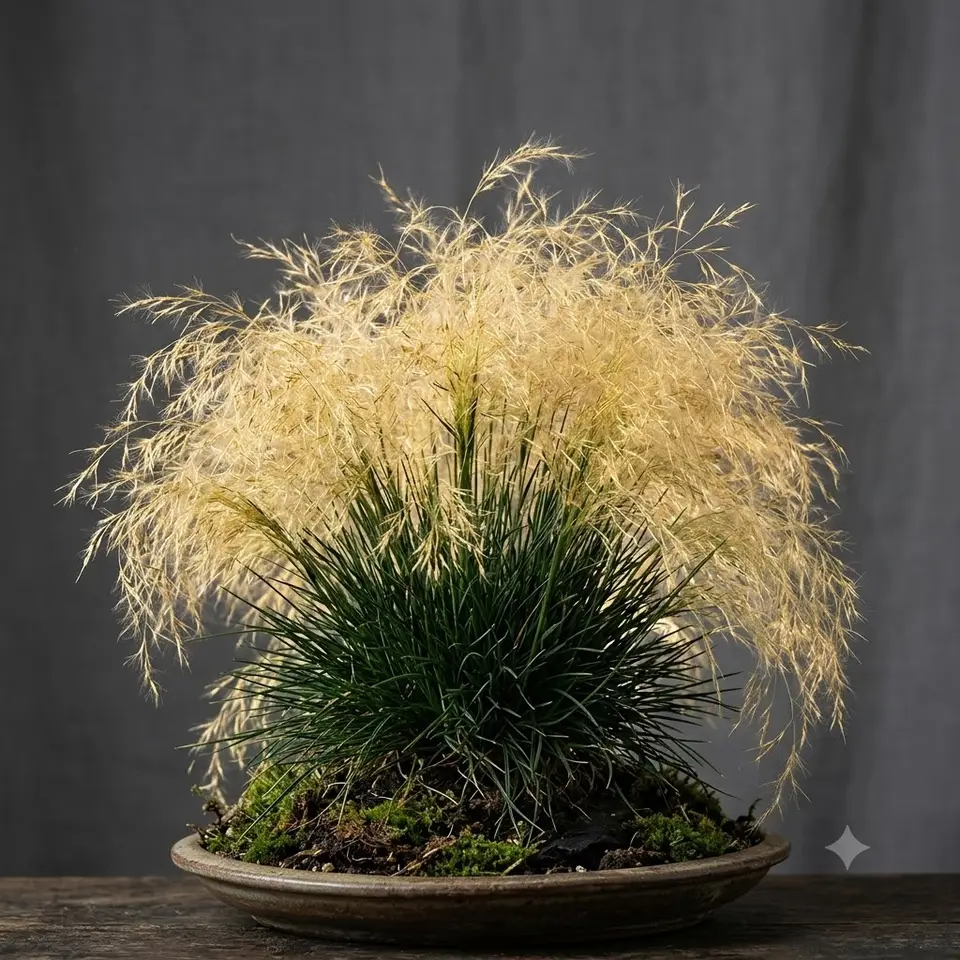
Tufted Hair Grass throws the garden's finest veil - a dark evergreen tussock that erupts in early summer into a meter-wide shimmer of gold-green flowers so airy they read as light rather than substance.
Last reviewed: October 2026
 AI illustration
 Overview
Tufted Hair Grass throws the garden's finest veil - a dark evergreen tussock that erupts in early summer into a meter-wide shimmer of gold-green flowers so airy they read as light rather than substance. It is also that rarity: a flowering grass genuinely content in part shade and damp soil. (Deschampsia cespitosa.)
Origin & Natural Habitat
Moist meadows, ditches and open woods across the temperate Northern Hemisphere - including most of North America and Europe. Hardy zones 4-8.
Appearance
A dense dark-green tussock 30-50 cm; June-July panicles rise to 90-120 cm in a gauzy cloud of tiny gold, bronze or silver flowers ('Goldtau', 'Bronzeschleier') that glitter after rain.
Why People Grow It - Qualities & Benefits
- Airiest early-summer flower veil of any hardy grass
- Takes part shade AND damp soil: rare combo
- Semi-evergreen dark base all winter
- Native across much of its selling range
Care
Light: Part shade to full sun in cool climates; in hot regions give afternoon shade.
Water: Likes moisture - one of the few ornamental grasses for damp corners, pond edges and heavy soil.
Soil: Moist, humus-rich to heavy; drought is its least favorite thing.
Temperature & Hardiness: Zones 4-8; a cool-season bloomer that flowers before the summer heat.
Feeding: Light spring compost at most.
Maintenance: Comb the tussock and cut old flower stems in late winter - no hard annual chop needed. Self-sows lightly in bare damp soil; cultivars come partly true.
Planting & Propagation
Division in spring or fall; species easy from seed. Clumps are long-lived and rarely demand renewal.
Common Problems & Pests
- Sulks and browns in hot-dry sites
- Modest self-seeding in open ground
- Rust rarely, in stagnant humidity
Toxicity & Safety
Non-toxic to pets and people; caterpillar host for several butterflies in its native range.
Pros & Cons
Pros
- Luminous flower veil
- Shade + damp tolerance
- Evergreen base tussock
- Ecologically valuable native
Cons
- Not for dry gravel gardens
- Flowers once, early
- Can seed about in wet mulch
Best Suited For
- Damp part-shade borders
- Pond and stream margins
- Woodland-edge naturalism
- Backlit positions: it's made of light
FAQ
Will it really flower in shade?
In half-day sun or bright dapple, yes - the veil thins only in genuinely deep shade. It's the go-to flowering grass where miscanthus would sulk.
Is it evergreen?
Semi: the dark tussock persists through mild winters; only the flower stems brown and need removing. In zone 4 it retreats further.
My soil is heavy and wet in spring - problem?
The opposite: deschampsia is one of the few ornamental grasses that genuinely enjoys it.
Gear for growing tufted hair grass
Links go to Amazon or a partner store (such as Adagio Teas) and may earn us a commission at no extra cost to you. As an Amazon Associate we earn from qualifying purchases. We link gear types, not sponsors' picks: you choose the exact product.