Liriope (Lilyturf)
Liriope is a grass-like edging plant for shade: evergreen strappy tufts that flower like tiny purple grape-hyacinths in August, shrug off drought, root competition and neglect, and outline a path for twenty years without complaint.
Last reviewed: October 2026
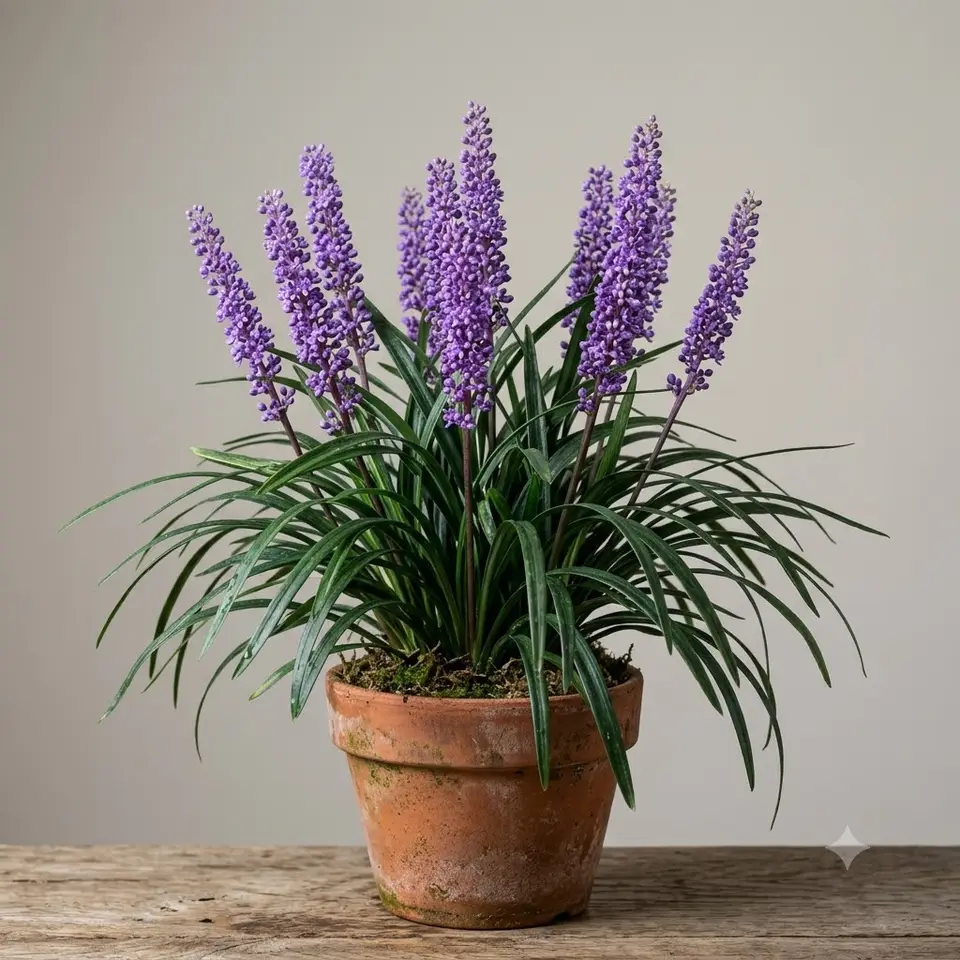 AI illustration
 Overview
Liriope is a grass-like edging plant for shade: evergreen strappy tufts that flower like tiny purple grape-hyacinths in August, shrug off drought, root competition and neglect, and outline a path for twenty years without complaint. Another lily relative doing a grass's job, and doing it tirelessly. (Liriope muscari.)
Origin & Natural Habitat
Woodlands of China, Japan and Taiwan. Hardy zones 5-10. IMPORTANT distinction: clumping Liriope muscari is the garden plant; running Liriope spicata is a spreader to deploy only where a colony is truly wanted.
Appearance
Dense evergreen tufts 25-40 cm of broad dark straps ('Variegata' cream-striped); upright spikes of violet beads in late summer, then black berries.
Why People Grow It - Qualities & Benefits
- Evergreen edging that actually flowers
- Thrives in dry shade and root-filled ground under trees
- August color when borders lull
- Nearly indestructible once established
Care
Light: Part shade ideal; takes full shade (fewer flowers) and, in cooler climates, full sun.
Water: Average to low; famously tolerant of dry root-woven soil under mature trees.
Soil: Any drained soil.
Temperature & Hardiness: Zones 5-10; evergreen except after harshest winters.
Feeding: Rarely needed.
Maintenance: One job a year: shear or mow the old foliage in late winter BEFORE new growth so the spring flush comes clean. Confirm you're buying clumping muscari, not running spicata, unless a spreading mat is the plan.
Planting & Propagation
Division in early spring, ad infinitum - every fistful grows. This is how the whole neighborhood ends up edged in it.
Common Problems & Pests
- Crown/root rot in waterlogged clay
- Anthracnose leaf spotting - the late-winter shear is the cure
- Slugs in soft spring growth
- Scale insects in the humid South
Toxicity & Safety
The ASPCA lists lilyturf (Liriope muscari) as non-toxic to dogs, cats and horses. The berries are not food: NC State Extension rates them low severity for people, with no known cases.
Pros & Cons
Pros
- Evergreen + flowers + berries
- Dry-shade and tree-root proof
- Divides into infinite free plants
- 20-year edging on autopilot
Cons
- Can look municipal if overused
- Running species invades if mischosen
- Needs the annual shear for freshness
Best Suited For
- Edging shaded paths and drives
- Underplanting trees and shrubs
- Erosion-holding shaded banks
- Low-water commercial-tough plantings
FAQ
Liriope or mondo grass?
Liriope is bigger, faster and flowers showily; mondo is finer, darker (the black form) and slower. Edging visibility → liriope; refined texture → mondo.
Why mow it in late winter?
Old blades carry leaf-spot and look ratty against the new flush - one high-blade mow or shear in February resets it to mint condition.
Is the spreading kind bad?
Liriope spicata runs hard and is genuinely difficult to remove - superb for a bank that needs colonizing, a mistake next to a lawn. Read the label twice.
Sources
Pet toxicity: checked against the ASPCA Animal Poison Control Center lists of toxic and non-toxic plants for cats and dogs, entry "Turf Lily" (Liriope muscari): non-toxic to cats and dogs. Lists read on 10 October 2026.
Gear for growing liriope (lilyturf)
Links go to Amazon or a partner store (such as Adagio Teas) and may earn us a commission at no extra cost to you. As an Amazon Associate we earn from qualifying purchases. We link gear types, not sponsors' picks: you choose the exact product.