Black Mondo Grass
Black Mondo Grass forms near-black, strappy evergreen tufts that make neighboring plants look brighter.
Last reviewed: October 2026
 AI illustration
 Overview
Black Mondo Grass forms near-black, strappy evergreen tufts that make neighboring plants look brighter. Technically a lily relative, it plays the role of a black grass better than any true grass ever could. (Ophiopogon planiscapus 'Nigrescens'.)
Origin & Natural Habitat
A dark selection of a Japanese woodland ophiopogon; slow, evergreen, zones 6-10.
Appearance
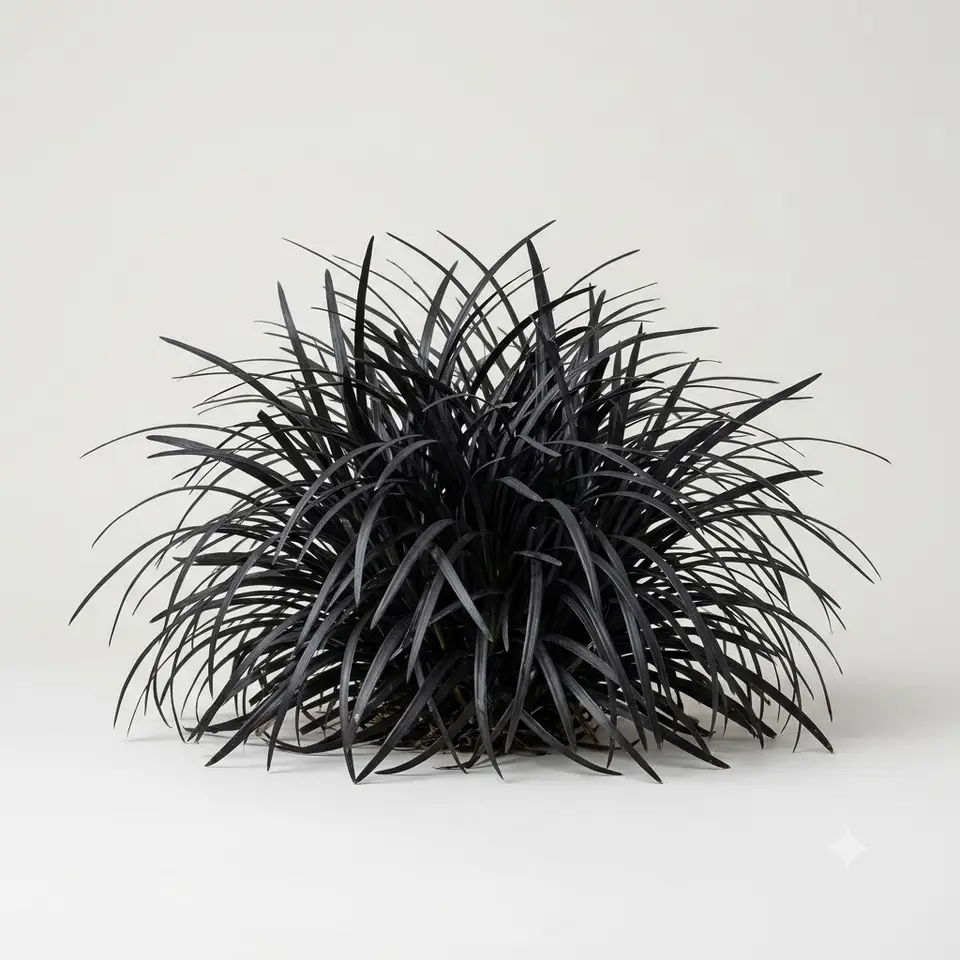
Arching jet-purple-black blades in low tufts 15-25 cm; small lilac summer bells, then glossy black berries; spreads slowly by short stolons into a low colony.
Why People Grow It - Qualities & Benefits
- The blackest foliage available, full stop
- Evergreen and unbothered by winter
- Makes chartreuse, silver and pink neighbors electric
- Compact, polite, container-perfect
Care
Light: Sun deepens the black (with adequate moisture); bright shade is fine and safer in hot regions.
Water: Average, appreciates consistent moisture; established plants tolerate short dry spells.
Soil: Humusy, slightly acid, well-drained.
Temperature & Hardiness: Zones 6-10; evergreen throughout.
Feeding: Light spring feed; it's slow with or without.
Maintenance: No cutting back ever - just remove tired blades. Slow to spread: plant in threes and fives at 20 cm for coverage this decade. Legendary pairing: against golden hakone grass or lime heuchera.
Planting & Propagation
Division of the stoloniferous mats in spring - each rooted tuft transplants easily. Berries sprout but seedlings vary toward green.
Common Problems & Pests
- Slowness (the only universal complaint)
- Slugs graze fresh spring blades occasionally
- Root rot in waterlogged soil
Toxicity & Safety
The berries are considered mildly toxic if eaten in quantity - keep an eye on toddlers and berry-curious dogs; foliage is not an attractant. Not in the same league as lilies, but site thoughtfully in pet gardens.
Pros & Cons
Pros
- Unique true-black color
- Evergreen structure at ground level
- Zero-maintenance once placed
- Striking in pots and gravel
Cons
- Slow to spread
- Berries mildly toxic
- Pricey per square meter of coverage
Best Suited For
- High-contrast modern plantings
- Gravel gardens and pot dressing
- Edging in black-and-gold schemes
- Small spaces where every plant must earn
FAQ
Is it really black?
As close as plants get - deep purple-black that reads jet against gravel or gold foliage; full-ish sun with moisture keeps it darkest.
Is it safe with pets?
Foliage isn't an attractant and serious cases are rare, but the black berries are mildly toxic eaten in quantity - trim berry stems in autumn if you have a berry-hoovering dog.
Why is it taking forever to spread?
Nature of the beast - a few centimeters a year. Buy density up front; this is a 'plant enough' species, not a 'wait for it' one.
Gear for growing black mondo grass
Links go to Amazon or a partner store (such as Adagio Teas) and may earn us a commission at no extra cost to you. As an Amazon Associate we earn from qualifying purchases. We link gear types, not sponsors' picks: you choose the exact product.