Prairie Dropseed
Prairie Dropseed is a groundcover grass that forms a fountain of emerald hair-fine leaves, with scented seed heads (often compared to buttered popcorn) and a very long lifespan.
Last reviewed: October 2026
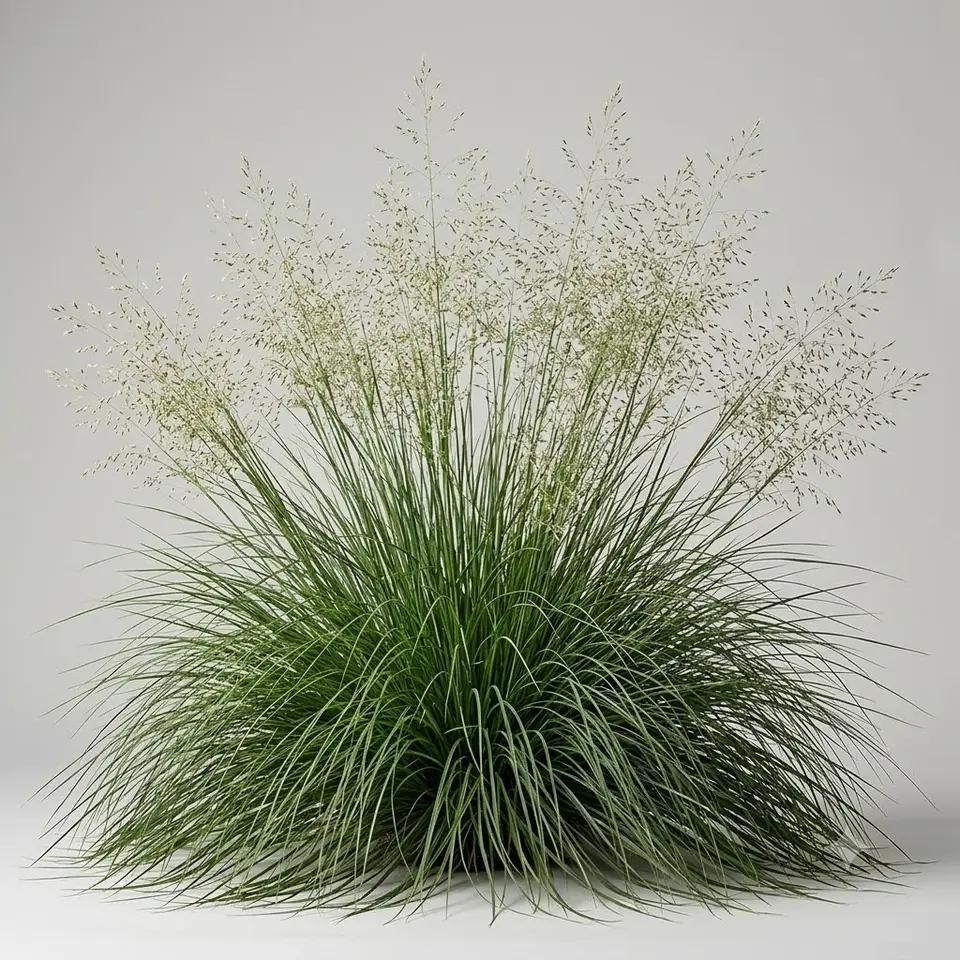 AI illustration
 Overview
Prairie Dropseed is a groundcover grass that forms a fountain of emerald hair-fine leaves, with scented seed heads (often compared to buttered popcorn) and a very long lifespan. It is the polished, non-invasive answer wherever fine texture is wanted without Mexican feather grass's rap sheet. (Sporobolus heterolepis.)
Origin & Natural Habitat
Dry prairies of central North America; the finest-textured of the major prairie grasses and one of the longest-lived. Hardy zones 3-9.
Appearance
A perfectly rounded emerald fountain 30-60 cm tall/wide; August seed panicles float 30 cm above, releasing the famous coriander-popcorn fragrance; autumn turns the whole dome pumpkin-gold.
Why People Grow It - Qualities & Benefits
- Elegant fine texture with zero invasive record
- The scented grass - unique in the catalog
- Decades-long lifespan, zone-3 hardy
- Refined enough for formal edging, wild enough for meadows
Care
Light: Full sun.
Water: Low once established - true prairie drought armor.
Soil: Any well-drained soil, poor and rocky included; tolerates clay better than reputation says.
Temperature & Hardiness: Zones 3-9; warm-season.
Feeding: None.
Maintenance: Cut to 8-10 cm in early spring. The only real cost is patience: dropseed builds slowly for 2-3 years (buy the biggest pots you can) and then outlives its planter.
Planting & Propagation
Division possible but slow and rarely needed; seed germinates readily though plants take years to bulk. Nursery plants are the practical route.
Common Problems & Pests
- Slow establishment - the universal note
- Practically nothing else: no serious pests, diseases, or manners issues
Toxicity & Safety
Non-toxic; seeds feed sparrows and juncos through fall.
Pros & Cons
Pros
- Fine texture, fully domesticated
- Popcorn-scented August bloom
- Generational lifespan
- Native with bird value
Cons
- Slow to size up
- Pricier per pot (nurseries grow it 2 years)
- Needs sun
Best Suited For
- Formal edging in repeated domes
- Prairie and native gardens
- Replacing feather grass in invasive-risk regions
- Underplanting for roses and shrubs
FAQ
Does it really smell like popcorn?
The August seed heads carry a warm coriander-popcorn scent noticeable meters away - plant it along a path where late-summer walks collect the reward.
Why is it more expensive than other grasses?
Slow youth: nurseries carry it twice as long before sale. Amortized over a 50-year lifespan it's the cheapest plant in the yard.
Feather grass or dropseed?
Same fine-textured fountain idea - dropseed is native, non-invasive, longer-lived and scented; feather grass is faster and cheaper but a listed escape risk in mild regions. Dropseed wins on character.
Gear for growing prairie dropseed
Links go to Amazon or a partner store (such as Adagio Teas) and may earn us a commission at no extra cost to you. As an Amazon Associate we earn from qualifying purchases. We link gear types, not sponsors' picks: you choose the exact product.