Maiden Grass (Miscanthus)
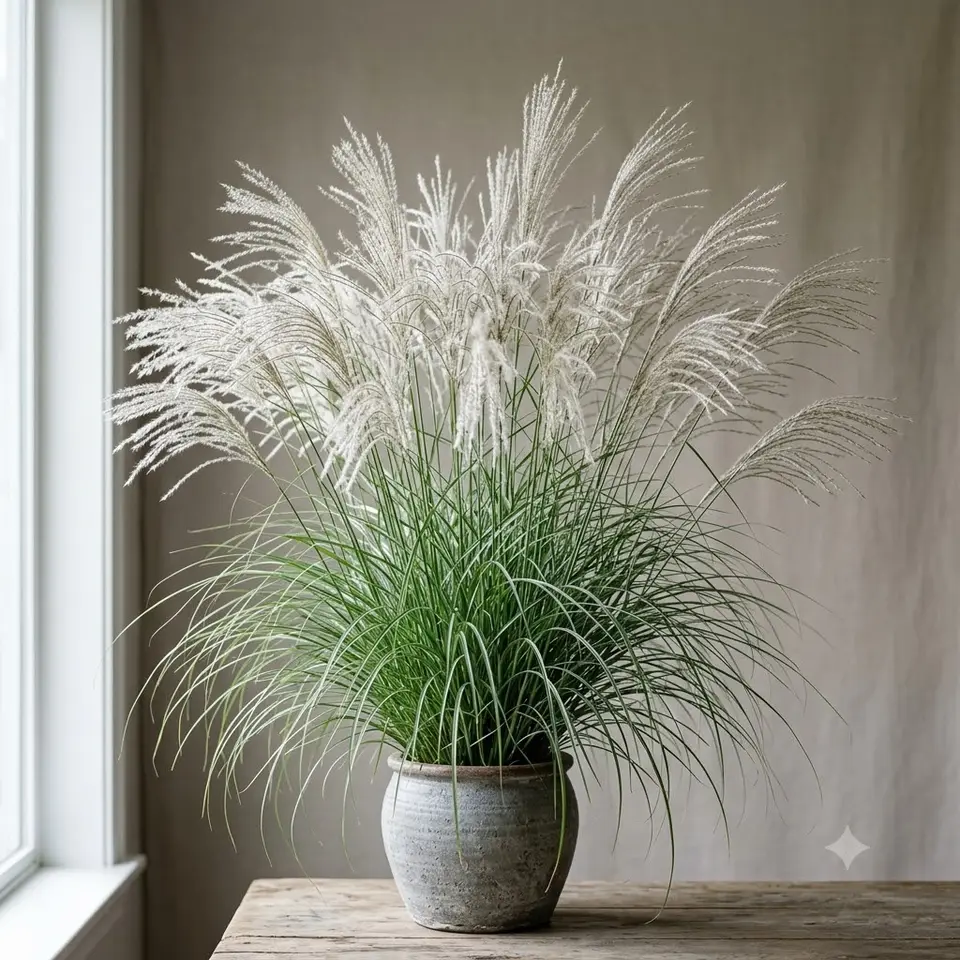
Maiden Grass is a fountain of fine arching leaves that erupts in silvery, silky plumes in autumn, just as everything else fades, then stands as bronze winter sculpture.
Last reviewed: October 2026
 AI illustration
 Overview
Maiden Grass is a fountain of fine arching leaves that erupts in silvery, silky plumes in autumn, just as everything else fades, then stands as bronze winter sculpture. Where there's room for one large statement grass, miscanthus is usually the one. (Miscanthus sinensis.)
Origin & Natural Habitat
Meadows and lowland slopes of Japan, Korea and China; a warm-season giant bred into hundreds of cultivars ('Gracillimus', 'Morning Light', 'Adagio'). Hardy zones 5-9.
Appearance
An arching clump 1.2-2.5 m tall by cultivar; narrow leaves often silver-veined, and feathery flower fans in September (copper opening to silver) that persist all winter.
Why People Grow It - Qualities & Benefits
- The best autumn flower display of any grass
- Graceful fountain habit at architectural scale
- Winter presence: bronze foliage + silver plumes
- Cultivars from 1 m dwarfs to 2.5 m screens
Care
Light: Full sun; even light shade thins the clump and delays the already-late bloom.
Water: Average; established clumps handle dry spells, though bloom is better with summer moisture.
Soil: Any decent garden soil; tolerant of clay.
Temperature & Hardiness: Zones 5-9, warm-season - it starts late in spring; don't declare it dead in May.
Feeding: Light or none; rich feeding means floppy giants.
Maintenance: One hard cut to 10-15 cm in late winter. IMPORTANT: in warm regions (US Southeast especially) some old cultivars self-seed invasively - choose modern sterile or late-flowering forms and check local guidance.
Planting & Propagation
Division in mid-spring as growth resumes - you will need a sharp spade, possibly an axe, and no dinner plans; mature crowns are woody fortresses. Divide every 5-8 years or when centers hollow.
Common Problems & Pests
- Self-seeding in warm climates (choose sterile cultivars)
- Miscanthus mealybug/blight in some regions: buy clean stock
- Center die-out with age: divide
- Late spring start alarms new owners annually
Toxicity & Safety
Non-toxic to pets; leaf edges are finely serrated - gloves and long sleeves for the big cut-back.
Pros & Cons
Pros
- Spectacular plumes and fall color
- True architectural scale
- Decades-long lifespan
- Huge cultivar choice
Cons
- Invasive seeding risk in warm zones
- Brutal to divide when mature
- Occupies real estate: plan for it
Best Suited For
- Specimen and focal-point planting
- Seasonal screens and living hedges
- Back-of-border architecture
- Winter-interest and wildlife gardens
FAQ
Is miscanthus invasive?
In cold-summer regions seed rarely ripens - low risk. In long warm autumns (zones 7+ Southeast US) older cultivars self-seed into wild land: pick sterile/late forms and heed local invasive lists. We don't give legal advice, check your region's guidance.
When does it green up?
Late - it's a warm-season grass that waits for real soil warmth. Mid-late spring bare stubs are normal; growth then is explosive.
Which cultivar for a small garden?
'Adagio' or 'Little Kitten' stay near 1-1.2 m with full plume display - the miscanthus experience without the mansion.
Gear for growing maiden grass (miscanthus)
Links go to Amazon or a partner store (such as Adagio Teas) and may earn us a commission at no extra cost to you. As an Amazon Associate we earn from qualifying purchases. We link gear types, not sponsors' picks: you choose the exact product.