Ravenna Grass
Ravenna Grass, sometimes called 'hardy pampas', sends silvery plumes three to four meters into the October sky in cold climates where true pampas would die at the first zone-6 winter.
Last reviewed: October 2026
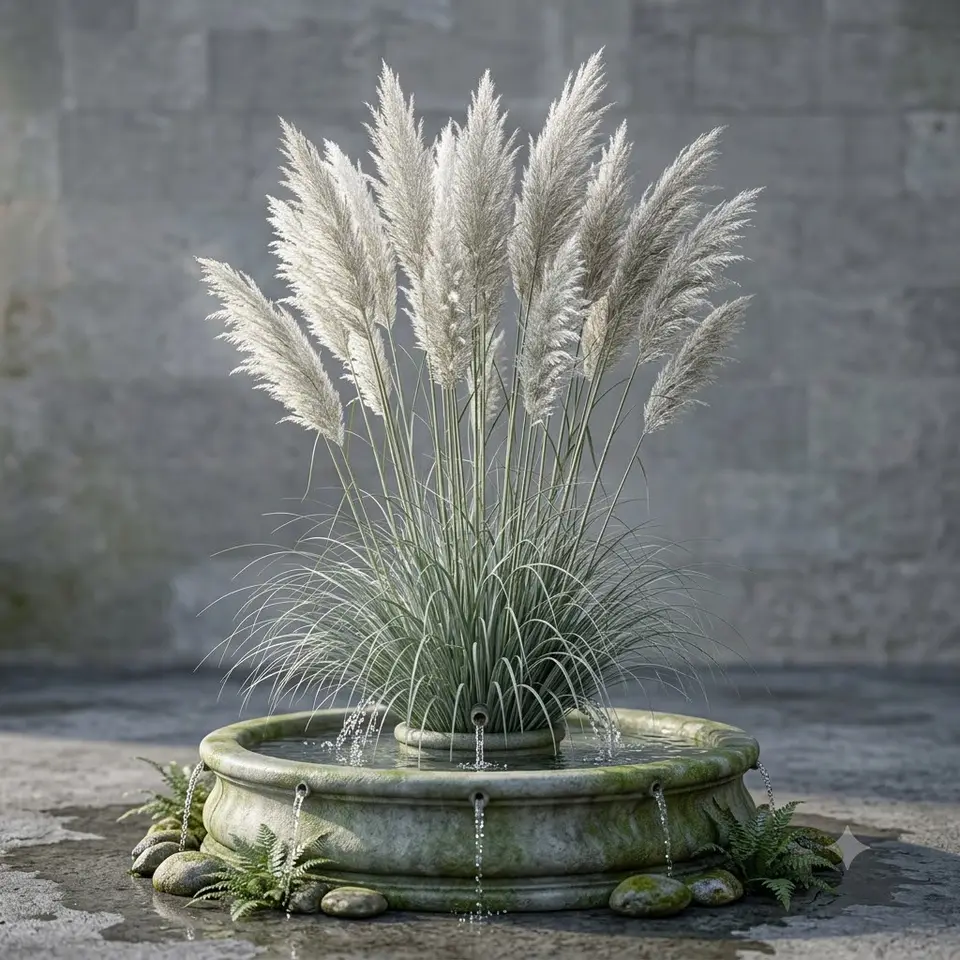 AI illustration
 Overview
Ravenna Grass, sometimes called 'hardy pampas', sends silvery plumes three to four meters into the October sky in cold climates where true pampas would die at the first zone-6 winter. It is spectacular, space-hungry, and (honesty first) a listed invasive in parts of the American West, so siting and region matter. (Tripidium ravennae.)
Origin & Natural Habitat
Riversides of the Mediterranean and western Asia. Hardy zones 6-9 (into 5 with siting) - the cold-climate answer to pampas grass.
Appearance
A gray-green fountain 1.2-1.5 m of foliage; in early autumn flowering canes erupt to 3-4 m carrying silvery-buff plumes that dry and stand through winter - the biggest hardy grass silhouette available.
Why People Grow It - Qualities & Benefits
- Pampas-scale drama in cold-winter gardens
- 3-4 m plumes: the garden's tallest exclamation
- Winter architecture visible from down the street
- Fast: full spectacle by year two or three
Care
Light: Full sun, all day - shade means no canes.
Water: Average; established clumps handle drought, plume best with some summer water.
Soil: Any drained soil; native to riverbanks, tolerant of much.
Temperature & Hardiness: Zones 6-9; mulch the crown at the zone-5 edge.
Feeding: None - it's big enough.
Maintenance: Region check FIRST: Ravenna grass is listed invasive in parts of the US Southwest and West (riparian escape) - consult your state's invasive list before planting; we don't give legal advice. Where appropriate: allow 2 m diameter, cut the whole monument down to 15 cm each late winter (loppers, gloves: the canes are bamboo-stiff).
Planting & Propagation
Species seed or spring division of young clumps (mature crowns are an excavation project). In risk regions, deadhead plumes before seed disperses - or choose miscanthus instead.
Common Problems & Pests
- Invasive potential in warm/riparian western regions: the serious caveat
- Sheer size outgrowing its welcome
- Late-winter cut is real work
- Canes may lean after wet snow
Toxicity & Safety
Non-toxic to pets; leaf edges are sharp-serrated - gloves and sleeves always, and site it off the play-path.
Pros & Cons
Pros
- Tallest hardy plumes, full stop
- True pampas look in zone 6
- Winter skyline value
- Cheap and fast to establish
Cons
- Needs a small building's footprint
- Invasive-listed in parts of the West
- Sharp leaves, heavy annual cut
- Plumes subtler than true pampas
Best Suited For
- Large gardens and long views
- Cold climates craving pampas drama
- Screens and backdrops with room
- Regions where it is NOT invasive-listed
FAQ
Is this actually pampas grass?
No - true pampas (Cortaderia) is reliably hardy only to about zone 7; Ravenna is the hardy stand-in with slimmer, taller plumes. Nurseries blur the labels; now you won't.
Is it safe to plant in my state?
Check first: several western US states list it invasive along waterways. In the Midwest, Northeast and much of Europe it behaves; near western rivers choose miscanthus or switchgrass instead.
How do I cut down something four meters tall?
Loppers, gloves, long sleeves, one hour each late winter: bundle the canes with a strap, cut low, haul away. The annual price of the annual skyline.
Gear for growing ravenna grass
Links go to Amazon or a partner store (such as Adagio Teas) and may earn us a commission at no extra cost to you. As an Amazon Associate we earn from qualifying purchases. We link gear types, not sponsors' picks: you choose the exact product.