Blue Oat Grass
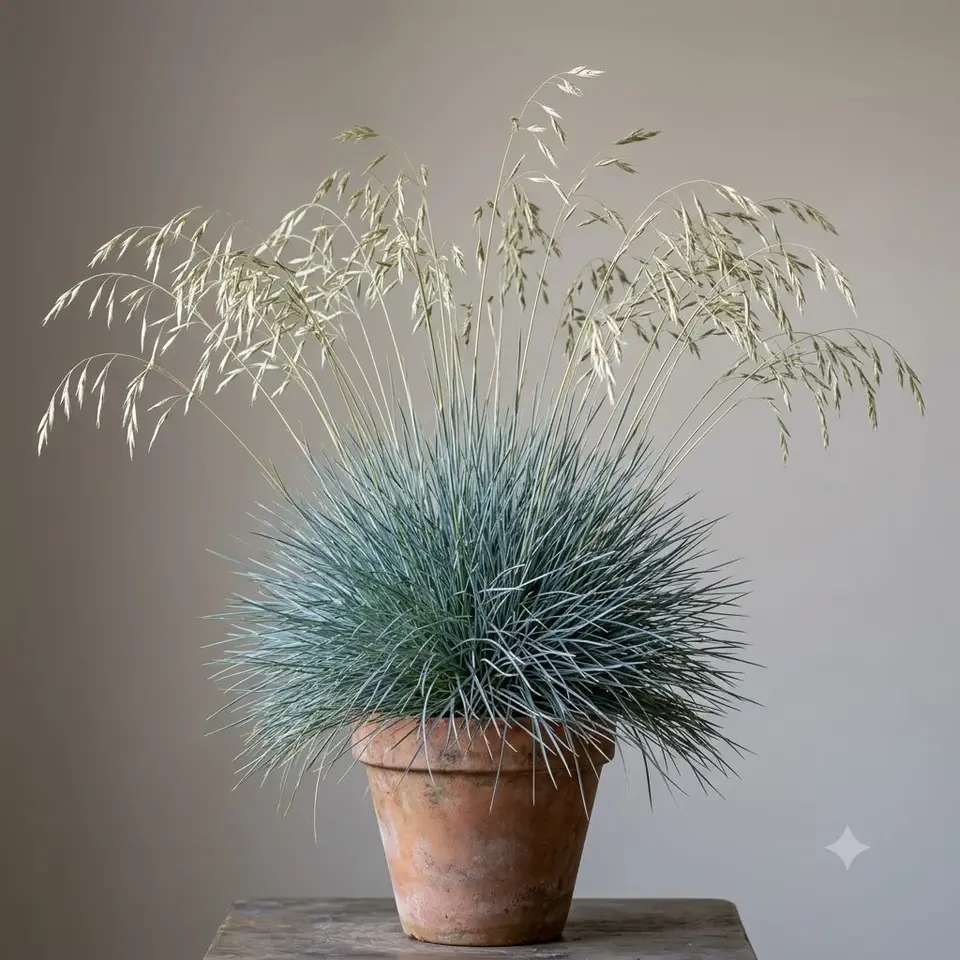
Blue Oat Grass is blue fescue's big brother - the same steel-blue needles scaled up into a stately half-meter urchin that never needs dividing, never runs, and sends elegant oat-like flower wands arching a meter high in early summer.
Last reviewed: July 2026
 AI illustration
 Overview
Blue Oat Grass is blue fescue's big brother - the same steel-blue needles scaled up into a stately half-meter urchin that never needs dividing, never runs, and sends elegant oat-like flower wands arching a meter high in early summer. It is the low-maintenance blue accent at shrub scale. (Helictotrichon sempervirens.)
Origin & Natural Habitat
Dry rocky meadows of the southwestern European Alps; evergreen in mild winters. Hardy zones 4-8.
Appearance
A hemispherical spiky dome of blue-gray needles 45-75 cm tall and wide; in early summer, wiry stems arc outward carrying oat-like buff flowers well clear of the foliage.
Why People Grow It - Qualities & Benefits
- Blue fescue color at four times the size
- Longer-lived and less divide-hungry than fescue
- Graceful arching flower display
- Evergreen structure in mild-winter gardens
Care
Light: Full sun for color and density.
Water: Low; drought-tolerant once rooted, allergic to winter swamp.
Soil: Well-drained, lean to average; gravel and rock gardens are home.
Temperature & Hardiness: Zones 4-8; a cool-season grass happiest away from humid-hot summers.
Feeding: None needed.
Maintenance: Glove-comb out dead needles in spring; snip spent flower stems. No annual hard cut - it's semi-evergreen like fescue.
Planting & Propagation
Division in spring or fall, needed rarely (every 6-8 years, if ever). Seed possible for the species; most gardeners never bother - clumps just persist.
Common Problems & Pests
- Crown rot in wet heavy soil
- Foliar rust in humid stagnant air - site it breezy
- Summer sulking in hot-humid regions
Toxicity & Safety
Non-toxic to pets and people.
Pros & Cons
Pros
- Big blue statement, small effort
- No dividing treadmill
- Elegant flowering habit
- Deer and rabbit resistant
Cons
- Humidity is its enemy
- Needs sharp drainage
- Less tidy-tiny than fescue for edging
Best Suited For
- Gravel and Mediterranean gardens
- Single accents among low perennials
- Dry sunny banks
- Mass plantings at 60-75 cm spacing
FAQ
Blue oat grass or blue fescue?
Scale and patience: fescue for ankle-height edging you'll divide every 3 years, blue oat for knee-height accents you'll leave alone for a decade.
Do I cut it down in spring?
No - just comb the dead out with gloved fingers and trim old flower stems. Hard cutting sets a semi-evergreen back.
Why are the tips browning in August?
Humid heat - the alpine in it protests. Cosmetic; good airflow and drainage keep it minor, and cool autumn restores the blue.
Gear for growing blue oat grass
Links go to Amazon or a partner store (such as Adagio Teas) and may earn us a commission at no extra cost to you. As an Amazon Associate we earn from qualifying purchases. We link gear types, not sponsors' picks: you choose the exact product.