Pink Muhly Grass
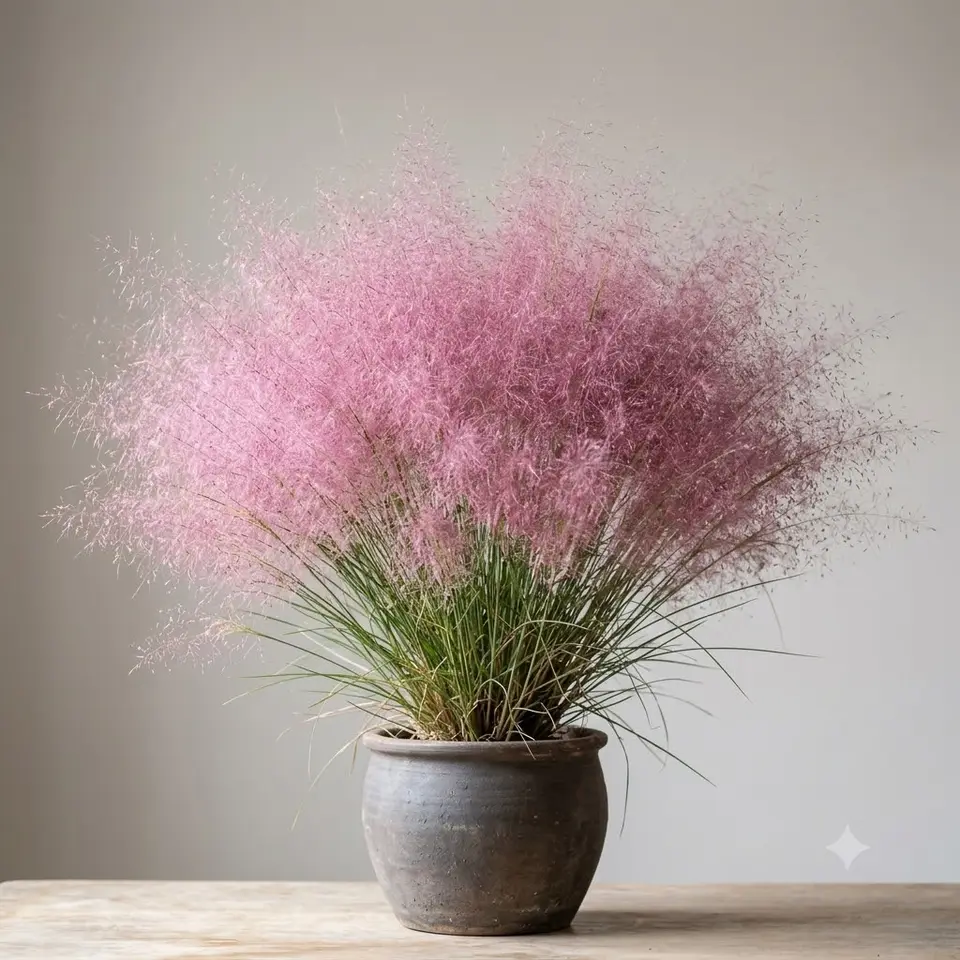
Pink Muhly Grass performs the garden's best magic trick: an unassuming green tuft all summer that detonates in October into a knee-high cloud of cotton-candy pink so improbable that passers-by ask if it's real.
Last reviewed: October 2026
 AI illustration
 Overview
Pink Muhly Grass performs the garden's best magic trick: an unassuming green tuft all summer that detonates in October into a knee-high cloud of cotton-candy pink so improbable that passers-by ask if it's real. No other hardy plant delivers that color at that season on that little care. (Muhlenbergia capillaris.)
Origin & Natural Habitat
Sandy prairies and open pine woods of the eastern and southern USA - a true native from Massachusetts to Texas. Hardy zones 6-10 (5 with sharp drainage and luck).
Appearance
A fine-textured clump 60-90 cm tall; wiry dark-green leaves, then airy panicles of pink-magenta filaments forming the famous haze, aging to buff and holding into winter.
Why People Grow It - Qualities & Benefits
- The pink October cloud: unmatched late color
- Native, tough, salt- and drought-tolerant
- Fine texture contrast for stiff neighbors
- Peak show when the garden is otherwise done
Care
Light: Full sun - the bloom density and the pink both fade in shade.
Water: Low once established; it grows wild on sand dunes. Winter-wet soil is the main killer at the cold edge.
Soil: Sandy or gravelly preferred, must drain sharply; poor soil = better bloom.
Temperature & Hardiness: Zones 6-10; in 5-6 give it a dry, sunny microclimate and skip the fall cut.
Feeding: None to a whisper of spring compost.
Maintenance: Leave it standing over winter (crown protection + beauty); comb or cut to 15 cm in mid-spring. Plant in odd-numbered drifts - one cloud is a curiosity, five are an event.
Planting & Propagation
Division in spring, or species seed sown warm - flowering usually starts year two. Buy blooming-size pots for instant October payoff.
Common Problems & Pests
- Winter rot in cold wet clay: drainage decides survival
- Slow spring wake-up at the cold edge
- Bloom-less plants = shade or over-feeding
Toxicity & Safety
Non-toxic to pets and people.
Pros & Cons
Pros
- Unreal pink haze in October
- Native + pollinator/bird friendly
- Thrives on sand, salt, drought
- Nearly maintenance-free
Cons
- Demands drainage in cold zones
- Anonymous-looking until fall
- Marginal below zone 6
Best Suited For
- Coastal and sandy gardens
- Mass drifts along paths and drives
- Native and pollinator plantings
- Anywhere autumn needs a headline
FAQ
Why didn't mine bloom pink?
Shade, rich feeding, or a spring cut done so late that it chopped the fresh new growth. Sun + lean soil + early-spring-only tidy = the cloud.
Will it survive zone 5?
Sometimes, on a sunny bank in gravelly soil with the foliage left on all winter - treat it as a gamble worth one plant, not a hedge.
When do I cut it back?
Mid-spring, after hard frosts pass - fall cutting exposes the crown to winter wet, the #1 cause of loss.
Gear for growing pink muhly grass
Links go to Amazon or a partner store (such as Adagio Teas) and may earn us a commission at no extra cost to you. As an Amazon Associate we earn from qualifying purchases. We link gear types, not sponsors' picks: you choose the exact product.