Quaking Grass
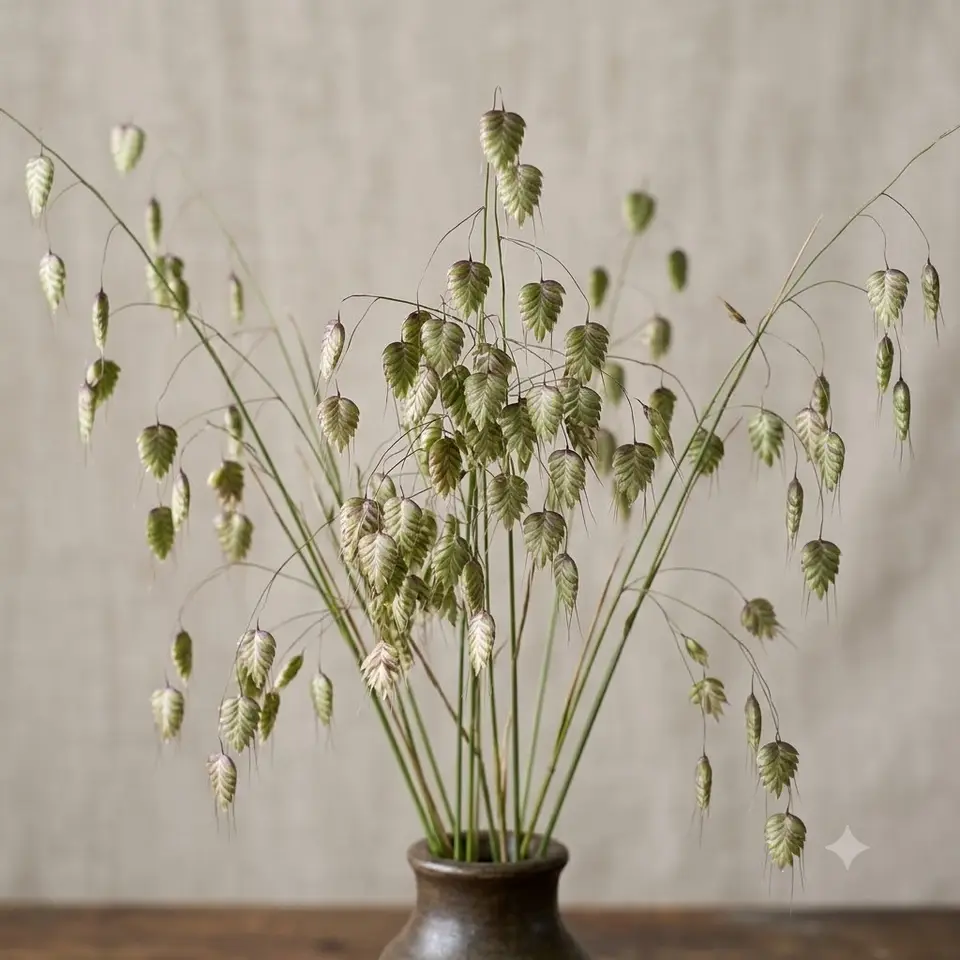
Quaking Grass has dangling heart-shaped seed heads that tremble audibly in the slightest breeze and dry into everlasting arrangements.
Last reviewed: October 2026
 AI illustration
 Overview
Quaking Grass has dangling heart-shaped seed heads that tremble audibly in the slightest breeze and dry into everlasting arrangements. A modest European meadow native, it earns its place purely on charm: no other hardy grass is this playful. (Briza media.)
Origin & Natural Habitat
Chalk downs and old meadows of Europe and temperate Asia; a signature of ancient unimproved grassland. Hardy zones 4-8.
Appearance
A modest green tuft 20-30 cm; late-spring stems to 60 cm hang dozens of puffed, heart-shaped spikelets (green washed purple, drying to straw) that quiver and rustle constantly.
Why People Grow It - Qualities & Benefits
- The trembling lockets: pure delight
- Earliest ornamental seed heads of the year
- First-rate dried flower
- At home in meadows, chalk and poor soil
Care
Light: Full sun to the lightest shade.
Water: Low; a lean-meadow plant.
Soil: Poor to average, drained; loves chalk and lime, tolerates most.
Temperature & Hardiness: Zones 4-8; cool-season - blooms late spring, rests in high summer.
Feeding: None - fertility grows leaves at the lockets' expense.
Maintenance: Shear the whole plant after the seed heads fade (midsummer) for a fresh low tuft, or leave for light self-sowing in meadow schemes. Cut stems for drying just as spikelets fully form.
Planting & Propagation
Seed - easy, direct-sown or in trays; divides in spring too. Self-sows gently in open meadow turf, never aggressively.
Common Problems & Pests
- Goes quiet (semi-dormant) in midsummer heat: by design
- Short-ish lived without occasional self-sowing
- Nothing pest-wise worth naming
Toxicity & Safety
Non-toxic to pets and people; safe in wildflower meadows grazed by curiosity.
Pros & Cons
Pros
- Unique quivering charm
- Superb dried
- Thrives on poor chalk
- Meadow-authentic native (Europe)
Cons
- Modest foliage presence
- Summer lull after bloom
- Needs re-sowing/refresh over years
Best Suited For
- Wildflower and chalk meadows
- Cottage borders front-row
- Cutting and drying gardens
- Children's gardens: the plant that plays
FAQ
When do I pick for drying?
Just as the lockets reach full size, before they bleach - hang small bunches upside down a fortnight and they last literally years.
Why did it vanish in August?
Cool-season habit: after seeding it rests. The shear-back refreshes the tuft for autumn; the show is a spring one.
Will it seed everywhere?
Gently, in open soil, never as a thug - in a meadow that's exactly the persistence you want; in tidy borders, deadhead by picking for the vase.
Gear for growing quaking grass
Links go to Amazon or a partner store (such as Adagio Teas) and may earn us a commission at no extra cost to you. As an Amazon Associate we earn from qualifying purchases. We link gear types, not sponsors' picks: you choose the exact product.