Blue Fescue
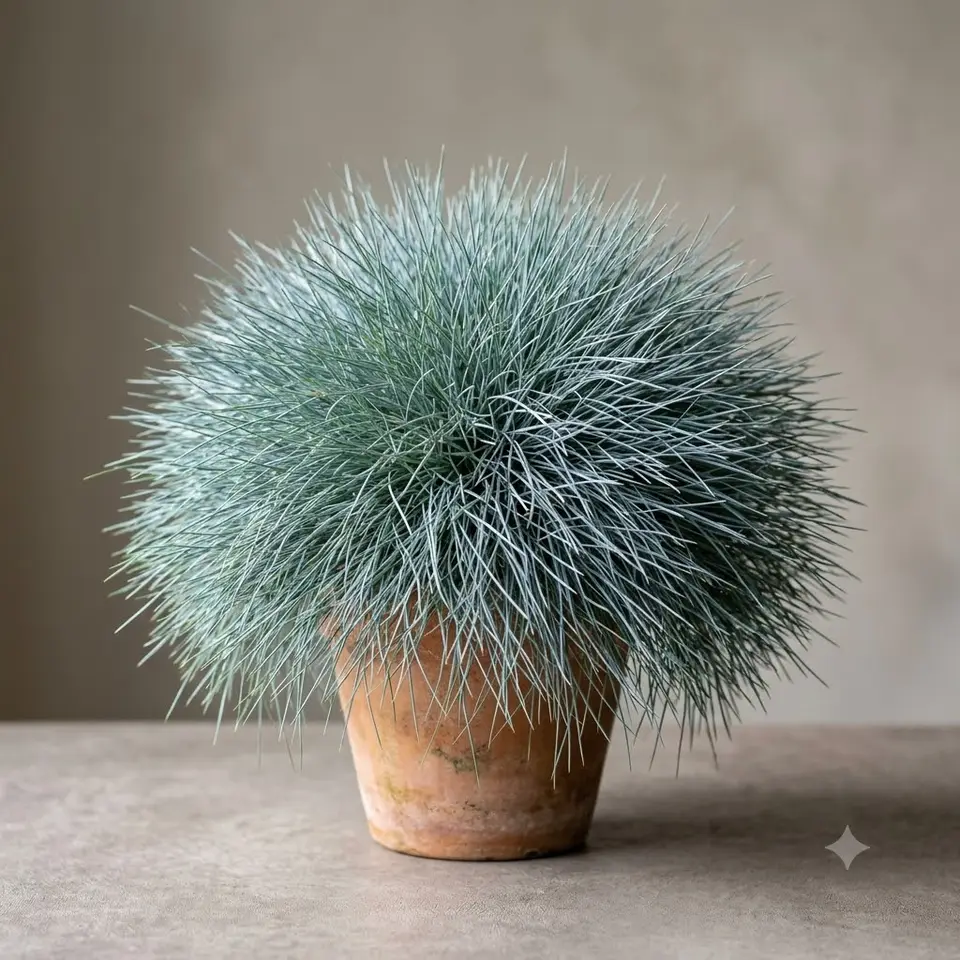
Blue Fescue forms a neat, silver-blue dome the size of a hedgehog that edges paths, fills gravel gardens and adds steel-blue color at ankle height.
Last reviewed: October 2026
 AI illustration
 Overview
Blue Fescue forms a neat, silver-blue dome the size of a hedgehog that edges paths, fills gravel gardens and adds steel-blue color at ankle height. It is among the smallest, bluest and easiest ornamental grasses. (Festuca glauca.)
Origin & Natural Habitat
Dry, rocky grasslands of central and southern Europe; the intense blue is a waxy drought-armor. Hardy zones 4-8.
Appearance
A dense, evergreen-ish tuft 15-30 cm tall and wide of needle-fine, powder-blue leaves; buff flower spikes rise briefly above the dome in early summer.
Why People Grow It - Qualities & Benefits
- The bluest foliage available at ground level
- Perfect repeatable edging dot: order without hedging
- Evergreen presence in mild winters
- Thrives on drought and poor soil
Care
Light: Full sun is non-negotiable for the blue - shade turns it dull green and sparse.
Water: Low; water to establish, then rain does it. Soggy soil is the one reliable killer.
Soil: Sharp drainage above all - sandy, gravelly, poor soils give the best color.
Temperature & Hardiness: Zones 4-8; happier in cool summers - hot-humid nights make it sulk.
Feeding: None. Fertility washes out the blue and flops the tuft.
Maintenance: Comb out dead needles with gloved fingers in spring; shear off spent flowers if you prefer the pure dome look.
Planting & Propagation
Division every 2-3 years in spring - old clumps die out in the center, and division is the refresh. Species seed comes fairly true; named forms ('Elijah Blue') need division.
Common Problems & Pests
- Center rot in rich or wet soil: the classic demise
- Short individual lifespan (3-5 yrs) without division
- Summer browning in humid heat: cosmetic, combs out
Toxicity & Safety
Non-toxic to pets and people - one of the safest edging plants there is.
Pros & Cons
Pros
- Intense steel-blue color
- Tiny, tidy, predictable footprint
- Superb in gravel and containers
- Deer and rabbit resistant
Cons
- Needs dividing to stay handsome
- Hates humidity and wet feet
- Individual clumps are short-lived
Best Suited For
- Path edging planted in rhythm
- Gravel, rock and Mediterranean gardens
- Container thrillers-fillers at the base
- Hot dry banks where lawns fail
FAQ
Why did my blue fescue turn green?
Not enough sun, or too much food and water. Lean, bright and dry brings the wax (and the blue) back with new growth.
Should I cut it back like other grasses?
No hard chop - it's semi-evergreen. Comb out the dead in spring and shear spent flower stems; that's all it wants.
Why did the middle die?
Age plus rich living. Lift, split the healthy outer ring into new tufts and replant in leaner soil - a 20-minute spring job every few years.
Gear for growing blue fescue
Links go to Amazon or a partner store (such as Adagio Teas) and may earn us a commission at no extra cost to you. As an Amazon Associate we earn from qualifying purchases. We link gear types, not sponsors' picks: you choose the exact product.