Mexican Feather Grass
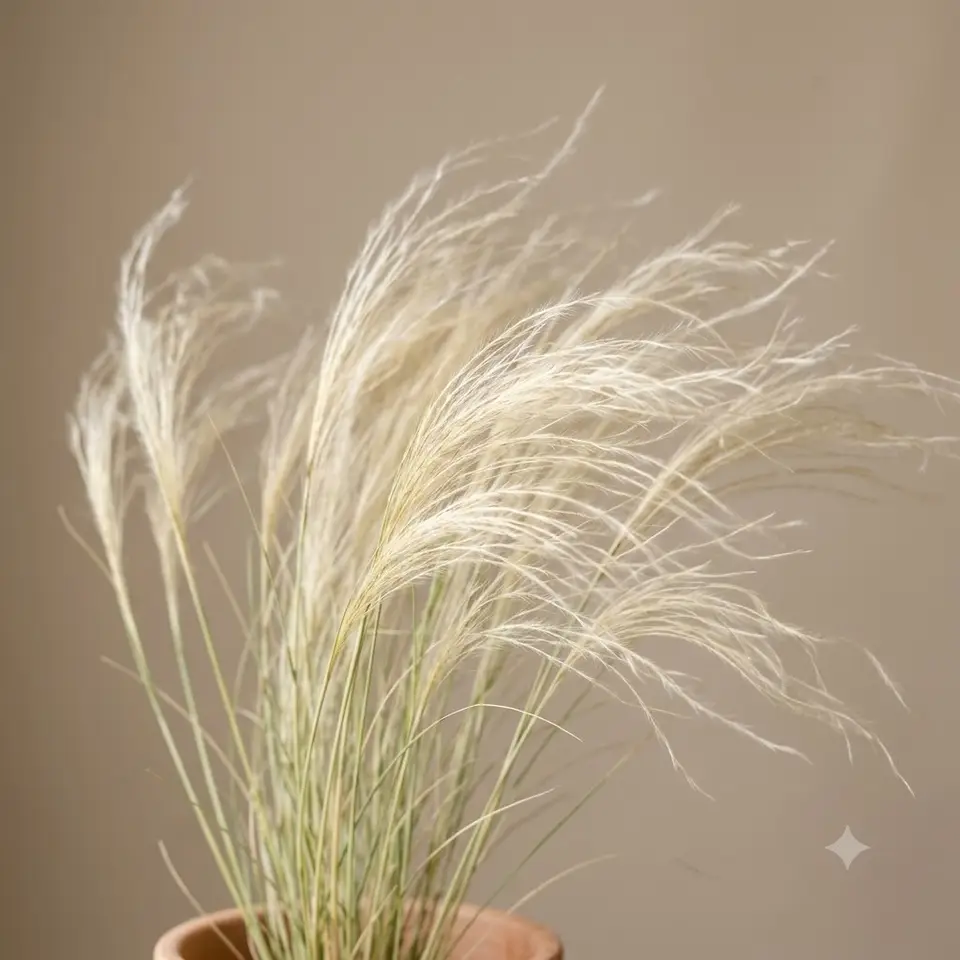
Mexican Feather Grass is pure motion - the finest-textured grass in cultivation, a blonde ponytail that ripples in air no other plant even notices.
Last reviewed: October 2026
 AI illustration
 Overview
Mexican Feather Grass is pure motion - the finest-textured grass in cultivation, a blonde ponytail that ripples in air no other plant even notices. It is also a documented invasive escapee in several mild regions, so the honest profile is two-sided: irresistible where it behaves, irresponsible where it doesn't. (Nassella tenuissima.)
Origin & Natural Habitat
Rocky slopes of the southwestern USA, Mexico, Chile and Argentina. Hardy zones 7-10, short-lived colder.
Appearance
A fountain of hair-fine bright-green blades 40-60 cm tall, dissolving in early summer into silky blonde seed plumes; the whole plant moves continuously.
Why People Grow It - Qualities & Benefits
- The most delicate texture and movement in the catalog
- Silky blonde summer color
- Thrives on heat, sun and neglect
- Superb in containers (and safely contained there)
Care
Light: Full sun.
Water: Very low - overwatering shortens its already brisk life.
Soil: Lean and sharply drained.
Temperature & Hardiness: Zones 7-10 perennial; often grown as a cheap annual elsewhere.
Feeding: None.
Maintenance: INVASIVENESS FIRST: it self-seeds prolifically and is listed invasive in parts of California, Australia and elsewhere - check your regional invasive list BEFORE planting; we don't give legal advice. Where it's a risk, grow it in containers and deadhead, or choose prairie dropseed instead. Comb out dead foliage rather than shearing.
Planting & Propagation
Self-sows readily (that's the whole problem); transplant volunteers or sow seed. Individual plants live 3-5 years - colonies persist by seeding.
Common Problems & Pests
- Invasive escape in mild climates: the defining issue
- Short-lived individual clumps
- Summer dormancy browning in hot-dry sites (normal)
Toxicity & Safety
Non-toxic to pets; the awned seeds can work into pet fur and ears like foxtails - brush animals after contact and site it away from dog runs.
Pros & Cons
Pros
- Unmatched movement and softness
- Effortless in dry heat
- Cheap and fast from seed
- Gorgeous backlit
Cons
- Genuinely invasive in mild regions
- Seeds ride on pets and socks
- Short individual lifespan
Best Suited For
- Containers (the responsible default)
- Enclosed courtyards away from wildland
- Dry gardens in regions where it's NOT listed
- Annual texture plant in cold climates
FAQ
Is it safe to plant?
Depends entirely on where you live: in listed regions (parts of California, Australia, NZ) - no, choose native alternatives; in cold-winter areas it behaves or dies. Check your local invasive-species list first.
What's a lookalike without the risk?
Prairie dropseed - similar fine texture and fountain habit, North American native, zero invasive record.
Why does it turn brown in midsummer?
Heat dormancy in dry sites - a survival trick, not death. A deep drink greens it; or accept the blonde phase as part of the look.
Gear for growing mexican feather grass
Links go to Amazon or a partner store (such as Adagio Teas) and may earn us a commission at no extra cost to you. As an Amazon Associate we earn from qualifying purchases. We link gear types, not sponsors' picks: you choose the exact product.