Peperomia Columbiana
Peperomia Columbiana is a compact, semi-succulent foliage plant prized for its deep bronze-purple leaves that shimmer with a metallic sheen and glow ruby-red underneath (Peperomia metallica var. columbiana, also sold simply as Peperomia columbiana).
Last reviewed: October 2026
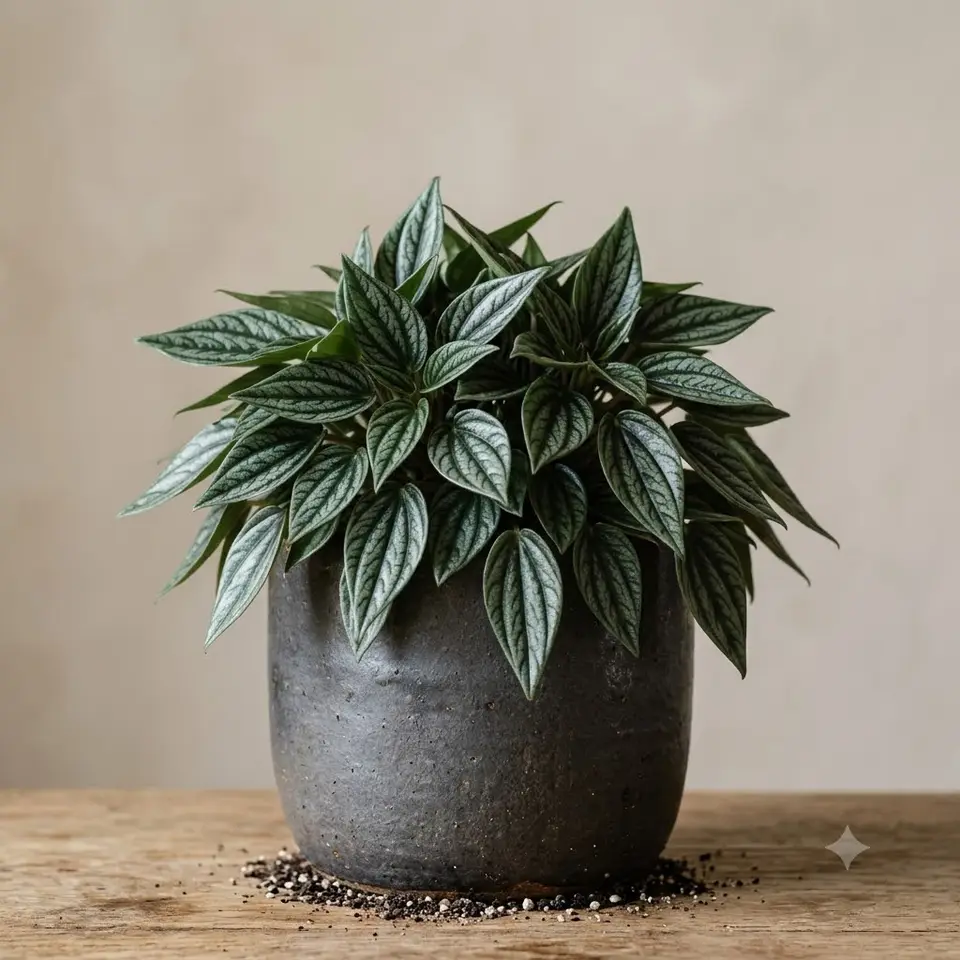 AI illustration
 Overview
Peperomia Columbiana is a compact, semi-succulent foliage plant prized for its deep bronze-purple leaves that shimmer with a metallic sheen and glow ruby-red underneath (Peperomia metallica var. columbiana, also sold simply as Peperomia columbiana). It stays small and tidy, making it a favourite among collectors who want dramatic colour without a sprawling footprint. Like most peperomias it stores water in its thick leaves, so its main demand is restraint rather than fuss.
Origin & Natural Habitat
The species belongs to the peppercorn family (Piperaceae) and traces to the tropical forests of northern South America, with the columbiana form linked to Colombia. In the wild these plants grow as low understorey and epiphytic dwellers, tucked into leaf litter, mossy rock, and the crooks of trees where light is filtered and drainage is sharp. That background explains its liking for airy footing, steady warmth, and shade from direct sun.
Appearance
The leaves are the whole show: small, rounded to slightly heart-shaped, and thickly fleshy, running roughly 3 to 6 cm long. Their upper surface is a dark bronze to burgundy-green with a satiny, almost pewter-like shine, while the undersides flush a rich wine-red that shows as the foliage catches the light. Growth is bushy and mounding on short reddish stems rather than climbing, and a mature plant typically forms a rounded clump around 15 to 25 cm tall and wide. In good light the purple tones deepen; in low light the colour fades toward plain green.
Why People Grow It - Qualities & Benefits
- Striking dark, metallic foliage that adds colour without needing flowers
- Stays small and slow, ideal for shelves, desks, and windowsills with little room
- Semi-succulent leaves tolerate the occasional missed watering
- Non-toxic to cats and dogs, so it suits pet-friendly homes
Care
Light: Bright, indirect light. Good light keeps the purple pigment rich, but harsh direct sun scorches the leaves and washes out colour. An east window or a spot set back from a south or west window works well. Water: Let the top half of the mix dry out, then water thoroughly and empty the saucer. The thick leaves hold reserves, so underwatering is far safer than overwatering, which is the fastest way to rot this plant. Soil: A light, fast-draining mix. Combine standard potting soil with plenty of perlite, bark, or coarse grit so roots never sit in sodden compost. Temperature & Humidity: Comfortable at normal room warmth, roughly 18 to 26°C, and kept above 12°C. Average humidity is fine; moderate to high humidity (around 40 to 60%) keeps it happiest, but it does not demand a terrarium. Feeding: Feed lightly with a balanced, diluted liquid fertiliser about once a month through spring and summer, and stop in autumn and winter. It is a light feeder and dislikes salt build-up. Extra: The stems and leaves are brittle and snap easily, so handle and repot gently and site it where it will not be knocked. One reassuring quirk: several Peperomia species are on the ASPCA non-toxic plant list, and the genus is considered non-toxic to cats and dogs.
Propagation
Propagate from leaf or stem cuttings in the growing season. Take a healthy leaf with a short piece of petiole, or a small stem tip, let the cut end dry for an hour or two, then insert into moist, gritty mix or set a leaf cutting upright with its base in the medium. Keep it warm, humid, and out of direct sun; roots and small plantlets form over several weeks. Cuttings also root in water, though a gritty mix tends to give sturdier roots.
Common Problems & Pests
- Overwatering and soggy soil cause mushy stems and root rot, the number one killer of this plant
- Faded, greener leaves and leggy stretching signal too little light
- Mealybugs, fungus gnats, and occasional spider mites, especially on stressed or over-wet plants
Toxicity & Safety
Peperomia Columbiana is pet-safe. It is considered non-toxic to cats and dogs, and the ASPCA lists several related Peperomia species as non-toxic, so a nibble is not a poisoning risk. There is no need to keep it out of reach for safety reasons, though as with any houseplant the potting mix and fertiliser should not be eaten by pets or children.
Pros & Cons
Pros
- Bold, unusual dark-purple foliage in a small package
- Forgiving of occasional neglect thanks to water-storing leaves
Cons
- Very sensitive to overwatering and prone to rot
- Brittle stems and leaves break easily when handled
Best Suited For
- Collectors and small-space growers who want colour on a shelf or desk
- Pet owners looking for a safe, non-toxic foliage plant
FAQ
Why are my plant's leaves turning green instead of purple?
The rich bronze-purple colour depends on light. In dim spots the plant produces more chlorophyll and looks greener; move it to a brighter position with indirect light and the darker tones return.
How often should I water Peperomia Columbiana?
There is no fixed schedule. Check the soil and water only once the top half has dried, then water fully and drain. In a bright, warm room that may be weekly; in cooler or darker conditions it can be much less. When unsure, wait.
Gear for growing peperomia columbiana
Links go to Amazon or a partner store (such as Adagio Teas) and may earn us a commission at no extra cost to you. As an Amazon Associate we earn from qualifying purchases. We link gear types, not sponsors' picks: you choose the exact product.