Peperomia Hope
Peperomia Hope is a compact, semi-trailing houseplant loved for its plump, coin-shaped leaves clustered along slender stems.
Last reviewed: September 2026
 AI illustration
 Overview
Peperomia Hope is a compact, semi-trailing houseplant loved for its plump, coin-shaped leaves clustered along slender stems. It is a hybrid (Peperomia 'Hope', a cross of Peperomia deppeana and Peperomia quadrifolia) bred for its tidy, cascading habit and easygoing nature. Its succulent-like leaves store water, which makes it forgiving of the occasional missed watering but unforgiving of overwatering.
Origin & Natural Habitat
The parent species of Peperomia Hope come from the warm, humid forests of tropical Central and South America. In the wild, plants of this group often grow as epiphytes, perching on tree bark, mossy branches, and rotting logs rather than in deep soil. They thrive in dappled light beneath the forest canopy, where warmth and steady humidity are constant and their roots stay airy rather than waterlogged. Peperomia Hope itself is a cultivated hybrid, so it does not occur in the wild, but it inherits these tropical, epiphytic preferences.
Appearance
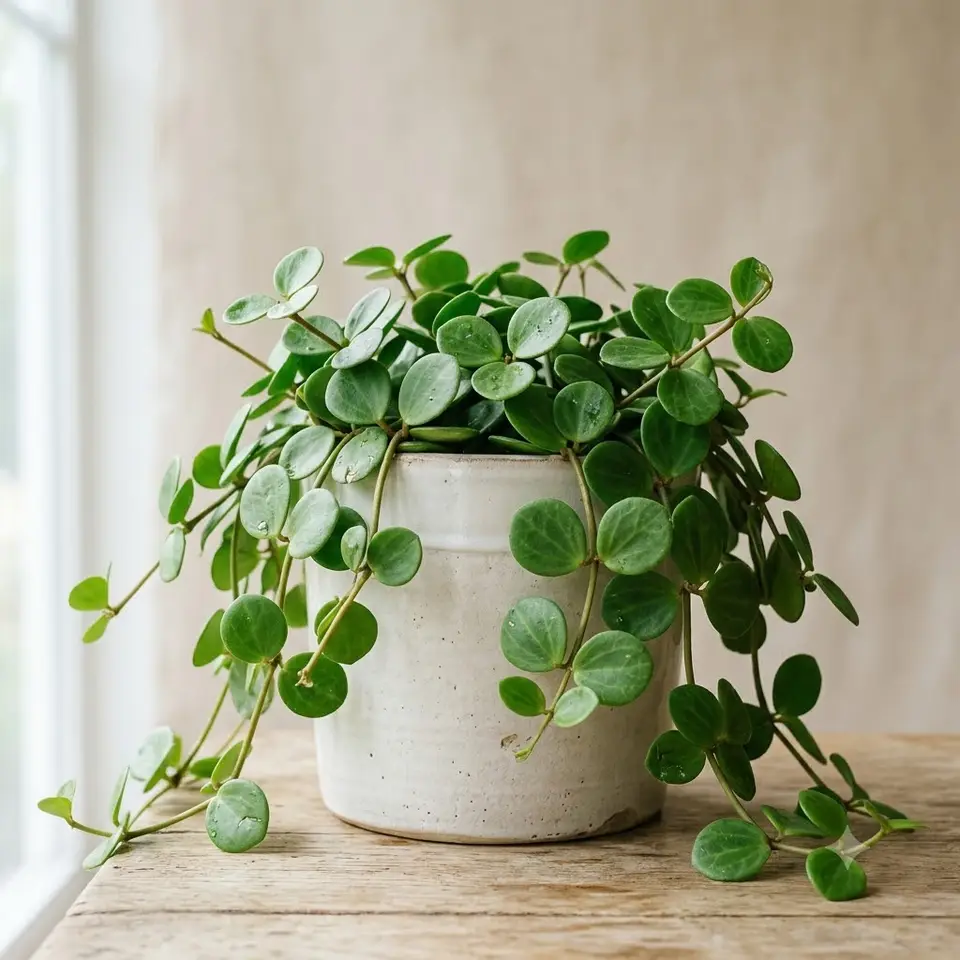
Peperomia Hope produces small, round to slightly oval leaves, roughly 1 to 2.5 cm across, arranged in whorls of three or four along the stem. The leaves are thick, fleshy, and glossy, in a fresh mid-green, sometimes with faint darker veining. As stems lengthen they arch and trail, giving a soft, cascading look that suits hanging baskets and shelf edges. It stays modest in size, typically reaching around 20 to 30 cm in trailing length, and grows at a relaxed, steady pace.
Why People Grow It - Qualities & Benefits
- Compact size that fits shelves, desks, and small windowsills without taking over.
- Charming trailing habit that softens hanging baskets and high shelves.
- Water-storing leaves make it drought-tolerant and beginner-friendly.
- Pet-safe foliage, so it can share a home with cats and dogs.
Care
Light: Bright, indirect light is ideal. A spot near an east-facing window, or a little back from a brighter window, keeps growth full and colour rich. Avoid harsh direct midday sun, which can scorch the leaves, and deep shade, which makes stems leggy. Water: Let the top few centimetres of soil dry out between waterings, then water thoroughly and empty the saucer. The fleshy leaves hold moisture, so it is far happier slightly dry than soggy. Overwatering is the number one killer of this plant. Soil: A light, fast-draining mix. A blend of standard potting soil with added perlite, orchid bark, or coarse sand works well and keeps the roots airy, echoing its epiphytic background. Temperature & Humidity: Comfortable at normal room temperatures of about 18 to 27°C. Protect it from cold draughts and keep it above roughly 10°C. It tolerates average household humidity but appreciates a moderately humid spot of 40 to 60%. Feeding: Feed lightly with a balanced, diluted liquid fertiliser about once a month during spring and summer. Skip feeding in autumn and winter when growth slows. Extra: The stems are brittle and snap easily, so handle and reposition the plant gently. Non-toxic to cats and dogs, as Peperomia is on the ASPCA pet-safe list.
Propagation
Propagation is easy from stem or leaf cuttings. Snip a healthy stem with a few leaves, let the cut end callus for an hour or two, then place it in a small pot of moist, well-draining mix or in water until roots form. Leaf cuttings with a short piece of petiole can also root, though stem cuttings are faster and more reliable. Warmth and bright, indirect light speed the process along.
Common Problems & Pests
- Overwatering leading to yellowing leaves, mushy stems, and root rot - the most common issue by far.
- Brittle stems that snap during handling or repotting, so move the plant carefully.
- Occasional pests such as mealybugs, spider mites, or fungus gnats, especially in overly damp soil.
Toxicity & Safety
Peperomia Hope is pet-safe and non-toxic to cats and dogs. Peperomia is included on the ASPCA list of plants that are safe around pets, so you can grow it without worrying about nibbling paws. It is a good choice for pet households. As a sensible precaution with any houseplant, keep pets and small children from eating the leaves in quantity, and do not let anyone eat the potting soil or fertiliser, which can cause an upset stomach even though the plant itself is harmless.
Pros & Cons
Pros
- Forgiving, low-maintenance, and well suited to beginners.
- Pet-safe and compact, ideal for homes with animals and limited space.
Cons
- Very sensitive to overwatering and prone to root rot if soil stays wet.
- Brittle stems break easily, so it needs gentle handling.
Best Suited For
- Beginners and busy owners who want an attractive, low-fuss trailing plant.
- Pet households looking for safe greenery for shelves, desks, and hanging baskets.
FAQ
Why are my Peperomia Hope leaves turning yellow and soft?
This is almost always a sign of overwatering. Let the soil dry out more between waterings, make sure the pot drains freely, and check the roots for rot if the problem continues.
Is Peperomia Hope safe for my cat or dog?
Yes. Peperomia is on the ASPCA pet-safe list and is non-toxic to cats and dogs, so Peperomia Hope is a good pick for pet-friendly homes. It is still wise to discourage pets from chewing on any houseplant.
Gear for growing peperomia hope
Links go to Amazon or a partner store (such as Adagio Teas) and may earn us a commission at no extra cost to you. As an Amazon Associate we earn from qualifying purchases. We link gear types, not sponsors' picks: you choose the exact product.