Peruvian Apple Cactus
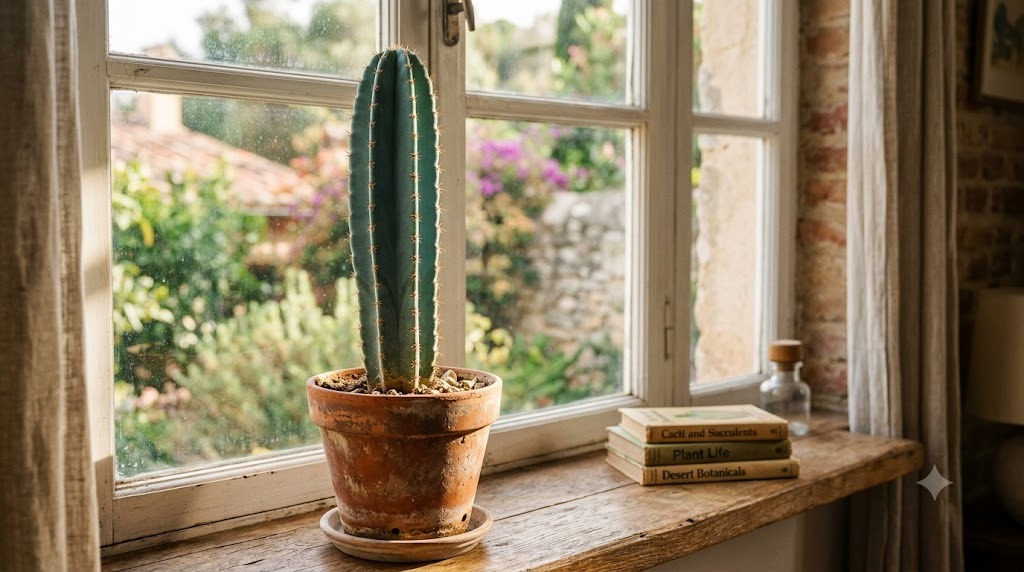
The Peruvian apple is a tall, columnar, blue-green cactus that grows faster than almost any other - a bold, architectural spire for a very sunny spot.
Last reviewed: July 2026
Overview
The Peruvian apple is a tall, columnar, blue-green cactus that grows faster than almost any other - a bold, architectural spire for a very sunny spot. Mature plants open huge, fragrant white flowers at night and can set edible red fruit, giving it its name.
Origin & Natural Habitat
Cereus repandus (often sold as Cereus peruvianus) comes from South America and the Caribbean, where it forms tall, branching, tree-like columns in hot, dry scrub. It is widely grown and naturalised in warm regions worldwide.
Appearance
An upright, ribbed, blue-green to grey-green column with well-spaced areoles bearing short brown spines along the ridges. It grows quickly and can branch with age. Big, fragrant white funnel flowers open at night on mature plants, followed by round, edible reddish-pink fruit (the 'Peruvian apple').
Why People Love It - Qualities & Benefits
People love how fast and easily it grows into a dramatic architectural column, its striking blue-green colour, the spectacular night flowers on older plants, and the novelty of edible fruit. It is one of the most rewarding columnar cacti for impatient growers.
Care
Light
Give the brightest, sunniest position you have - a south-facing window with hours of direct sun, or outdoors in warm weather. Strong light keeps the column firm, blue and upright; poor light causes pale, thin, leaning growth.
Watering
Water when the soil has dried out, roughly every one to two weeks in the warm growing season and sparingly in winter. It is more vigorous than many cacti and drinks a little more when growing fast, but still rots if kept soggy.
Soil & Potting
A gritty, free-draining cactus mix in a sturdy pot with drainage. A vigorous column becomes top-heavy, so a heavier pot and some grit in the mix help with both stability and drainage.
Humidity & Temperature
Warm, dry air suits it; ordinary room air is fine. Keep frost-tender potted plants above about 5-10°C, and give a cooler, drier winter rest.
Feeding
Feed with a dilute cactus fertiliser a couple of times through the growing season - being fast-growing it appreciates a little more feeding than slow desert cacti.
Repotting
Repot every couple of years in spring as it grows, handling the column with thick gloves and folded card. A tall plant may need staking until established and a weighty pot to stay upright.
Propagation
Very easy from stem cuttings: cut a section of column, let the cut end callus for one to two weeks, then set it upright in dry, gritty soil to root. It also grows readily from seed.
Common Problems & Pests
Overwatering rot at the base is the main risk. Scale and mealybugs can appear on the ribs. Etiolation (pale, thin, stretched growth) means too little light. Corky brown patches low on old columns are usually just age.
Toxicity & Safety
The Peruvian apple cactus is not toxic to people or pets - its ripe fruit is in fact edible - but its spines can injure, so keep it out of reach of children and animals and handle with protection.
Pros & Cons
Pros: fast-growing and dramatic, striking blue-green colour, night flowers and edible fruit on mature plants, easy from cuttings. Cons: gets large and top-heavy, spiny, needs strong light and a stable heavy pot.
Best Suited For
Ideal for anyone with a very sunny window or warm patio who wants a fast, bold, architectural cactus - and the patience to enjoy night flowers and fruit as it matures.
FAQ
Is the fruit really edible? Yes - the ripe reddish 'Peruvian apple' fruit of mature plants is edible and mildly sweet.
Why is my column growing thin and pale at the top? Too little light - move it to your sunniest spot and new growth thickens up.
Gear for growing peruvian apple cactus
Links go to Amazon or a partner store (such as Adagio Teas) and may earn us a commission at no extra cost to you. As an Amazon Associate we earn from qualifying purchases. We link gear types, not sponsors' picks: you choose the exact product.