Peperomia Maculosa
Peperomia Maculosa is a semi-succulent tropical foliage plant prized by collectors for its long, deep green leaves and its dramatically speckled leaf stalks (Peperomia maculosa).
Last reviewed: October 2026
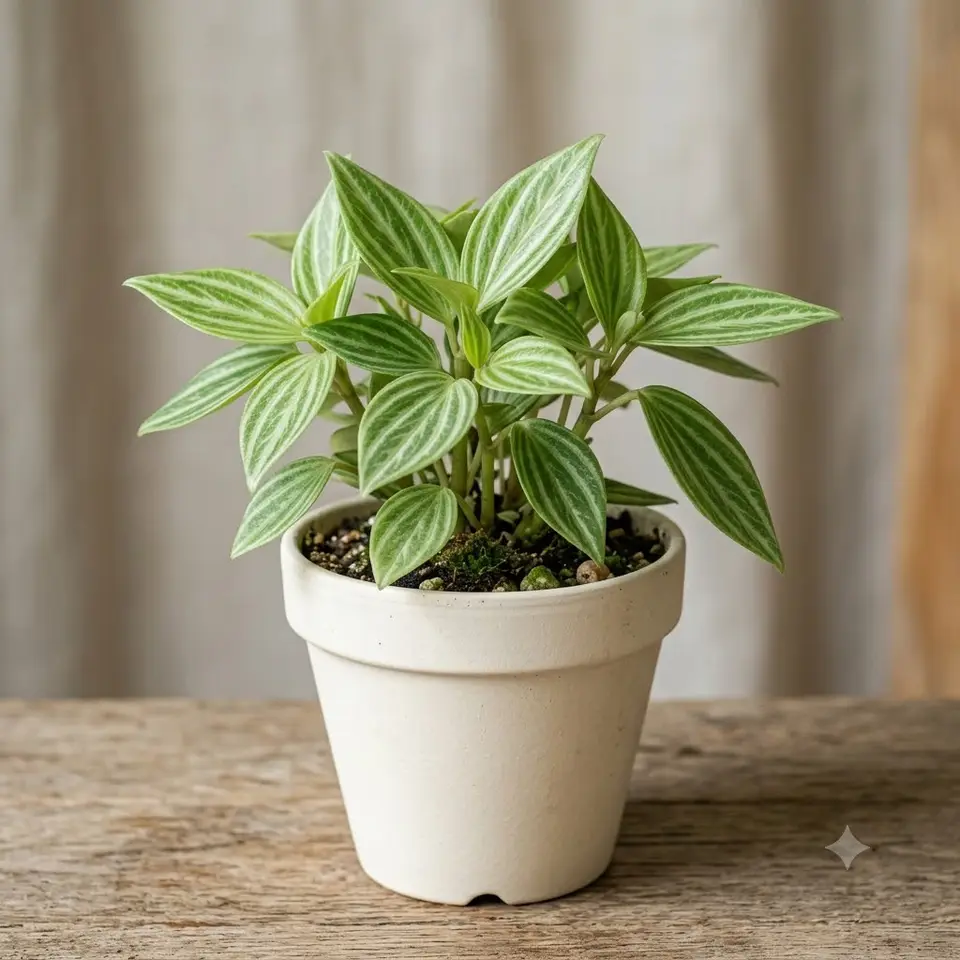 AI illustration
 Overview
Peperomia Maculosa is a semi-succulent tropical foliage plant prized by collectors for its long, deep green leaves and its dramatically speckled leaf stalks (Peperomia maculosa). The species name means "spotted", a nod to the dark purple flecks that run along the petioles. It stays compact, tolerates average indoor conditions, and rewards a light hand with watering.
Origin & Natural Habitat
Peperomia maculosa is native to the tropical Americas, ranging across the West Indies and Caribbean islands down through Central America and into northern South America. In the wild it grows as a terrestrial or epiphytic plant on the humid, shaded floor and lower trunks of tropical forests, where it sits in leaf litter or clings to mossy bark in bright, filtered light and consistently high humidity.
Appearance
The leaves are elliptic to lance-shaped, thick and slightly fleshy, and larger than those of many Peperomias - often 10 to 20 cm long. They are a rich, glossy deep green marked by a striking pale silver-grey central vein that runs the length of each blade. The most distinctive feature is the petioles, which are heavily peppered with dark reddish-purple spots. Growth is a loose, semi-upright rosette, and mature plants typically reach around 20 to 30 cm tall. Thin, rat-tail flower spikes appear in good conditions.
Why People Grow It - Qualities & Benefits
- The speckled petioles and silver-veined leaves make it a genuine conversation piece among Peperomia collectors.
- Its semi-succulent leaves store water, so it forgives the occasional missed watering.
- It stays a manageable size, suiting shelves, desks, and small tabletop spots.
- It is non-toxic, making it a safe choice for homes with cats and dogs.
Care
Light: Bright, indirect light. An east or north window is ideal, or a spot set back from a brighter window. Direct midday sun scorches the leaves, while deep shade makes growth leggy and dulls the markings. Water: Let the top third to half of the soil dry out before watering, then water thoroughly and empty the saucer. The fleshy leaves hold moisture, so this plant is far more at risk from overwatering than from drought. Soil: A light, fast-draining, airy mix. Standard potting soil cut with perlite, orchid bark, and a little coco coir works well and keeps the roots from sitting wet. Temperature & Humidity: Comfortable at normal room temperatures of 18 to 26°C. Keep it above 12°C and away from cold draughts. It tolerates average household humidity but looks its best at 50 to 60%. Feeding: Feed with a balanced liquid fertiliser diluted to half strength once a month during spring and summer. Do not feed in autumn and winter. Extra: The stems and petioles are brittle and snap easily, so handle and repot gently and give the plant a spot where it will not be knocked. Good news for pet owners: Peperomia is non-toxic to cats and dogs and appears on the ASPCA pet-safe plant list.
Propagation
Propagate from stem cuttings or leaf cuttings in spring or summer. Take a healthy leaf with a short piece of petiole, or a stem section with a node, let the cut surface callus for a few hours, then insert it into a moist, airy mix or a glass of water. Keep it warm and in bright, indirect light. Roots and small plantlets usually form over several weeks. Because the stems are brittle, take clean cuttings rather than tearing them.
Common Problems & Pests
- Overwatering is the main killer, causing soft, yellowing leaves and root or stem rot; always let the mix dry down first.
- Brittle stems and petioles break easily during handling and repotting, so move the plant carefully.
- Mealybugs and the occasional spider mite can appear; check leaf joints and undersides and treat early with insecticidal soap.
Toxicity & Safety
Peperomia Maculosa is pet-safe. It is considered non-toxic to both cats and dogs, and the ASPCA lists several other Peperomia species as non-toxic, so it is a reassuring pick for households with curious pets and young children. There is no toxic hazard from the plant itself; as with any houseplant, the potting soil and fertiliser should simply be kept out of reach and not eaten.
Pros & Cons
Pros
- Non-toxic and safe around cats and dogs.
- Semi-succulent leaves make it forgiving of occasional underwatering.
Cons
- Very sensitive to overwatering and prone to rot in soggy soil.
- Brittle stems snap easily and need careful handling.
Best Suited For
- Beginner and intermediate growers who tend to overwater and want a forgiving plant.
- Peperomia collectors after an unusual, speckle-stemmed species for a shelf or desk.
FAQ
Why are the leaf stalks covered in spots?
The spotting is completely natural and is exactly what the name maculosa, meaning "spotted", refers to. Those dark reddish-purple flecks on the petioles are a signature feature of the species, not a sign of pests or disease.
How often should I water Peperomia Maculosa?
There is no fixed schedule; water when the top third to half of the soil has dried out. This is usually every one to two weeks indoors, but always check the soil first, since the fleshy leaves mean it copes far better with dry spells than with staying wet.
Gear for growing peperomia maculosa
Links go to Amazon or a partner store (such as Adagio Teas) and may earn us a commission at no extra cost to you. As an Amazon Associate we earn from qualifying purchases. We link gear types, not sponsors' picks: you choose the exact product.