Peperomia Frost
Peperomia Frost is a compact, semi-succulent foliage plant prized for its shimmering, silver-frosted leaves that look almost dusted with ice (Peperomia caperata 'Frost').
Last reviewed: September 2026
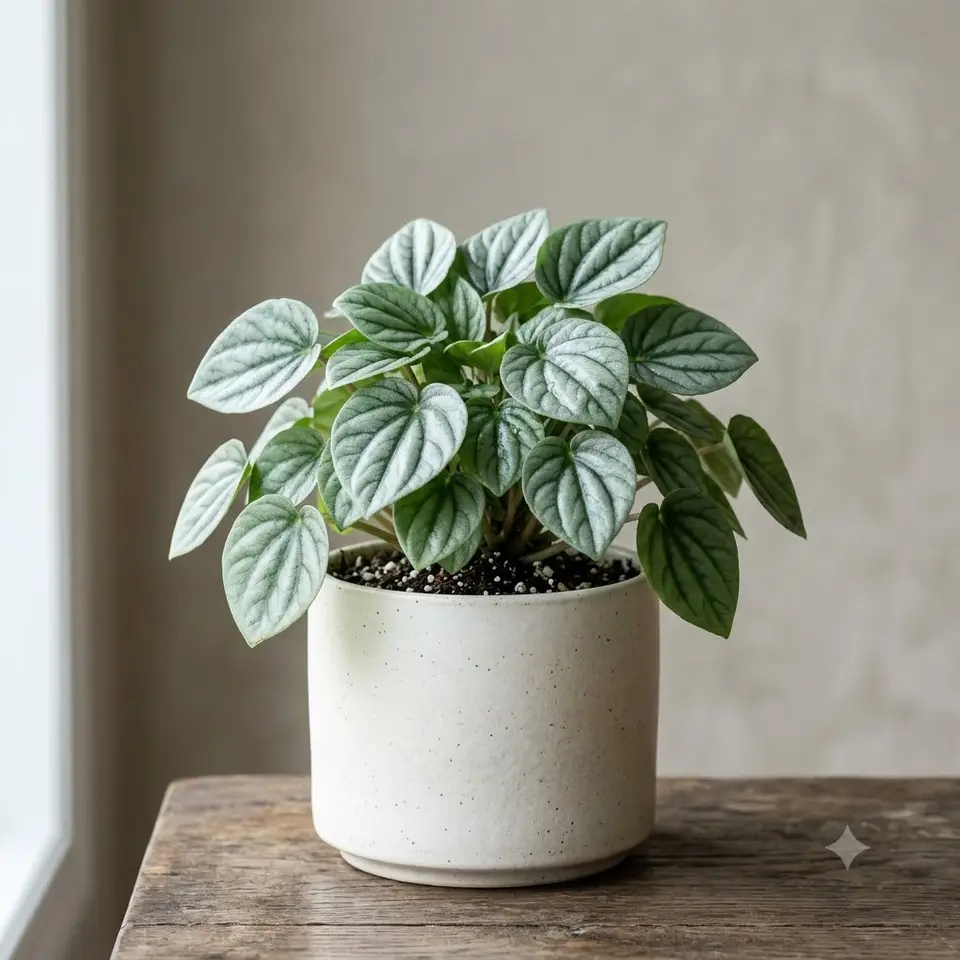 AI illustration
 Overview
Peperomia Frost is a compact, semi-succulent foliage plant prized for its shimmering, silver-frosted leaves that look almost dusted with ice (Peperomia caperata 'Frost'). It stays small and tidy, making it a favourite for desks, shelves, and terrariums. The plant is grown purely for its ornamental foliage rather than flowers, which are modest by comparison.
Origin & Natural Habitat
The parent species, Peperomia caperata, is native to the rainforests of Brazil, where it grows as a low, understorey plant. In the wild it clings to shaded forest floors and mossy surfaces, rooting into pockets of leaf litter and decaying wood. This background explains its preference for warm, humid, dappled-light conditions and its dislike of soggy roots. 'Frost' is a selected cultivar bred for its distinctive silvery leaf colouring.
Appearance
Peperomia Frost forms a low, rounded rosette of heart-shaped leaves, each one deeply corrugated with a network of sunken veins. The leaf surface carries a metallic, silver-white sheen laid over darker green tissue, giving the frosted effect that names the plant. Individual leaves are small, roughly 4 to 6 cm across, held on short pink-tinged stalks. Mature plants stay compact, usually reaching about 15 to 20 cm tall and wide. In good conditions it may send up slender, greenish flower spikes that resemble thin rat tails, more curious than showy.
Why People Grow It - Qualities & Benefits
- Striking silver-frosted, textured foliage that adds contrast to a plant shelf
- Stays small and slow-growing, so it rarely outgrows its spot
- Semi-succulent leaves store water, making it forgiving of the occasional missed watering
- Non-toxic and pet-safe, which suits homes with cats and dogs
Care
Light: Bright, indirect light. It tolerates medium light but colours and compactness are best in a bright spot out of direct midday sun, which can scorch the leaves. Water: Let the top half of the soil dry before watering, then water thoroughly and drain fully. The fleshy leaves hold moisture, so it is far happier slightly dry than wet. Overwatering is the most common way to kill it. Soil: A light, airy, well-draining mix. A blend of standard potting soil with perlite, orchid bark, or coarse sand works well and keeps roots from sitting in water. Temperature & Humidity: Comfortable at 18 to 26°C. Keep it above 12°C and away from cold draughts. It appreciates moderate to high humidity of 50% or more but adapts to average room humidity. Feeding: Feed with a balanced, diluted liquid fertiliser roughly once a month during spring and summer. It is a light feeder, so avoid overdoing it. Pause feeding in autumn and winter. Extra: The key quirk is fragile, brittle stems and petioles that snap easily, so handle and repot gently. Non-toxic to cats and dogs. Peperomia is on the ASPCA pet-safe plant list.
Propagation
Propagate from leaf or stem cuttings, which root readily. Take a healthy leaf with a short piece of its stalk, let the cut end callus for an hour or two, then insert it into moist, airy potting mix or set it in water until roots form. Keep it warm and in bright, indirect light, and small plantlets should emerge over several weeks. Spring and early summer give the fastest, most reliable results.
Common Problems & Pests
- Overwatering leads to soft, blackened stems and root rot, the single biggest threat to this plant
- Brittle stems and leaf stalks snap under rough handling, so move it carefully
- Occasional mealybugs, fungus gnats (a sign of soil kept too wet), and spider mites in dry air
Toxicity & Safety
Peperomia Frost is pet-safe and non-toxic to cats and dogs. Peperomia is listed on the ASPCA pet-safe plant list, so you can keep it in reach of curious pets without the worry that comes with many popular houseplants. There is no hidden hazard in the plant itself. As a sensible habit, still discourage pets and children from chewing on any houseplant, and keep potting soil and fertiliser from being eaten.
Pros & Cons
Pros
- Beautiful, textured, silver foliage in a compact package
- Pet-safe and forgiving of light neglect
Cons
- Very sensitive to overwatering and root rot
- Brittle stems that break easily during handling
Best Suited For
- Beginners who want an easy, small plant with high visual impact
- Pet owners looking for safe, non-toxic greenery for shelves, desks, or terrariums
FAQ
Why are the leaves on my Peperomia Frost turning soft and dropping?
This is almost always overwatering. The semi-succulent leaves store water, so the plant needs the soil to dry out between drinks. Let the top half of the mix dry, ensure the pot drains freely, and trim away any mushy, rotted stems.
Does Peperomia Frost need high humidity to thrive?
It enjoys moderate to high humidity but is not fussy. It grows well in average room conditions, though grouping it with other plants or using a pebble tray can help if your air is very dry, especially in winter.
Sources
Pet toxicity: checked against the ASPCA Animal Poison Control Center lists of toxic and non-toxic plants for cats and dogs, entry "Emerald Ripple Peperomia" (Peperomia caperata): non-toxic to cats and dogs. Lists read on 10 October 2026.
Gear for growing peperomia frost
Links go to Amazon or a partner store (such as Adagio Teas) and may earn us a commission at no extra cost to you. As an Amazon Associate we earn from qualifying purchases. We link gear types, not sponsors' picks: you choose the exact product.