Peperomia Ginny
Peperomia Ginny is a compact, semi-succulent foliage plant prized for its rounded leaves edged in warm cream and rosy pink.
Last reviewed: October 2026
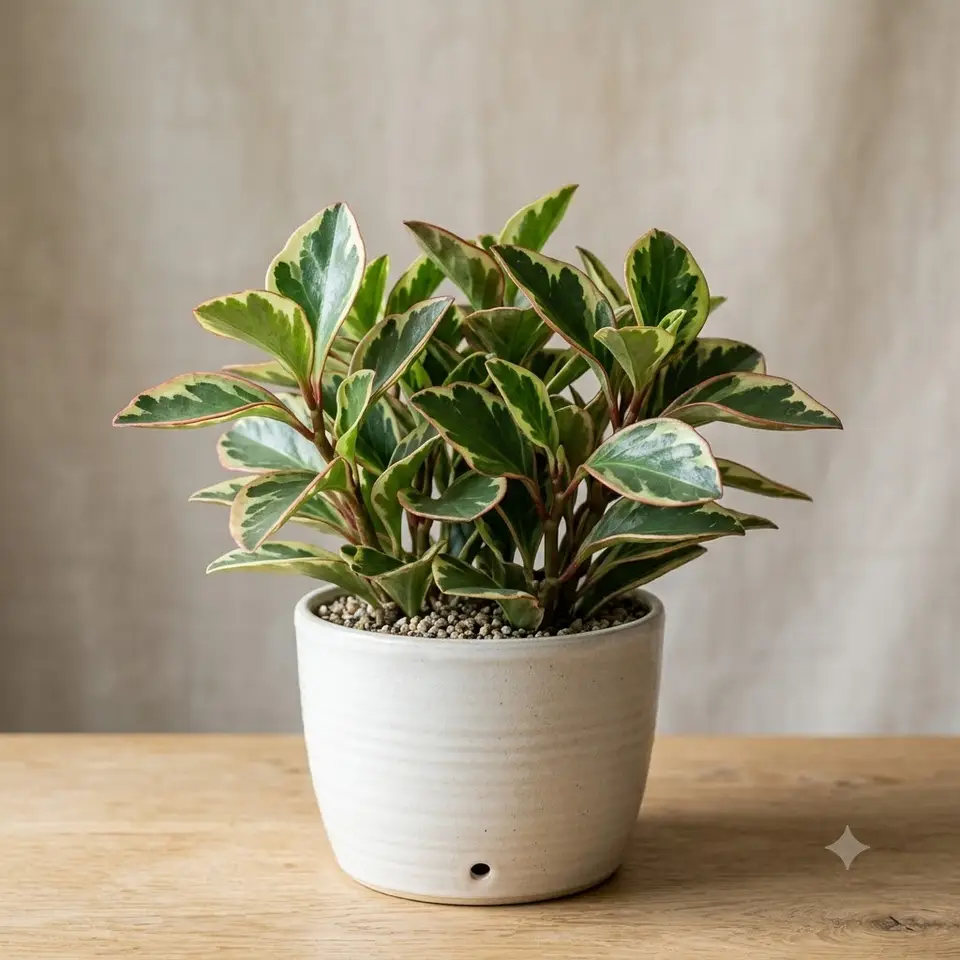 AI illustration
 Overview
Peperomia Ginny is a compact, semi-succulent foliage plant prized for its rounded leaves edged in warm cream and rosy pink. A cultivar of the red-edge peperomia (Peperomia clusiifolia), it stays small and tidy, making it a favourite for desks, shelves and windowsills. It is easygoing and forgiving as long as you resist the urge to overwater.
Origin & Natural Habitat
The parent species, Peperomia clusiifolia, is native to Jamaica in the Caribbean. In the wild these peperomias grow as small understorey and epiphytic plants, often perched on rotting wood or rocky ledges in humid, shaded forest. Their thick leaves are an adaptation to the bright but sheltered light and the fast-draining, low-nutrient pockets of debris they root into. 'Ginny' itself is a selected cultivar rather than a wild form.
Appearance
Ginny produces thick, glossy, slightly cupped leaves that are broadly oval to teardrop-shaped, roughly 5 to 8 cm long. The leaf centre is a fresh mid-green, ringed by a soft cream margin that flushes into coral-pink or rose along the very edge, giving it the alternate name "Rainbow" or "Tricolor" peperomia. Stems are short, upright and a touch reddish, holding the foliage in a dense, bushy mound. It is a slow, modest grower, typically maturing to around 20 to 30 cm tall and wide, which keeps it neat without regular pruning.
Why People Grow It - Qualities & Benefits
- Colourful cream-and-pink variegation that brightens a shelf without needing flowers
- Compact size that fits small spaces, desks and grouped plant displays
- Low, forgiving care needs that suit beginners and busy owners
- Confirmed non-toxic status, so it is safe to keep around cats and dogs
Care
Light: Bright, indirect light brings out the strongest pink and cream tones. It tolerates medium light but variegation fades and growth stretches in shade. Keep it out of harsh midday sun, which can scorch the leaves. Water: Let the top half of the soil dry out before watering, then water thoroughly and drain fully. The thick leaves store moisture, so this plant is far happier slightly dry than soggy. Ease off in winter. Soil: A light, airy, fast-draining mix. A blend of standard potting soil with added perlite, orchid bark or coarse sand works well and prevents water pooling at the roots. Temperature & Humidity: Comfortable at normal room temperatures of about 18 to 26°C. Avoid cold draughts and anything below roughly 12°C. It copes with average household humidity but appreciates a little extra moisture in very dry rooms. Feeding: Feed lightly with a balanced, diluted liquid fertiliser roughly once a month in spring and summer. Skip feeding in autumn and winter, as it needs very little. Extra: The key quirk is that the succulent-like leaves and stems make this plant intolerant of overwatering, so always err on the dry side. Peperomia is non-toxic to cats and dogs and appears on the ASPCA pet-safe list.
Propagation
Ginny propagates easily from stem or leaf cuttings in spring or summer. Take a healthy stem with a few leaves, or a whole leaf with a short piece of stalk, let the cut end callus for an hour or two, then insert it into moist, airy propagation mix or a glass of water. Keep it warm and in bright indirect light, and roots usually form within a few weeks. Note that variegated cultivars root best from stem cuttings that carry the coloured margin.
Common Problems & Pests
- Root rot and mushy, blackening stems from overwatering or heavy soil, the single most common cause of decline
- Faded or reverting variegation and leggy growth when light is too low
- Occasional mealybugs, fungus gnats or spider mites, especially on stressed or overwatered plants
Toxicity & Safety
Peperomia Ginny is pet-safe. It is non-toxic to both cats and dogs and is listed on the ASPCA roster of safe plants, so an accidental nibble is not expected to cause poisoning. The plant itself poses no chemical hazard, though the potting soil and any fertiliser should not be eaten, and eating non-food leaves can still cause mild stomach upset in a curious pet.
Pros & Cons
Pros
- Genuinely pet-safe and non-toxic, easy to place in a home with animals
- Compact, colourful and low-maintenance, forgiving of the occasional missed watering
Cons
- Brittle stems and leaves snap easily if knocked or handled roughly
- Very sensitive to overwatering, which quickly leads to rot
Best Suited For
- Beginners and busy owners who want colour without demanding care
- Pet households, small apartments, desks and shelf displays
FAQ
Why are my Ginny's leaves turning soft and mushy?
This is almost always overwatering. The thick leaves hold their own water, so soggy soil suffocates and rots the roots. Let the mix dry out well between waterings and make sure the pot drains freely.
Is Peperomia Ginny safe for cats and dogs?
Yes. It is non-toxic to cats and dogs and appears on the ASPCA pet-safe list, so it is a good choice for homes with pets. Even so, discourage pets from chewing on it, since non-food leaves can cause mild tummy upset.
Sources
Pet toxicity: checked against the ASPCA Animal Poison Control Center lists of toxic and non-toxic plants for cats and dogs, entry "Red Edge Peperomia" (Peperomia clusiifolia): non-toxic to cats and dogs. Lists read on 10 October 2026.
Gear for growing peperomia ginny
Links go to Amazon or a partner store (such as Adagio Teas) and may earn us a commission at no extra cost to you. As an Amazon Associate we earn from qualifying purchases. We link gear types, not sponsors' picks: you choose the exact product.