Anthurium Pedatoradiatum
Anthurium Pedatoradiatum is a collector-favourite aroid grown entirely for its dramatic, deeply divided foliage rather than its modest flowers.
Last reviewed: September 2026
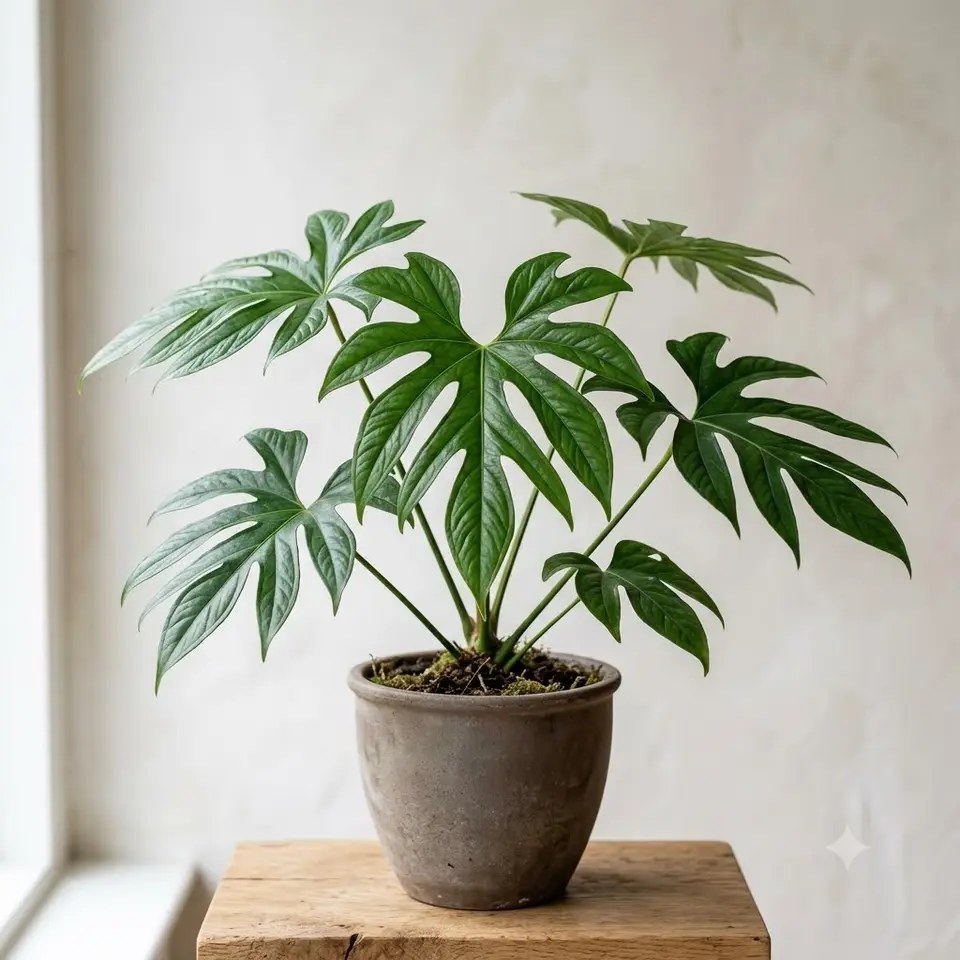 AI illustration
 Overview
Anthurium Pedatoradiatum is a collector-favourite aroid grown entirely for its dramatic, deeply divided foliage rather than its modest flowers. Each mature leaf splits into a fan of long, finger-like lobes that radiate from a central point, giving the plant a bold, sculptural silhouette that few other houseplants can match. It is prized by aroid enthusiasts for the way its leaves transform from simple juvenile blades into elaborate, many-fingered adult forms (Anthurium pedatoradiatum).
Origin & Natural Habitat
It is native to southern Mexico, mainly the humid forests of Veracruz, Oaxaca, and Chiapas, where it grows as a terrestrial or low-climbing plant in shaded, moist understory conditions, often over limestone. In habitat it experiences warm temperatures, high humidity, and dappled light filtered through the forest canopy.
Appearance
Mature leaves are pedately divided, meaning they split into numerous narrow, finger-like lobes (often 10 to 15 or more) that spread out in a hand-shaped or star-shaped pattern, sometimes reaching 45 to 90 cm across on long petioles. The foliage is a deep matte to semi-glossy green with a leathery texture, held on a short, stout stem that can develop a caudex-like base over time. Juvenile leaves start out simple and arrow-shaped, gradually gaining lobes as the plant matures, and a well-grown specimen can reach roughly 1 to 1.5 m tall and wide indoors.
Why People Grow It - Qualities & Benefits
- Bold, hand-shaped foliage that makes an instant statement piece
- A fascinating maturation process as simple juvenile leaves become deeply lobed adults
- A relatively uncommon collector aroid that stands out from mainstream houseplants
- Large, architectural form that fills a corner or anchors a plant shelf
Care
Light: Bright, indirect light. It tolerates medium light but produces its most divided, well-formed leaves in strong filtered light; avoid harsh direct sun, which scorches the foliage.
Water: Keep the mix evenly moist but never soggy. Water thoroughly once the top 2 to 3 cm has dried, and reduce frequency in winter. It dislikes both drought stress and standing water at the roots.
Soil: A chunky, well-aerated aroid mix - for example orchid bark, perlite, coco coir, and a little worm castings - so water drains fast while the roots stay lightly moist and oxygenated.
Temperature & Humidity: Warmth-loving, happiest at 18 to 27°C and unhappy below about 15°C. It genuinely prefers humidity above 60%; in dry indoor air leaf edges brown and pest pressure rises, so a humidifier or a well-lit terrarium-style spot helps.
Feeding: Feed with a balanced, diluted liquid fertiliser every 3 to 4 weeks during spring and summer. Ease off in autumn and winter when growth naturally slows.
Extra: This plant does not go fully dormant, but it slows noticeably in winter, and its biggest quirk is patience - new leaves emerge one at a time and only gain their full lobed shape as the plant matures, so consistent warmth and humidity matter more than speed. Toxic to cats and dogs (insoluble calcium oxalate crystals in the sap) - keep out of reach of pets and children.
Propagation
The most reliable method is division: mature plants produce offsets or multiple growth points at the base that can be separated with roots attached and potted up individually. It can also be grown from fresh seed, but this is slow and mostly of interest to dedicated collectors.
Common Problems & Pests
- Spider mites are the main threat, especially in dry air - watch for fine webbing and stippled, dull leaves
- Thrips, mealybugs, and scale can also appear, hiding along petioles and lobe undersides
- Root rot and yellowing lower leaves from overwatering or a dense, poorly draining mix; brown crispy edges usually signal humidity that is too low
Toxicity & Safety
Like all Anthurium species, this plant is toxic to cats and dogs. Its tissues contain insoluble calcium oxalate crystals that, when chewed, embed in the mouth and throat and cause intense oral irritation, drooling, pawing at the mouth, and vomiting. The sap can also irritate human skin and eyes, so it is wise to wash your hands after pruning or repotting and to keep the plant away from curious pets and small children.
Pros & Cons
Pros
- Striking, architectural foliage unlike common houseplants
- Rewarding to grow as juvenile leaves mature into their lobed adult form
Cons
- Genuinely needs high humidity and warmth to look its best
- Prone to spider mites and slow to reach full size
Best Suited For
- Aroid collectors who enjoy watching a plant develop over time
- Growers who can provide steady warmth and above-average humidity
FAQ
Why are my plant's leaves not splitting into fingers?
Deeply lobed leaves are a sign of maturity. Young plants and stressed plants produce simpler blades, so give it bright indirect light, consistent warmth, humidity, and time, and the lobes will develop as it grows.
Is Anthurium Pedatoradiatum hard to care for?
It is an intermediate plant. The care itself is straightforward, but it is fussy about humidity and warmth and can attract spider mites in dry indoor air, so it suits growers who can meet those conditions reliably.
Gear for growing anthurium pedatoradiatum
Links go to Amazon or a partner store (such as Adagio Teas) and may earn us a commission at no extra cost to you. As an Amazon Associate we earn from qualifying purchases. We link gear types, not sponsors' picks: you choose the exact product.