Anthurium Warocqueanum
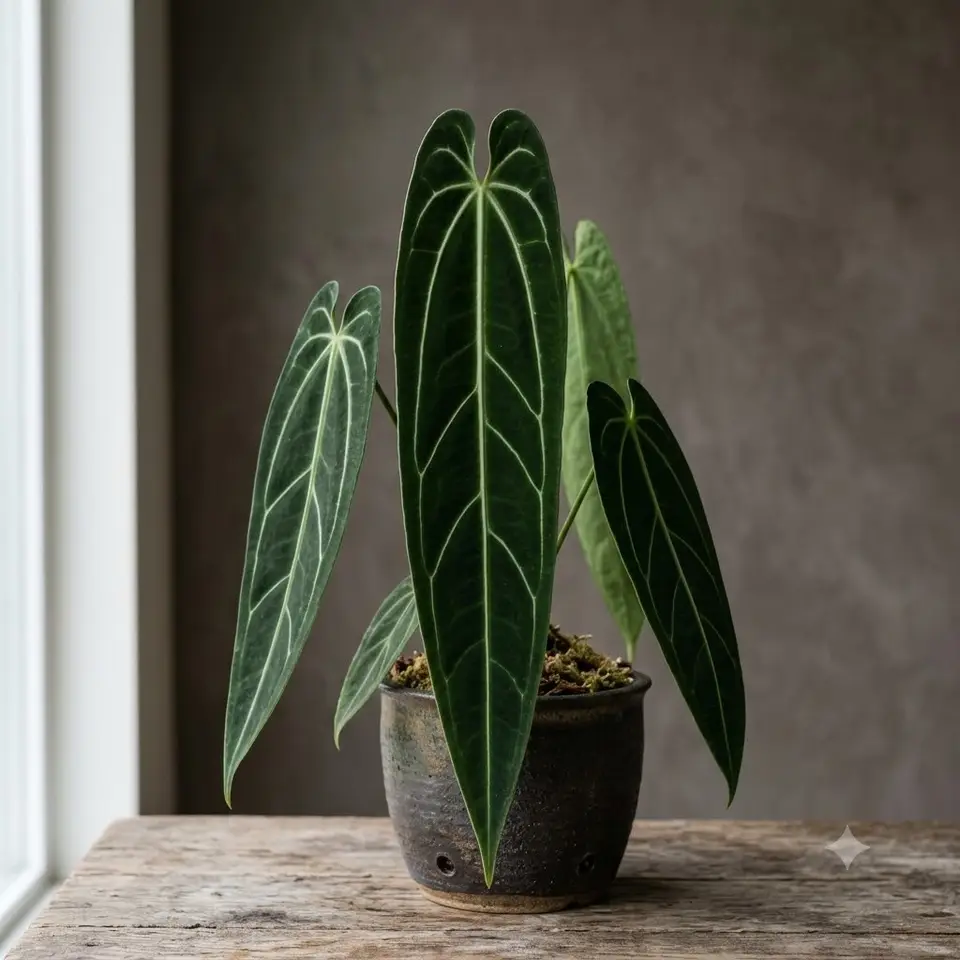
The Queen Anthurium is one of the most coveted velvet-leaved aroids in the hobby, prized for its enormous, pendant, deep green blades laced with pale silvery veins.
Last reviewed: September 2026
 AI illustration
 Overview
The Queen Anthurium is one of the most coveted velvet-leaved aroids in the hobby, prized for its enormous, pendant, deep green blades laced with pale silvery veins. Collectors chase it for the sheer drama of a single mature leaf, which can grow longer than an arm and shimmer like suede under indirect light. It is a genuine trophy plant, but a demanding one (Anthurium warocqueanum).
Origin & Natural Habitat
It is native to the humid montane and lowland rainforests of Colombia, particularly the Chocó and Antioquia regions. There it grows as a hemi-epiphyte, clinging to tree trunks in warm, shaded, near-constantly moist air.
Appearance
The leaves are long, narrow and pendant, hanging downward from the crown and elongating dramatically with age. Blades are a matte, velvety dark green with contrasting silvery-white primary veins, and mature examples can reach about 1 to 2 m in length under ideal conditions. Growth is slow and the plant tends to climb a mossy support, producing one large leaf at a time rather than a bushy mound.
Why People Grow It - Qualities & Benefits
- Spectacular, oversized velvet leaves that are a true collector centerpiece
- Striking silver venation that gives the foliage a hand-painted look
- A rewarding long-term project plant that improves with each new leaf
- High status among aroid enthusiasts and a strong focal point in a plant collection
Care
Light: Bright, indirect light. Direct sun scorches the velvet surface, while too little light stalls growth and shrinks new leaves.
Water: Keep the mix evenly moist but never waterlogged. Let only the top layer approach dryness, then water thoroughly. Use room-temperature, low-mineral water if you can, as it is sensitive to salt buildup.
Soil: A chunky, fast-draining aroid mix - orchid bark, perlite, coco chips and some sphagnum moss. Roots need air, so a loose, airy medium is essential to prevent rot.
Temperature & Humidity: Warmth-loving, ideally 18 to 27°C, and it dislikes anything below about 15°C. Be honest: this plant wants high humidity, ideally 70% or more, and it will struggle, crisp and refuse to size up in dry indoor air. Many growers rely on a grow cabinet or greenhouse.
Feeding: Feed with a dilute, balanced fertilizer during active growth, roughly every two to four weeks at quarter to half strength. Flush the medium occasionally to clear built-up salts.
Extra: The single biggest challenge is humidity stability - sudden drops cause leaf edges to brown and new leaves to emerge deformed. It does not go fully dormant but slows noticeably in cooler, darker months. Toxic to cats and dogs (insoluble calcium oxalate crystals in the sap) - keep out of reach of pets and children.
Propagation
Propagate by stem division or by cutting a section of the climbing stem that has at least one node and aerial root, then potting it into moist sphagnum or an airy mix until it establishes. Basal offsets can also be separated during repotting. Seed is possible but slow and rarely practical for home growers.
Common Problems & Pests
- Spider mites are the top pest, thriving in the same warm conditions the plant enjoys and stippling or bronzing the velvet leaves; inspect regularly
- Root rot from soggy, compacted medium, plus thrips and mealybugs that hide along veins and leaf joints
- Crispy brown leaf edges and stalled, undersized new growth caused by low humidity or mineral-heavy water
Toxicity & Safety
This plant is toxic to cats and dogs. Like other Anthurium, its tissues contain insoluble calcium oxalate crystals, so chewing or biting the leaves or stem releases needle-like crystals that cause oral irritation, intense drooling, pawing at the mouth, difficulty swallowing and vomiting. The sap can also irritate skin, so wear gloves when cutting or repotting and wash your hands afterward.
Pros & Cons
Pros
- Show-stopping, collector-grade velvet foliage that grows more impressive over time
- A rewarding challenge that teaches advanced aroid care
Cons
- High, stable humidity is essential and hard to provide in a typical home
- Slow-growing, pricey and prone to spider mites and leaf damage
Best Suited For
- Experienced aroid growers with a grow cabinet, greenhouse or dedicated humid space
- Patient collectors who want a long-term statement plant, not a quick, easy grower
FAQ
Why are the leaf tips turning brown and crispy?
This is almost always low humidity or mineral buildup from tap water. Raise ambient humidity, keep conditions stable and switch to low-mineral water to protect the delicate velvet surface.
Is Anthurium warocqueanum a good beginner plant?
No. Its steep humidity needs, slow growth and pest sensitivity make it an advanced plant. Beginners usually have better luck building skills on hardier aroids first.
Gear for growing anthurium warocqueanum
Links go to Amazon or a partner store (such as Adagio Teas) and may earn us a commission at no extra cost to you. As an Amazon Associate we earn from qualifying purchases. We link gear types, not sponsors' picks: you choose the exact product.