Asparagus Fern
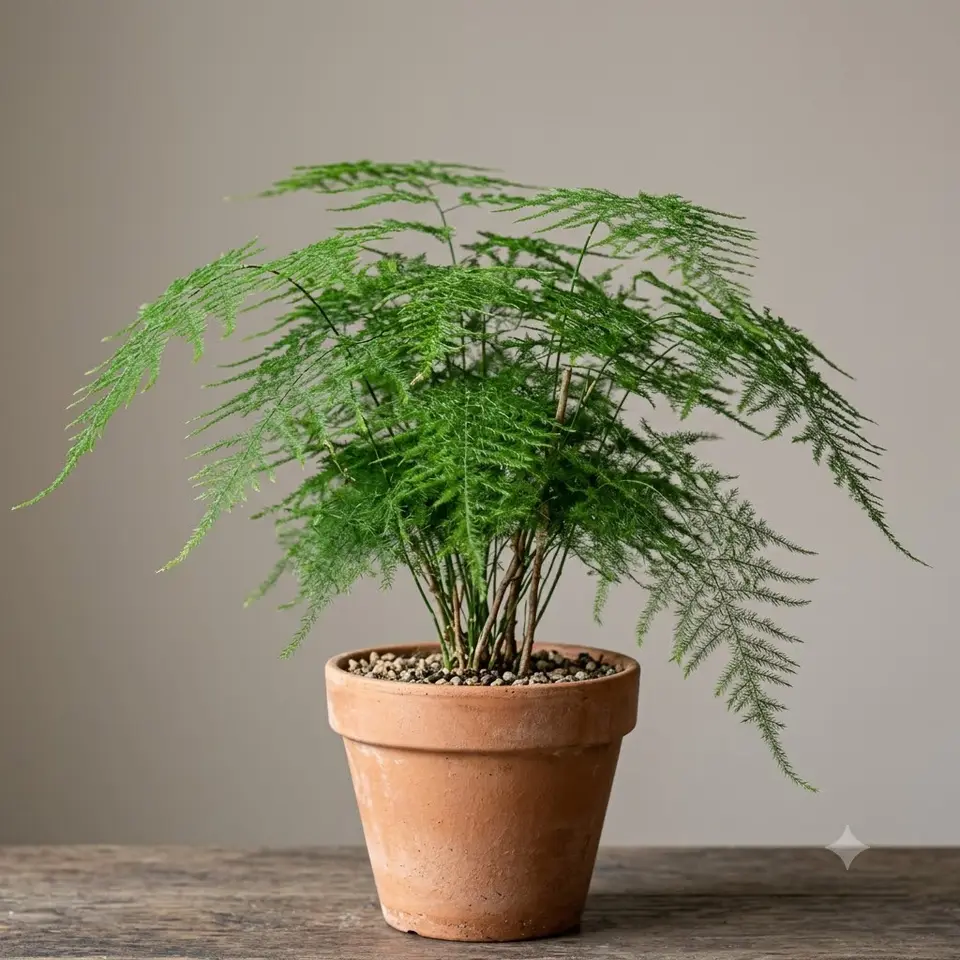
The asparagus fern looks feathery and fern-like but is actually a member of the asparagus (lily) family - a soft, lacy, fast-growing climber loved for its airy foliage.
Last reviewed: October 2026
 AI illustration
 Overview
The asparagus fern looks feathery and fern-like but is actually a member of the asparagus (lily) family - a soft, lacy, fast-growing climber loved for its airy foliage. Two honest caveats: it isn't a true fern, and it is toxic to pets, with berries that are especially hazardous. (Asparagus setaceus.)
Origin & Natural Habitat
Southern/eastern Africa, a climbing relative of edible asparagus grown worldwide as a lacy foliage plant.
Appearance
Soft, feathery, fern-like sprays of fine needle-like 'leaves' (actually cladodes) on wiry climbing/arching stems; mature plants can produce small white flowers and purple-black berries.
Why People Grow It - Qualities & Benefits
- Soft, lacy, airy foliage
- Fast-growing and vigorous
- Tolerant of ordinary rooms
- Handsome trailing or climbing habit
Care
Light: Bright indirect light; tolerates some morning sun. Too little light thins it out.
Water: Keep evenly moist in growth; tolerates some drying (it has water-storing tubers) but drops needles if too dry.
Soil: Standard well-draining potting mix; the tuberous roots can get pot-bound and crack pots - repot when crowded.
Temperature & Humidity: 13-24°C; average humidity is fine, though very dry air yellows the foliage.
Feeding: Balanced feed monthly in spring-summer - it's a vigorous grower.
Extra: TOXIC to cats and dogs: the foliage can irritate and the purple-black berries are especially poisonous if eaten - keep out of pets' reach, and note it is NOT a true fern despite the name. The fine 'needles' also drop and can prickle.
Propagation
Divide the tuberous clump, or sow the seed from the berries (wear gloves - sap can irritate skin).
Common Problems & Pests
Yellowing/needle drop = too dry or too dark; aggressive tuberous roots crack pots. Vigorous to the point of weedy in mild climates (invasive in some regions - never plant out where it can escape).
Toxicity & Safety
Toxic to cats and dogs (ASPCA) - foliage irritates and the berries are especially hazardous. Not pet-safe. Also invasive outdoors in some warm regions: keep it contained.
Best Suited For
- Beginners and forgiving-fern seekers
- Homes WITHOUT pets, or with the plant well out of reach
- Shade and bright-indirect spots
- Terrariums and humid rooms
FAQ
Is the asparagus fern a true fern?
No - it's in the asparagus/lily family, not a fern at all. It just has feathery, fern-like foliage.
Is it safe around pets?
No - it's toxic to cats and dogs, and the purple-black berries are especially hazardous. Keep it well out of reach, or choose a pet-safe fern such as the Boston or button fern instead.
Sources
Pet toxicity: checked against the ASPCA Animal Poison Control Center lists of toxic and non-toxic plants for cats and dogs, entry "Asparagus Fern" (Asparagus densiflorus cv sprengeri): toxic to cats and dogs. Lists read on 10 October 2026.
Gear for growing asparagus fern
Links go to Amazon or a partner store (such as Adagio Teas) and may earn us a commission at no extra cost to you. As an Amazon Associate we earn from qualifying purchases. We link gear types, not sponsors' picks: you choose the exact product.