Baseball Plant (Euphorbia obesa)
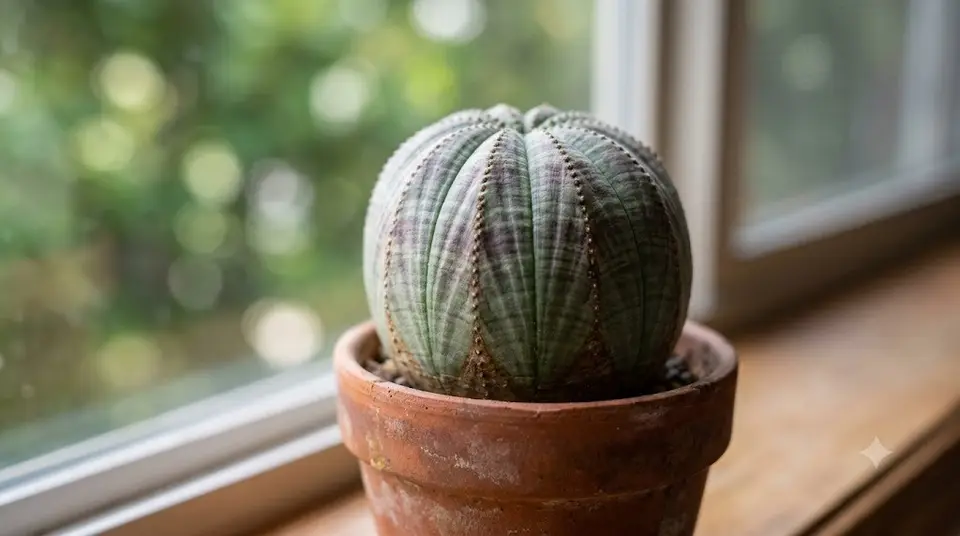
The baseball plant is a curious, spineless, ball-shaped euphorbia patterned with subtle plaid-like markings, looking uncannily like a striped ball or a sea urchin.
Last reviewed: July 2026
 AI illustration
 Overview
The baseball plant is a curious, spineless, ball-shaped euphorbia patterned with subtle plaid-like markings, looking uncannily like a striped ball or a sea urchin. Slow, tidy and utterly distinctive, it is a prized collector's succulent - but, like all euphorbias, it carries a toxic, irritant milky sap, so it needs a careful home.
Origin & Natural Habitat
Euphorbia obesa is native to a small area of the Great Karoo in the Eastern Cape of South Africa, growing on dry, stony ground. It is endangered in the wild, so any plant you buy should be nursery-propagated, never wild-collected.
Appearance
A firm, rounded, spineless grey-green ball, ribbed into (usually) eight segments and patterned with fine, tessellated, plaid-like bands of purple, red and green, resembling a striped ball. With age it may become slightly columnar. Plants are male or female (dioecious), with tiny flowers at the crown.
Why People Love It - Qualities & Benefits
Collectors love the clean, geometric, spineless ball, the subtle plaid patterning, and its slow, sculptural, low-care nature. It is a distinctive, hand-shaped little gem - handsome, unusual and undemanding, given respect for its sap.
Care
Light
Bright light with several hours of direct sun keeps the ball firm, well-patterned and compact - a sunny windowsill is ideal. Too little light and it grows soft, pale and elongated, losing its neat shape.
Watering
Soak, then let the soil dry out completely before watering again, roughly every couple of weeks in summer and rarely in winter. The rounded body stores water and rots if kept wet, so err dry.
Soil & Potting
A gritty, very free-draining cactus or succulent mix in a pot with drainage. Sharp drainage is essential to protect the water-storing body from rot.
Humidity & Temperature
Warm, dry air suits it; it dislikes humidity. Ordinary dry room air is fine. Keep it above about 10°C and give a cool, dry winter rest.
Feeding
A much-diluted feed once or twice in the growing season is ample for this slow plant.
Repotting
Repot rarely, only when pot-bound, in spring. Handle with care and wash your hands afterwards because of the toxic sap, and wait a week before watering after repotting.
Propagation
Usually grown from seed, which needs both a male and a female plant to set. It rarely offsets, so seed (from a reputable source, never the wild) is the main route. Handle the sap carefully if you ever cut it.
Common Problems & Pests
Overwatering rot is the main danger. Mealybugs can appear. Soft, pale, elongating growth means too little light. Any cut or damage weeps toxic white latex - keep it off skin and eyes.
Toxicity & Safety
The baseball plant is toxic: like all euphorbias its milky white sap is a skin and eye irritant and is poisonous if eaten. Keep it well out of reach of children and pets, wash your hands after handling or repotting, avoid getting sap in the eyes, and seek medical or veterinary help if any part is swallowed. Enjoy this one at a safe height in a pet-aware home.
Pros & Cons
Pros: striking spineless patterned ball, tidy, slow and sculptural, low-care, a collector's gem. Cons: toxic irritant sap (pets, children, eyes, skin), slow-growing, needs seed and both sexes to propagate, rots if overwatered.
Best Suited For
A distinctive, low-care collector's succulent for a bright windowsill - best in a pet-free home, or kept well out of reach, with care taken over its toxic sap.
FAQ
Is the baseball plant poisonous? Yes - as a euphorbia its milky sap is an irritant and toxic if eaten; handle with care and keep out of reach.
Why won't mine make seed? It is dioecious - you need both a male and a female plant to set seed.
Gear for growing baseball plant (euphorbia obesa)
Links go to Amazon or a partner store (such as Adagio Teas) and may earn us a commission at no extra cost to you. As an Amazon Associate we earn from qualifying purchases. We link gear types, not sponsors' picks: you choose the exact product.