Baby Rubber Plant Peperomia
The Baby Rubber Plant Peperomia (Peperomia obtusifolia) is a compact, semi-succulent foliage plant prized for its thick, glossy, spoon-shaped leaves.
Last reviewed: September 2026
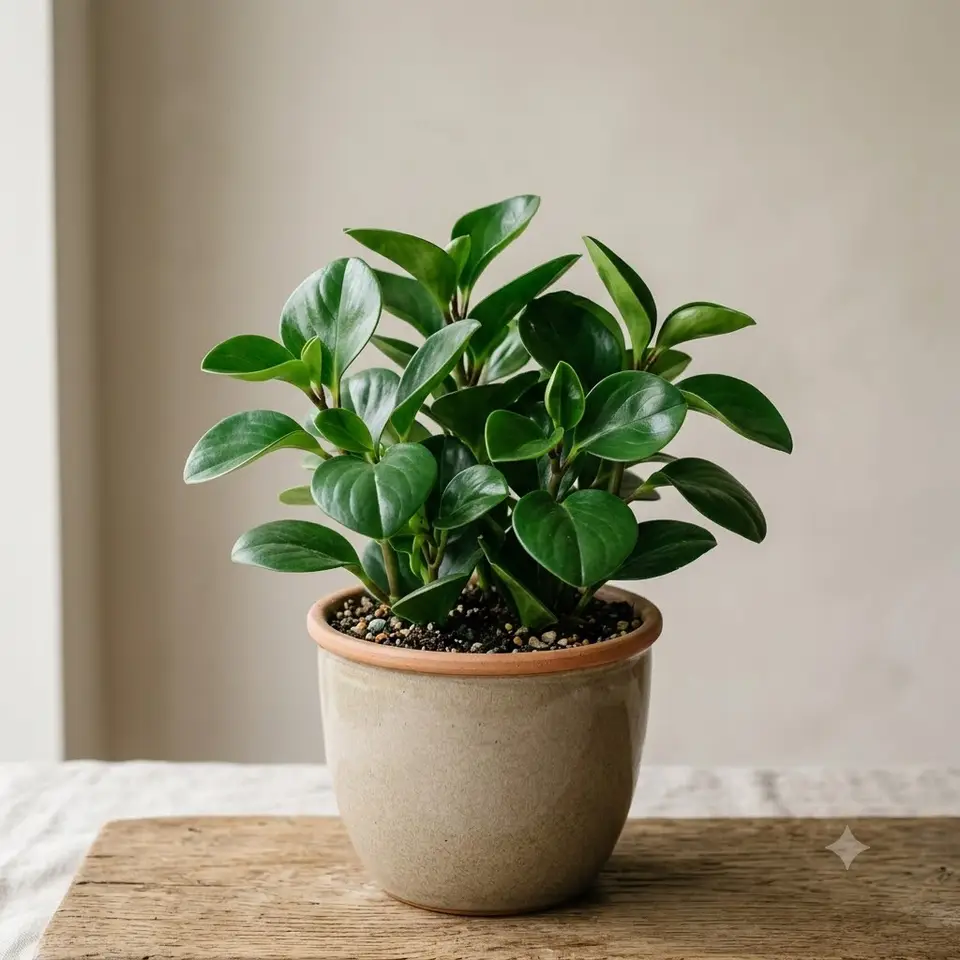 AI illustration
 Overview
The Baby Rubber Plant Peperomia (Peperomia obtusifolia) is a compact, semi-succulent foliage plant prized for its thick, glossy, spoon-shaped leaves. Despite the common name, it is not related to the true rubber tree - it belongs to the pepper family, Piperaceae. Its slow, tidy growth and forgiving nature make it one of the easiest collector Peperomias to keep on a shelf or desk.
Origin & Natural Habitat
Peperomia obtusifolia is native to the warm, humid regions of Florida, Mexico, the Caribbean, and parts of northern South America. In the wild it often grows as an epiphyte or in leaf litter on the rainforest floor, rooting into mossy bark, rotting logs, and shallow pockets of organic debris. This origin explains its preference for airy, fast-draining conditions and its dislike of soggy roots.
Appearance
The leaves are rounded to oval with a blunt (obtuse) tip, thick and fleshy, and carry a waxy, high-gloss surface. Each leaf is typically 3 to 6 cm across, deep green in the plain form, though popular variegated cultivars show cream, gold, or grey-green marbling. Stems are upright and succulent when young, becoming trailing and slightly brittle with age. The plant stays small and mounded, usually reaching 20 to 30 cm tall and roughly as wide, occasionally sending up narrow, spike-like flower stalks that look like slender rat-tails.
Why People Grow It - Qualities & Benefits
- Very forgiving and low-maintenance, ideal for beginners and busy owners
- Stays compact, so it suits small shelves, desks, and windowsills
- Thick leaves store water, making it tolerant of occasional missed waterings
- Pet-safe foliage that adds year-round glossy greenery
Care
Light: Bright, indirect light is ideal. It tolerates medium light but grows leggy and loses variegation in dim corners. Keep it out of harsh midday sun, which can scorch the leaves. Water: Let the top half of the soil dry out before watering, then water thoroughly and let it drain. Water sparingly in winter. This plant is far more likely to die from overwatering than from drought. Soil: A light, fast-draining mix. A blend of standard potting soil with perlite, orchid bark, or coarse sand works well and prevents waterlogging. Temperature & Humidity: Comfortable at 18 to 27°C. Protect it from cold drafts and anything below about 10°C. It tolerates average room humidity but appreciates moderate humidity of 40 to 60%. Feeding: Feed with a balanced, diluted liquid fertiliser about once a month during spring and summer. Do not feed in autumn and winter. Extra: The key quirk is restraint - the fleshy stems and leaves hold water, so err on the dry side and use a pot with drainage holes. Good news for pet owners: this plant is non-toxic to cats and dogs and is listed on the ASPCA pet-safe list.
Propagation
Easy to propagate from leaf or stem cuttings. Take a healthy leaf with a short piece of stalk, or a stem tip with a couple of leaves, let the cut end callus for a few hours, then insert it into moist, airy soil or a glass of water. Keep it warm and bright, and roots usually form within a few weeks.
Common Problems & Pests
- Overwatering causes soft, yellowing leaves, mushy stems, and root rot - the most common cause of failure
- Brittle stems snap easily when handled or knocked, so place and repot it gently
- Occasional pests include mealybugs, fungus gnats (from wet soil), and spider mites in dry air
Toxicity & Safety
The Baby Rubber Plant Peperomia is pet-safe. Peperomia obtusifolia is non-toxic to both cats and dogs and appears on the ASPCA list of safe plants, making it a reassuring choice for homes with curious pets or children. The plant itself poses no poisoning risk, though the potting soil and any added fertiliser are not meant to be eaten and should be kept out of reach.
Pros & Cons
Pros
- Genuinely easy, drought-forgiving, and compact
- Non-toxic and safe around cats and dogs
Cons
- Sensitive to overwatering and prone to root rot if soggy
- Brittle stems break easily and can look sparse if given too little light
Best Suited For
- Beginners and first-time plant owners wanting a reliable, tidy plant
- Homes with pets, small spaces, and bright indirect windowsills
FAQ
Why are the leaves turning yellow and soft?
This is almost always overwatering. Let the soil dry to at least halfway down before watering again, make sure the pot drains freely, and trim away any mushy stems or rotted roots.
Is the Baby Rubber Plant Peperomia safe for cats and dogs?
Yes. It is non-toxic to both cats and dogs and is on the ASPCA pet-safe list, so it is a good pick for pet-friendly homes.
Sources
Pet toxicity: checked against the ASPCA Animal Poison Control Center lists of toxic and non-toxic plants for cats and dogs, entry "Baby Rubber Plant" (Peperomia obtusifolia): non-toxic to cats and dogs. Lists read on 10 October 2026.
Gear for growing baby rubber plant peperomia
Links go to Amazon or a partner store (such as Adagio Teas) and may earn us a commission at no extra cost to you. As an Amazon Associate we earn from qualifying purchases. We link gear types, not sponsors' picks: you choose the exact product.