Begonia Luxurians
Begonia luxurians is a striking cane-type begonia grown almost entirely for its foliage, which fans out into narrow, finger-like leaflets that look far more like a palm or a schefflera than a typical begonia.
Last reviewed: September 2026
 AI illustration
 Overview
Begonia luxurians is a striking cane-type begonia grown almost entirely for its foliage, which fans out into narrow, finger-like leaflets that look far more like a palm or a schefflera than a typical begonia. Collectors chase it for that architectural, tropical silhouette and its tall, upright growth, which reads as exotic even among a shelf of statement plants. It is known botanically as Begonia luxurians.
Origin & Natural Habitat
It is native to the humid Atlantic Forest of southeastern Brazil, in the states around Rio de Janeiro and Sao Paulo. There it grows as an understory to mid-canopy plant in warm, shaded, consistently moist forest conditions.
Appearance
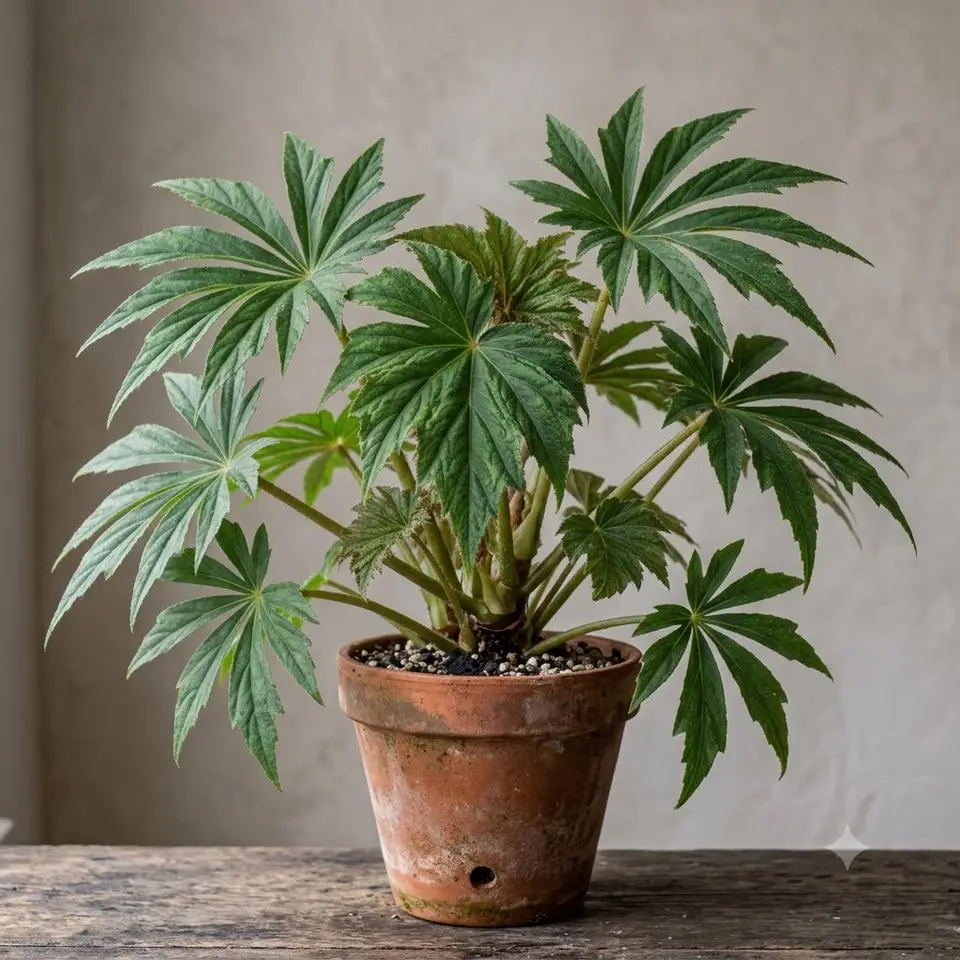
The signature feature is its palmate leaf: a single leaf splits into many long, slim, serrated leaflets that radiate from one point, giving a spidery, palm-like rosette. Foliage is deep green with a subtle sheen, held on reddish, hairy petioles above tall bamboo-like canes. Indoors it often reaches 0.9 to 1.5 m, and in ideal warm, humid conditions it can climb toward 1.8 to 2.4 m, sometimes producing clusters of small, pale creamy flowers.
Why People Grow It - Qualities & Benefits
- Unmistakable palm-like foliage that looks tropical and sculptural
- Grows tall and upright, making a real floor-standing or shelf statement piece
- Fast-growing when it is happy, rewarding good conditions quickly
- A genuine collector's begonia that stays interesting through the year
Care
Light: Bright, indirect light. It wants plenty of brightness to stay compact and colourful, but harsh direct midday sun will scorch and bleach the leaflets.
Water: Keep the mix lightly and evenly moist. Water when the top 2-3 cm begin to dry, and never let it sit soggy or fully bone-dry - both extremes trigger leaf drop.
Soil: A light, airy, well-draining mix. A peat or coco-based potting soil loosened with perlite, orchid bark, and a little added drainage works well.
Temperature & Humidity: Warmth-loving, happiest around 18 to 27°C, and it dislikes anything below about 13°C. Be honest: this is a humidity plant. It really wants 60% or more, and in dry indoor air the leaflets crisp at the tips, so a humid room, pebble tray, or humidifier makes a big difference.
Feeding: Feed with a balanced, diluted liquid fertilizer roughly every 2 to 4 weeks through spring and summer, and ease off in the darker, cooler months.
Extra: Its biggest quirk is fussiness about consistency - sudden drops in humidity, cold drafts, or letting it dry out will cause dramatic leaf drop, and it may slow noticeably in winter without going fully dormant. Toxic to cats and dogs (soluble oxalates; the underground parts are most toxic) - keep out of reach of pets and children.
Propagation
Propagate from stem or cane cuttings taken in the warmer months. Cut a healthy section below a node, root it in water or directly in a light, moist mix, and keep it warm and humid until new growth appears.
Common Problems & Pests
- Spider mites and thrips, especially in dry indoor air - watch for stippling and fine webbing on the leaflets
- Powdery mildew and botrytis in stagnant, cool, damp conditions, so keep airflow moving
- Root and stem rot from overwatering or heavy, poorly draining soil
Toxicity & Safety
Begonia is toxic to cats and dogs. The genus contains soluble oxalates, with the highest concentration in the underground parts (the tubers of tuberous species being the worst offenders). Chewing can cause oral irritation, intense mouth and throat discomfort, drooling, and vomiting, and the sap may irritate sensitive skin, so handle with care and wash your hands after pruning.
Pros & Cons
Pros
- Dramatic, palm-like foliage unlike almost any other houseplant
- Vigorous and tall-growing when its needs are met
Cons
- Genuinely demanding about high humidity and steady warmth
- Prone to sulking and dropping leaves after any sudden change
Best Suited For
- Intermediate growers who can offer steady warmth and humidity
- Collectors wanting a tall, architectural foliage statement
FAQ
Why are the leaf tips turning brown and crispy?
Almost always low humidity or inconsistent watering. Raise the ambient humidity above 60% and keep the mix evenly moist rather than swinging between soggy and dry.
Is Begonia luxurians safe around my pets?
No. Like other begonias it is toxic to cats and dogs due to soluble oxalates, so place it well out of reach of curious animals and children.
Sources
Pet toxicity: checked against the ASPCA Animal Poison Control Center lists of toxic and non-toxic plants for cats and dogs, genus-wide entry "Begonia" (Begonia spp.): toxic to cats and dogs. Lists read on 10 October 2026.
Gear for growing begonia luxurians
Links go to Amazon or a partner store (such as Adagio Teas) and may earn us a commission at no extra cost to you. As an Amazon Associate we earn from qualifying purchases. We link gear types, not sponsors' picks: you choose the exact product.