Beefsteak Begonia
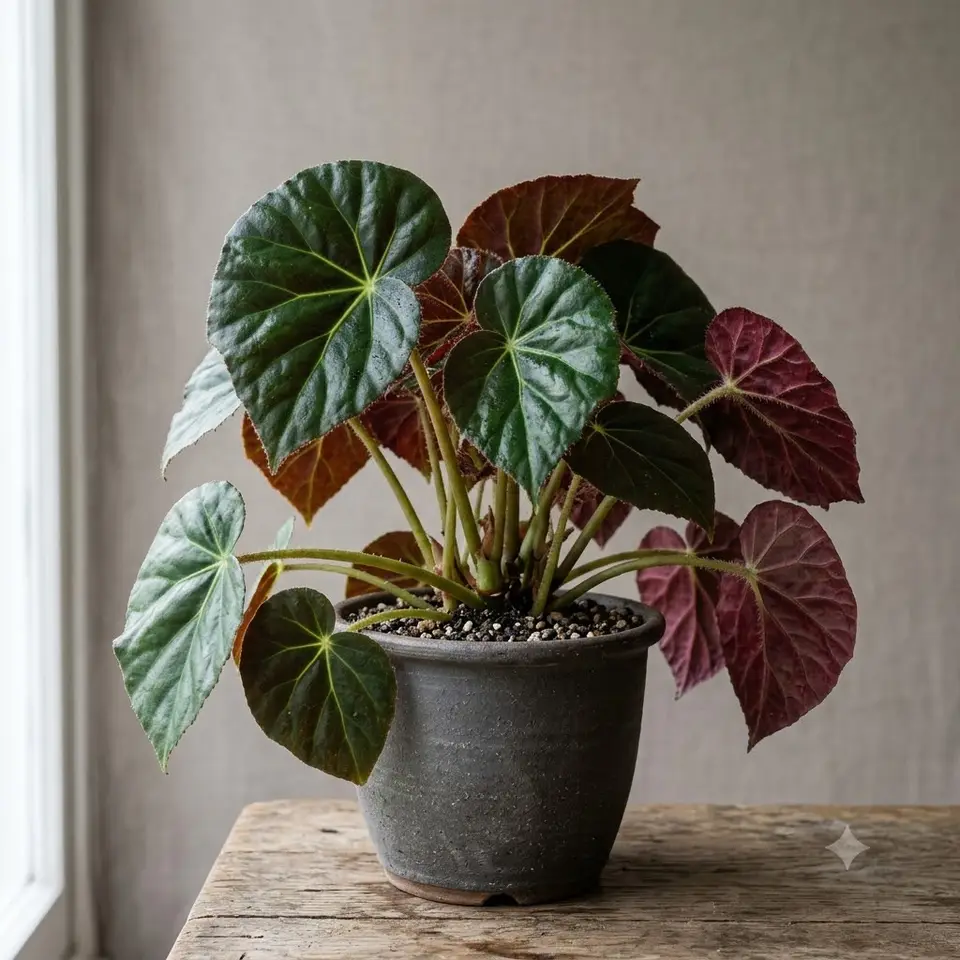
The Beefsteak Begonia is an old-fashioned rhizomatous begonia grown for its round, glossy leaves that are deep green on top and a rich blood-red beneath - the source of its name.
Last reviewed: September 2026
 AI illustration
 Overview
The Beefsteak Begonia is an old-fashioned rhizomatous begonia grown for its round, glossy leaves that are deep green on top and a rich blood-red beneath - the source of its name. Collectors love it because it is one of the toughest, longest-lived begonias, often passed down for generations as cuttings, and it forgives the neglect that kills fussier species. It is a garden hybrid known botanically as Begonia × erythrophylla.
Origin & Natural Habitat
It is not a wild plant but a cultivated cross first raised in the 1840s from two Mexican parent species, Begonia hydrocotylifolia and Begonia manicata, which grow in the moist, shaded understory of Mexican forests. That heritage gives it a taste for warmth, dappled light, and steady but not soggy moisture.
Appearance
The leaves are near-circular to kidney-shaped, thick and waxy, reaching 8 to 13 cm across, glossy olive to dark green above and glowing red-purple underneath. Growth comes from a creeping surface rhizome that snakes over the soil and sends up leaves on reddish stalks, forming a low, spreading mound around 30 to 38 cm tall and wide. In late winter it can throw up airy sprays of small pale-pink flowers held above the foliage.
Why People Grow It - Qualities & Benefits
- Striking two-tone leaves, glossy green on top and vivid red below
- Genuinely easy and long-lived compared with most begonias
- Compact, spreading habit that suits shelves, windowsills, and hanging displays
- Roots readily from a single leaf or rhizome piece, so it is easy to share
Care
Light: Bright, indirect light. An east window or a spot near a bright south or west window with a sheer curtain is ideal. Harsh direct sun scorches and fades the leaves; deep shade makes it leggy and dull.
Water: Let the top 2-3 cm of soil dry out, then water thoroughly and let it drain. This begonia hates sitting wet - overwatering and crown rot are the main ways it dies. Ease off noticeably in winter.
Soil: A light, fast-draining mix. Standard potting soil cut with perlite and a little orchid bark or coco coir works well. The rhizome should sit on top of the soil, not buried.
Temperature & Humidity: Happiest between 18 and 24°C and it dislikes cold drafts and temperatures below about 13°C. It tolerates average room humidity better than most begonias but looks its best around 50%; very dry winter air can crisp the leaf edges. Avoid misting the foliage directly, which invites mildew.
Feeding: Feed with a balanced houseplant fertilizer diluted to half strength every 3 to 4 weeks during spring and summer. Stop feeding in late fall and winter while growth slows.
Extra: This is a rhizomatous begonia, so it does not die back to nothing like tuberous types - it stays evergreen but rests and grows little in winter, when you should water sparingly. Toxic to cats and dogs (soluble oxalates, most concentrated in the underground rhizome) - keep out of reach of pets and children.
Propagation
Very easy. Take a leaf with a bit of stalk, or cut a 3 to 5 cm section of rhizome, and lay or pin it onto moist soil; new plantlets sprout from the cut. Rhizome division at repotting is the fastest route to a full new plant. Spring and early summer give the quickest results.
Common Problems & Pests
- Powdery mildew - the most common issue; caused by wet leaves, crowding, and poor airflow, so water at the soil and keep foliage dry
- Crown and rhizome rot from overwatering or a buried rhizome sitting in wet soil
- Mealybugs and, in dry air, spider mites; browning or crisping leaf edges usually signal air that is too dry or water that is inconsistent
Toxicity & Safety
Begonias are toxic to cats and dogs. They contain soluble oxalates, which are most concentrated in the underground rhizome but present throughout the plant. If chewed, they cause mouth and stomach irritation, drooling, and vomiting; because the oxalates are soluble they can be absorbed, so larger amounts may affect the kidneys. The sap can also irritate sensitive skin, so it is worth washing your hands after taking cuttings. Keep the plant well out of reach of pets and small children.
Pros & Cons
Pros
- Forgiving, hardy, and long-lived - a great first begonia
- Bold red-and-green foliage and easy propagation from a single leaf
Cons
- Prone to powdery mildew and rot if watered carelessly
- Toxic to pets, so not ideal in homes where cats chew plants
Best Suited For
- Beginners who want a rewarding, low-drama begonia
- Collectors of foliage plants with bright, indirect light and no leaf-nibbling pets
FAQ
Why are the undersides of the leaves red?
That red-purple pigment is natural to this hybrid and gives the plant its name. Strong indirect light deepens the color, while too little light leaves the undersides paler and the plant leggy.
Does the Beefsteak Begonia go dormant?
Not fully. As a rhizomatous begonia it stays evergreen year-round but slows almost to a stop in winter. During that rest, cut back sharply on water and hold off feeding until spring growth resumes.
Sources
Pet toxicity: checked against the ASPCA Animal Poison Control Center lists of toxic and non-toxic plants for cats and dogs, genus-wide entry "Begonia" (Begonia spp.): toxic to cats and dogs. Lists read on 10 October 2026.
Gear for growing beefsteak begonia
Links go to Amazon or a partner store (such as Adagio Teas) and may earn us a commission at no extra cost to you. As an Amazon Associate we earn from qualifying purchases. We link gear types, not sponsors' picks: you choose the exact product.