Anthurium Veitchii
Anthurium Veitchii, widely known as the "King Anthurium", is a prized epiphytic aroid grown purely for its dramatic foliage.
Last reviewed: September 2026
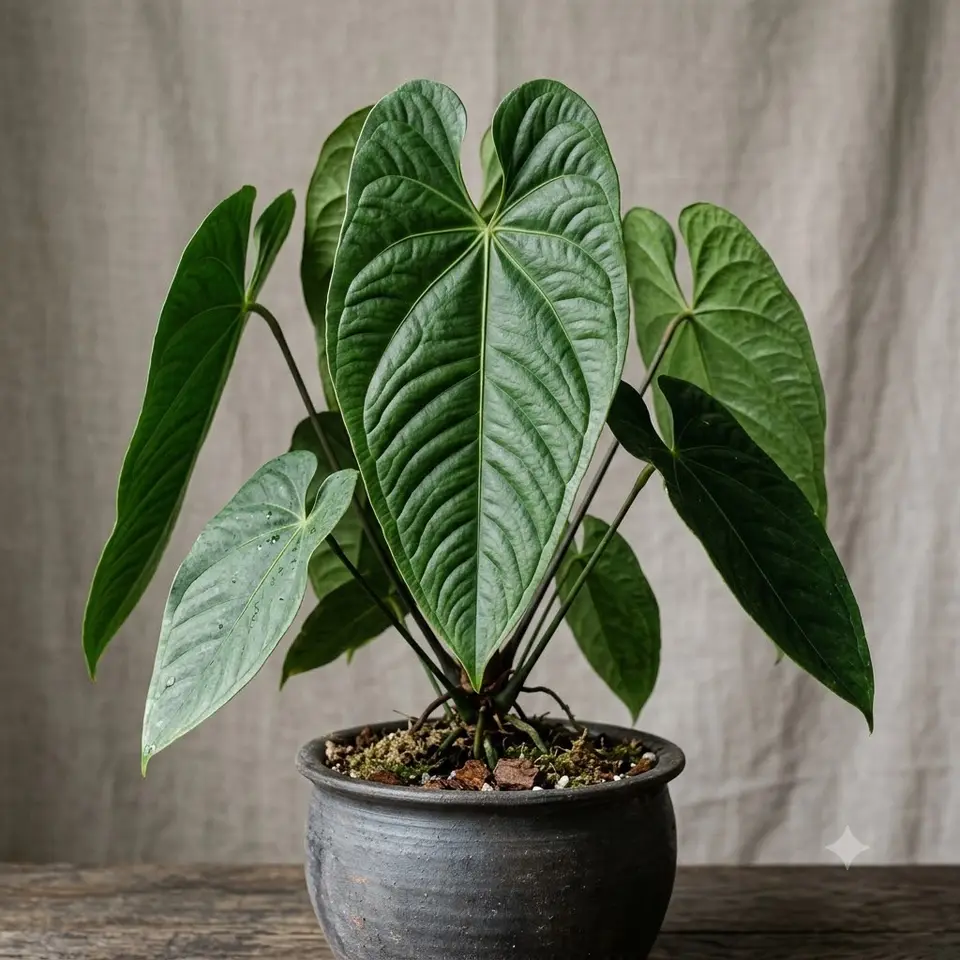 AI illustration
 Overview
Anthurium Veitchii, widely known as the "King Anthurium", is a prized epiphytic aroid grown purely for its dramatic foliage. Collectors chase it for the enormous pendant leaves that hang in deep, corrugated pleats, giving each leaf the look of hammered metal. It is a slow, demanding plant that rewards patience with truly show-stopping specimens (Anthurium veitchii).
Origin & Natural Habitat
It is native to the humid cloud forests of the Chocó region in western Colombia, where it grows as an epiphyte on tree trunks and branches. In habitat it enjoys constant warmth, high humidity, dappled light and excellent air movement.
Appearance
The leaves are long, narrow and heart-based at the top, and they hang downward as they mature, with deep transverse ridges pleated between the lateral veins that create its signature bullate, corrugated texture. Foliage is glossy deep green, often flushed bronze or reddish when young. In cultivation leaves commonly reach 60 cm to 1.2 m long, while mature wild specimens can produce pendant leaves of 1.5 to 1.8 m, so it needs height and hanging room to be shown properly.
Why People Grow It - Qualities & Benefits
- Iconic corrugated, pleated leaves that are unlike almost any other houseplant
- A true statement and centerpiece plant for serious collectors
- Impressive scale, with leaves that keep getting longer as the plant matures
- Epiphytic habit makes it well suited to hanging displays and mounts
Care
Light: Bright, indirect light. Avoid direct midday sun, which scorches the thin leaves; an east-facing window or filtered light works well.
Water: Keep the mix lightly and evenly moist, watering when the top 2-3 cm begin to dry. Never let it sit in soggy media or standing water, as the roots rot quickly.
Soil: A very chunky, fast-draining epiphytic aroid mix - orchid bark, perlite, chunky sphagnum moss and horticultural charcoal - so roots get both moisture and air.
Temperature & Humidity: Warmth-loving, happiest at 18 to 29°C and intolerant of cold below about 13°C. Be honest: this plant wants high humidity, ideally 70% or more, along with steady airflow. Low household humidity is the number one reason it struggles indoors.
Feeding: Feed with a balanced, diluted fertilizer every few weeks during active growth in spring and summer, and ease off in the cooler, darker months.
Extra: It does not go dormant, but it is a genuinely slow, fussy grower that resents drafts, dry air and abrupt changes, so stability matters more than frequent fiddling. A grow tent, cabinet or humidifier is often needed to keep it thriving. Toxic to cats and dogs (insoluble calcium oxalate crystals in the sap irritate the mouth and throat) - keep out of reach of pets and children.
Propagation
Most reliably propagated by dividing basal offshoots or pups once they have their own roots, or by stem cuttings that include a node. Seed propagation is possible but slow and uncommon outside dedicated growers.
Common Problems & Pests
- Spider mites, which thrive in the dry indoor air this plant is often kept in and quickly stipple the leaves
- Root rot and stem collapse from a mix that stays too wet or holds too little air
- Brown, crispy leaf tips and edges, plus deformed or stalled new leaves, caused by low humidity or inconsistent care
Toxicity & Safety
Anthurium Veitchii is toxic to cats and dogs. Like other Anthurium species, its tissues contain insoluble calcium oxalate crystals, and chewing or biting releases them, causing oral irritation, intense drooling, pawing at the mouth, and sometimes vomiting or difficulty swallowing. The sap can also irritate human skin, so gloves are wise when handling, dividing or pruning it. Keep it away from curious pets and small children.
Pros & Cons
Pros
- One of the most visually striking foliage plants you can grow
- Long-lived and increasingly impressive as it matures
Cons
- High humidity and airflow needs make it hard in an average home
- Slow-growing, space-hungry and unforgiving of neglect or wet roots
Best Suited For
- Experienced collectors with a humid grow space, cabinet or greenhouse
- Growers who want a large, dramatic specimen and can offer hanging room
FAQ
Why are my Veitchii leaves smaller than expected?
Leaf size scales up with the plant's maturity and conditions. Young plants and those in low humidity or low light produce shorter leaves; consistent warmth, bright indirect light and high humidity gradually yield the long, deeply pleated foliage it is famous for.
Can I grow Anthurium Veitchii as a normal houseplant without a cabinet?
You can try, but be realistic. It can survive in a warm room with a humidifier and good airflow, yet it will look its best and grow fastest in an enclosed, high-humidity environment. Dry air usually leads to browning edges and spider mites.
Gear for growing anthurium veitchii
Links go to Amazon or a partner store (such as Adagio Teas) and may earn us a commission at no extra cost to you. As an Amazon Associate we earn from qualifying purchases. We link gear types, not sponsors' picks: you choose the exact product.