Anthurium Regale
Anthurium Regale is a large-leaved velvet aroid prized by collectors for its enormous heart-shaped blades and bold silver-white veining.
Last reviewed: September 2026
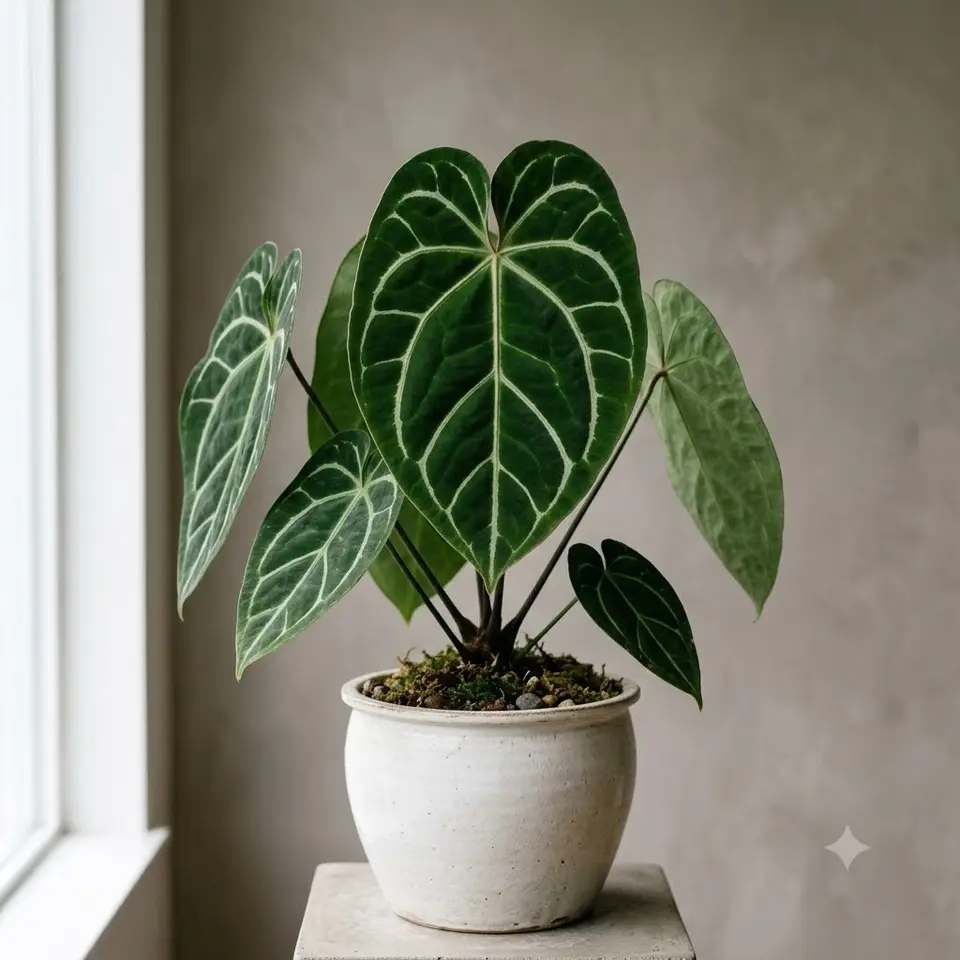 AI illustration
 Overview
Anthurium Regale is a large-leaved velvet aroid prized by collectors for its enormous heart-shaped blades and bold silver-white veining. It is a slow, statement-making plant that rewards patience with leaves that can span a good part of a metre. Its dark, suede-textured foliage and pale vein network make it one of the most sought-after velvet anthuriums (Anthurium regale).
Origin & Natural Habitat
It is native to Peru, growing in the warm, humid forests of the Huallaga river drainage in the Huanuco and San Martin regions. There it lives as a terrestrial and semi-epiphytic plant in rich, moist leaf litter under a filtered forest canopy.
Appearance
The leaves are large, cordate (heart-shaped) blades that hang from long petioles and mature to a deep matte green with a velvety surface. Bright silvery-white primary and secondary veins stand out sharply against the dark blade, giving the leaf a mapped, quilted look. In good conditions leaves can reach 60-90 cm or more in length, and a mature plant develops a bold, upright to arching form.
Why People Grow It - Qualities & Benefits
- Dramatic, oversized velvet leaves that anchor a collection
- Striking silver-white vein contrast on near-black-green blades
- A true collector piece that grows more impressive with each new leaf
- Semi-epiphytic habit that adapts well to airy, chunky mixes
Care
Light: Bright, indirect light. Direct midday sun scorches the velvet surface, while too little light stalls growth and dulls the veins.
Water: Keep the mix lightly and evenly moist, watering when the top 2-3 cm begin to dry. It dislikes both drying out fully and sitting wet, so drainage matters.
Soil: A chunky, airy aroid mix - orchid bark, perlite, coco coir or peat, and a little charcoal - that holds moisture but drains fast and keeps roots aerated.
Temperature & Humidity: Warmth-loving: 18-27°C and no cold drafts or temperatures below about 15°C. It genuinely wants high humidity, ideally 60-80%; below roughly 50% expect crisping edges and slowed growth. Be honest with yourself here - average room air is often not enough.
Feeding: Feed with a diluted balanced or aroid fertilizer every 3-4 weeks in spring and summer, and pause in the darker, cooler months. Flush the mix occasionally to prevent salt buildup.
Extra: This plant does not go dormant, but it is genuinely fussy about stable warmth and humidity, and it grows slowly - a stalled or sulking Regale is common when conditions swing. Toxic to cats and dogs (insoluble calcium oxalate crystals in the sap) - keep out of reach of pets and children.
Propagation
Propagate by division of the rhizome or by separating basal offshoots, each with roots attached, and potting them into the same airy mix. Seed is possible but slow and mostly for experienced growers. Keep divisions warm and humid while they re-establish.
Common Problems & Pests
- Spider mites are the main threat, especially in dry air; they stipple and dull the velvet leaves, so inspect leaf undersides often
- Root rot from soggy, dense soil or overwatering, and crisp brown leaf edges from low humidity
- Thrips, mealybugs, and scale can also appear; wipe leaves gently and isolate new arrivals
Toxicity & Safety
Anthurium Regale is toxic to cats and dogs. Like other anthuriums it contains insoluble calcium oxalate crystals throughout its tissues; when chewed, these cause oral irritation, intense drooling, pawing at the mouth, and vomiting. The sap can also irritate skin, so wear gloves when dividing or pruning and wash your hands afterward.
Pros & Cons
Pros
- Show-stopping, large velvet foliage with brilliant vein contrast
- A rewarding long-term specimen that appreciates in beauty and value
Cons
- Demanding humidity and warmth make it a poor fit for casual care
- Slow growing and prone to sulking when conditions are unstable
Best Suited For
- Experienced aroid collectors with a greenhouse, cabinet, or high-humidity room
- Growers who enjoy dialing in conditions rather than a set-and-forget plant
FAQ
Why are the edges of my Regale turning crispy brown?
This is almost always low humidity, sometimes combined with underwatering or fertilizer salt buildup. Raise ambient humidity, keep moisture even, and flush the soil occasionally.
Does Anthurium Regale go dormant in winter?
No, it stays evergreen, but its growth slows markedly in the cooler, darker months. Ease off feeding and watering during that period and keep it warm.
Gear for growing anthurium regale
Links go to Amazon or a partner store (such as Adagio Teas) and may earn us a commission at no extra cost to you. As an Amazon Associate we earn from qualifying purchases. We link gear types, not sponsors' picks: you choose the exact product.