Anthurium Superbum
Anthurium Superbum is a "bird's nest" type anthurium prized for its thick, sculptural, upright leaves that form a tidy rosette rather than a climbing vine.
Last reviewed: September 2026
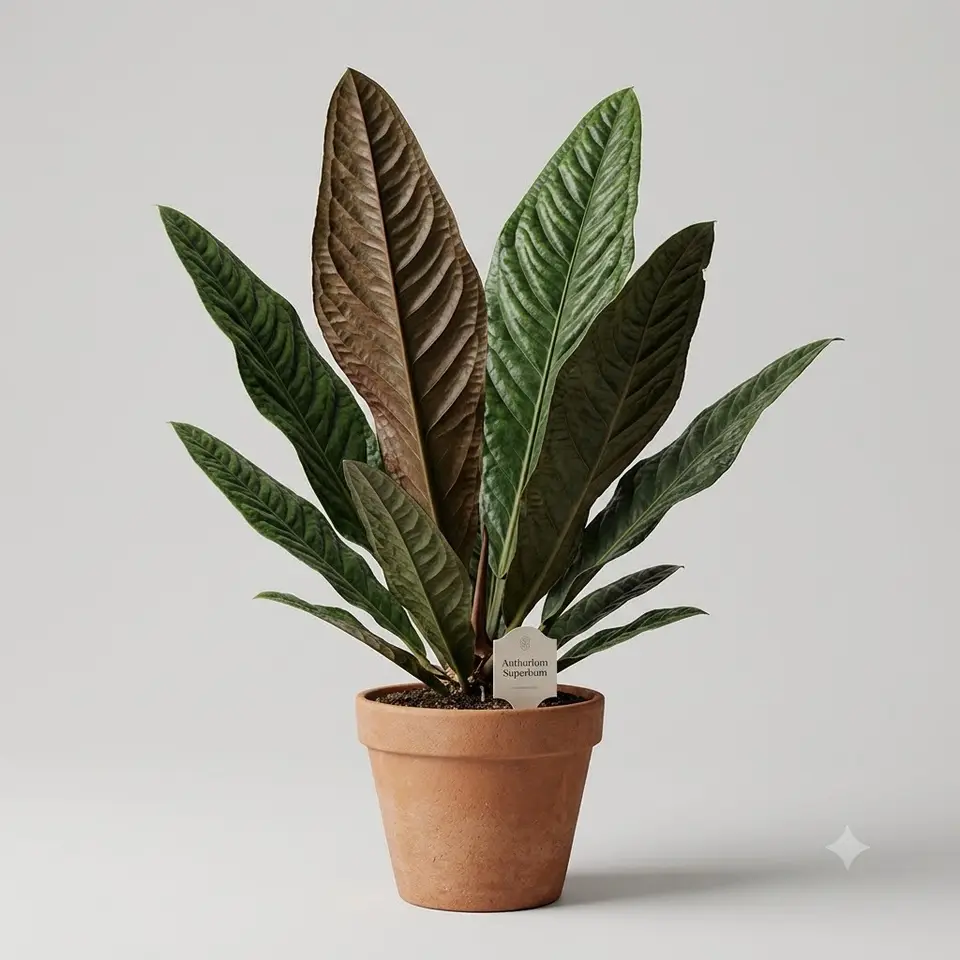 AI illustration
 Overview
Anthurium Superbum is a "bird's nest" type anthurium prized for its thick, sculptural, upright leaves that form a tidy rosette rather than a climbing vine. Collectors want it for its architectural silhouette, heavily corrugated foliage, and its reputation as one of the tougher, more forgiving members of an otherwise fussy genus (Anthurium superbum).
Origin & Natural Habitat
It is native to Ecuador, where it grows in warm, humid lowland and premontane tropical forest. In the wild it is largely epiphytic or hemi-epiphytic, its rosette funnelling leaf litter and moisture down toward the roots.
Appearance
The leaves are broad, elliptical to paddle-shaped, thick and leathery, with a deeply quilted surface and prominent sunken veins that catch the light. New growth often flushes coppery or bronze before hardening to a deep matte green on top, while the underside carries a reddish to burgundy cast. Leaves stand upright and radiate from a central point, and a healthy plant can reach roughly 60 to 90 cm across at maturity.
Why People Grow It - Qualities & Benefits
- Bold, sculptural rosette that works as a living centerpiece
- Corrugated, heavily veined leaves with a striking reddish underside
- More heat and neglect tolerant than many collector anthuriums
- Compact, non-climbing habit that suits shelves and tabletops
Care
Light: Bright, indirect light. It tolerates medium light but grows fuller and more compact with plenty of filtered brightness; keep it out of harsh direct sun, which scorches the leaves.
Water: Water when the top 2-5 cm of mix have dried, then water thoroughly and let it drain. It dislikes both bone-dry roots and soggy, waterlogged soil, so consistency matters more than volume.
Soil: A chunky, fast-draining aroid mix - think bark, perlite, and coco coir or a little peat, with some horticultural charcoal. The roots want air, so avoid dense, water-holding potting soil.
Temperature & Humidity: Warmth-loving, happiest between about 18 and 27°C, and it resents anything below roughly 13°C. It appreciates higher humidity (ideally 60% or more); it survives average room humidity but leaf quality suffers and edges can brown in dry air.
Feeding: Feed with a balanced, diluted liquid fertilizer roughly every 4 to 6 weeks during spring and summer. Ease off in the darker months when growth naturally slows.
Extra: This anthurium does not go dormant, but it is a slow grower - patience is the real requirement, as it may push only a handful of leaves per year. Toxic to cats and dogs (insoluble calcium oxalate crystals in the sap) - keep out of reach of pets and children.
Propagation
The most reliable method is division: an established plant will eventually offset or can be split at the root crown during repotting, giving each division its own roots and growth point. It can be grown from fresh seed, but that is slow and mainly for the dedicated. Leaf cuttings do not work for this rosette-forming type.
Common Problems & Pests
- Spider mites are the main pest, especially in dry indoor air; watch for fine webbing and stippled, dull leaves
- Root rot from overwatering or dense soil, showing as yellowing, mushy stems at the base
- Brown, crispy leaf edges and tips from low humidity or inconsistent watering
Toxicity & Safety
Like the whole genus, Anthurium Superbum is toxic to cats and dogs. The leaves and sap contain insoluble calcium oxalate crystals, which cause intense oral irritation, drooling, pawing at the mouth, and vomiting if chewed or swallowed. The sap can also irritate skin and eyes, so wash your hands after pruning or repotting and keep it away from curious pets and children.
Pros & Cons
Pros
- Dramatic, architectural foliage that reads as a statement plant
- Hardier and more heat tolerant than most collector anthuriums
Cons
- Slow grower that tests your patience
- Prone to spider mites and unhappy in dry air
Best Suited For
- Collectors who want anthurium drama without extreme fussiness
- Growers who can offer warmth, steady moisture, and decent humidity
FAQ
Why is my Anthurium Superbum growing so slowly?
That is normal for this species. It naturally pushes only a few leaves per year, and growth slows further in low light or cooler months. Bright indirect light and steady warmth give you the best pace.
Do I really need high humidity for it?
It will survive in average room humidity, but you will likely see browning edges and slower growth. Aiming for 60% or higher, with a pebble tray or humidifier, keeps the foliage looking its best.
Gear for growing anthurium superbum
Links go to Amazon or a partner store (such as Adagio Teas) and may earn us a commission at no extra cost to you. As an Amazon Associate we earn from qualifying purchases. We link gear types, not sponsors' picks: you choose the exact product.