Anthurium Clarinervium
Anthurium Clarinervium is a compact, velvet-leaved aroid grown purely for its dramatic foliage: deep green, heart-shaped leaves laced with a bright network of pale silvery-white veins.
Last reviewed: September 2026
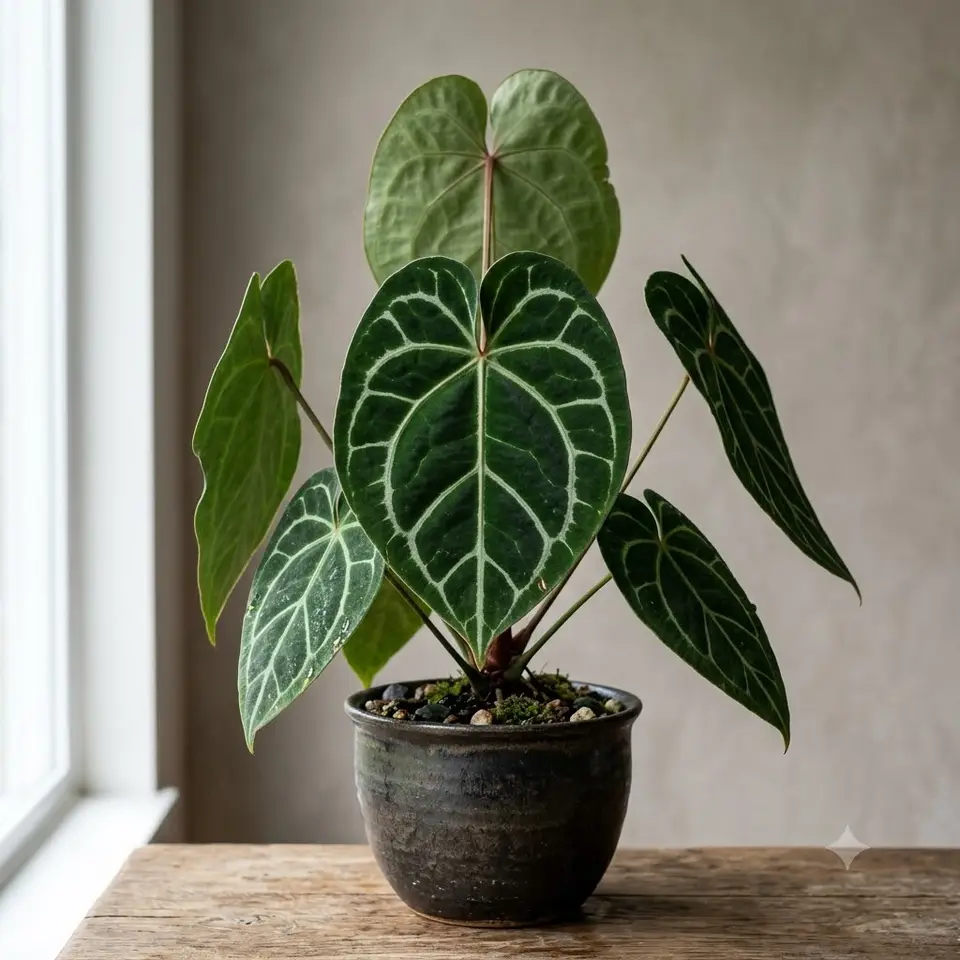 AI illustration
 Overview
Anthurium Clarinervium is a compact, velvet-leaved aroid grown purely for its dramatic foliage: deep green, heart-shaped leaves laced with a bright network of pale silvery-white veins. Collectors prize it because that vein contrast looks almost hand-painted, and because a well-grown specimen stays tidy enough for a shelf yet reads as a real statement plant. It is a species Anthurium (not a hybrid), botanically named (Anthurium clarinervium).
Origin & Natural Habitat
It is native to the state of Chiapas in southern Mexico, where it grows as a lithophyte on shaded limestone outcrops in humid, tropical forest. Because it clings to rock rather than deep soil, its roots are used to fast drainage, steady moisture, and warm, still, humid air.
Appearance
The leaves are thick, stiff, and velvety, cordate (heart-shaped) with a rounded outline and a deep basal notch, typically reaching roughly 15 to 30 cm long on a mature plant. New leaves often emerge bronze or reddish before darkening to a matte forest green crossed by contrasting ivory to silver veins. It grows slowly from a short, upright rhizome, so the plant stays fairly small and clumping rather than climbing, usually topping out around 40 to 60 cm across in a pot.
Why People Grow It - Qualities & Benefits
- Striking vein pattern that makes it one of the most recognizable "velvet" anthuriums
- Stays compact, so it suits shelves, cabinets, and smaller collections
- Evergreen foliage with year-round interest and no showy flower to rely on
- A rewarding step-up species for growers ready to move beyond beginner aroids
Care
Light: Bright, indirect light. Direct midday sun scorches the velvety surface, while too little light flattens the vein contrast and slows already-slow growth. An east window or a metre or so back from a bright window is ideal.
Water: Water when the top few centimetres of mix have dried, then water thoroughly and let it drain. It dislikes both drying out completely and sitting wet; soggy soil quickly leads to root rot.
Soil: A chunky, fast-draining aroid mix - for example orchid bark, perlite, and coco coir or a little peat, with some horticultural charcoal. The roots want air, so avoid dense, water-logging potting soil.
Temperature & Humidity: Warmth-loving: roughly 18 to 27°C, and it resents anything below about 15°C or cold drafts. Be honest, this plant genuinely wants high humidity, ideally 60% or more; in dry rooms leaf edges crisp and new leaves can deform, so many growers use a humidifier, pebble tray, or a growing cabinet.
Feeding: Feed with a balanced, diluted fertilizer roughly monthly during active growth in spring and summer, and ease off in the darker months. It is sensitive to salt buildup, so flush the pot occasionally.
Extra: The single biggest quirk is its humidity and airflow demand - it does not truly go dormant, but growth stalls sharply in cool, dry, dim conditions, and low humidity is the usual reason a healthy-looking plant suddenly stops pushing good leaves. Toxic to cats and dogs (insoluble calcium oxalate crystals in the sap irritate the mouth and throat) - keep out of reach of pets and children.
Propagation
Propagate by division of the rhizome or by separating rooted offsets when repotting, keeping several healthy roots on each piece. Mature plants can also be grown from fresh seed, but that is slow and mostly done by specialists.
Common Problems & Pests
- Spider mites are the classic pest, especially in dry indoor air; check the leaf undersides for fine webbing and stippling
- Crispy brown leaf edges and stalled, deformed new growth, almost always from humidity that is too low
- Yellowing leaves and mushy roots from overwatering or a dense, poorly draining mix, which invites root rot
Toxicity & Safety
Like other anthuriums, this plant is toxic to cats and dogs. It contains insoluble calcium oxalate crystals throughout its tissues; when chewed, these needle-like crystals cause oral irritation, intense drooling, pawing at the mouth, and sometimes vomiting or difficulty swallowing. The sap can also irritate skin and eyes, so it is wise to wash your hands after pruning or repotting and to keep the plant away from curious pets and small children.
Pros & Cons
Pros
- Bold, unmistakable veined foliage on a manageably small plant
- Long-lived and evergreen with the right warmth and humidity
Cons
- Genuinely fussy about humidity and prone to spider mites
- Slow-growing, so recovering from a setback takes patience
Best Suited For
- Intermediate growers who can provide warmth, humidity, and a chunky mix
- Collectors who want a compact velvet anthurium for a shelf or cabinet
FAQ
Why are the edges of my leaves turning brown and crispy?
That is almost always low humidity, sometimes combined with inconsistent watering or salt buildup. Raise ambient humidity toward 60% or higher, keep watering even, and flush the pot occasionally to clear excess fertilizer salts.
Does Anthurium Clarinervium need a terrarium or cabinet?
Not strictly, but it is much easier in a humid, enclosed space. In a normal room it can succeed with a humidifier and good airflow; in very dry homes a cabinet or terrarium takes most of the guesswork out of keeping the foliage pristine.
Gear for growing anthurium clarinervium
Links go to Amazon or a partner store (such as Adagio Teas) and may earn us a commission at no extra cost to you. As an Amazon Associate we earn from qualifying purchases. We link gear types, not sponsors' picks: you choose the exact product.