Anthurium Crystallinum
Anthurium Crystallinum is a prized velvet-leaf aroid grown purely for its dramatic foliage: broad, heart-shaped leaves in deep matte green, laced with bright silvery-white veins that look almost crystalline.
Last reviewed: September 2026
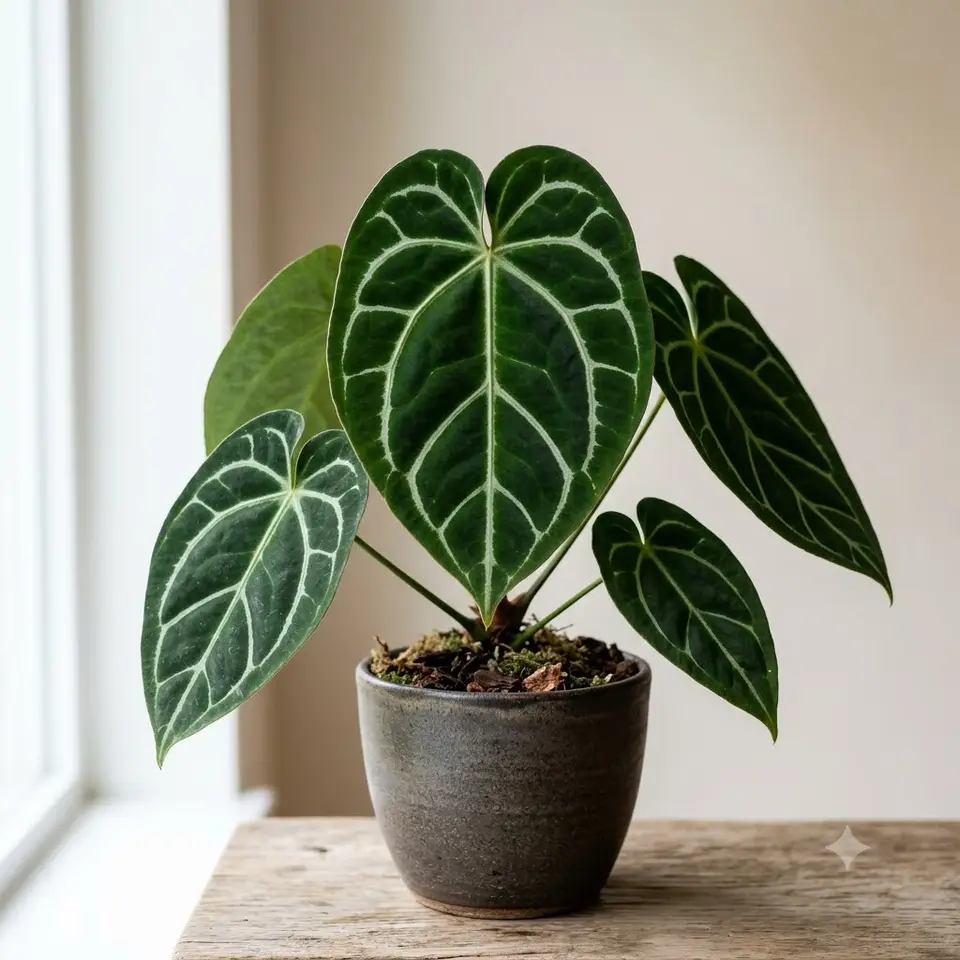 AI illustration
 Overview
Anthurium Crystallinum is a prized velvet-leaf aroid grown purely for its dramatic foliage: broad, heart-shaped leaves in deep matte green, laced with bright silvery-white veins that look almost crystalline. Collectors chase it for that contrast and for the plush, suede-like texture of each leaf, though it asks for real humidity and attention in return. It is botanically known as (Anthurium crystallinum).
Origin & Natural Habitat
It is native to the humid tropical rainforests of Central and South America, ranging through Panama, Colombia, Ecuador and Peru. In the wild it grows as an understory epiphyte or terrestrial plant, clinging to trees or leaf litter in warm, shaded, consistently moist conditions.
Appearance
The leaves are large, ovate to heart-shaped, and covered in a fine velvety sheen that gives them a matte, almost fabric-like surface. Mature leaves are deep emerald to blackish green with striking silvery-white primary and secondary veins, and new growth often emerges a coppery pink or bronze before hardening off. It has a compact, clumping rosette habit, and individual leaves can reach around 30 to 60 cm long on a well-grown mature plant kept in good conditions.
Why People Grow It - Qualities & Benefits
- Show-stopping silver venation against dark, velvety foliage
- A genuine collector centerpiece that anchors an aroid or terrarium display
- Stays relatively compact compared to many large-leaf aroids
- New leaves emerge in warm coppery-pink tones, giving ongoing visual interest
Care
Light: Bright, indirect light. Direct sun scorches and dulls the velvet leaves, while deep shade slows growth and weakens venation. An east window or a metre or so back from a bright window is ideal.
Water: Keep the mix lightly and evenly moist, never soggy. Water when the top 2-3 cm begin to dry, and reduce slightly in winter. It is sensitive to both drying out fully and to sitting wet, so drainage matters.
Soil: A chunky, airy aroid mix - orchid bark, perlite, coco coir and a little worm castings. It wants moisture retention with plenty of air around the roots to avoid rot.
Temperature & Humidity: Warmth-loving: roughly 18 to 27°C, and it dislikes anything below about 15°C. Humidity is the honest sticking point - it really wants 60% or higher, and in dry indoor air the leaves can brown at the edges or fail to size up. Many growers use a humidifier or a cabinet.
Feeding: Feed with a dilute, balanced liquid fertilizer roughly every 3 to 4 weeks during active growth in spring and summer, at half strength. Ease off in the darker winter months.
Extra: Its make-or-break quirk is humidity plus airflow - high moisture without stagnant air invites rot, so it thrives best in a well-ventilated humid setup rather than a stuffy one. It does not go fully dormant but growth slows noticeably in winter. Toxic to cats and dogs (insoluble calcium oxalate crystals in the sap) - keep out of reach of pets and children.
Propagation
Propagate by division of the rosette or by separating basal offsets, each with roots attached, potting them into the same airy mix. Mature specimens can also be grown from seed after pollination, but this is slow and mostly for dedicated hobbyists.
Common Problems & Pests
- Spider mites are the classic pest, especially in warm dry air - watch for fine webbing and stippled, dull leaves
- Root rot from soggy, compacted soil or overwatering
- Brown, crispy leaf edges and stalled growth from low humidity or inconsistent watering
Toxicity & Safety
This plant is toxic to cats and dogs. Like other Anthurium species, all parts contain insoluble calcium oxalate crystals; when chewed, the sap releases these needle-like crystals and causes intense oral irritation, drooling, pawing at the mouth, and sometimes vomiting or difficulty swallowing. The sap can also irritate human skin and eyes, so handle with care and wash hands after pruning or repotting.
Pros & Cons
Pros
- Striking, high-contrast foliage that few other houseplants match
- Stays manageable in size for a statement collector plant
Cons
- Fussy about humidity and easily damaged by dry indoor air
- Prone to spider mites and to root rot if watering is careless
Best Suited For
- Experienced aroid collectors who can provide steady warmth and humidity
- Growers with a humidifier, terrarium or plant cabinet for stable conditions
FAQ
Why are the edges of my leaves turning brown and crispy?
Almost always low humidity or inconsistent watering. Raise ambient humidity toward 60% or more with a humidifier or enclosure, and keep the mix evenly moist rather than swinging between bone-dry and soaked.
Is Anthurium Crystallinum a good beginner plant?
Not really. It is best treated as an intermediate to advanced plant because of its humidity demands and susceptibility to spider mites and rot. Beginners can succeed, but usually only with a humid, well-ventilated setup and careful watering.
Gear for growing anthurium crystallinum
Links go to Amazon or a partner store (such as Adagio Teas) and may earn us a commission at no extra cost to you. As an Amazon Associate we earn from qualifying purchases. We link gear types, not sponsors' picks: you choose the exact product.