Anthurium Magnificum
Anthurium Magnificum is a large-leaved velvet Anthurium prized for its dramatic, deeply veined foliage and elegant proportions.
Last reviewed: September 2026
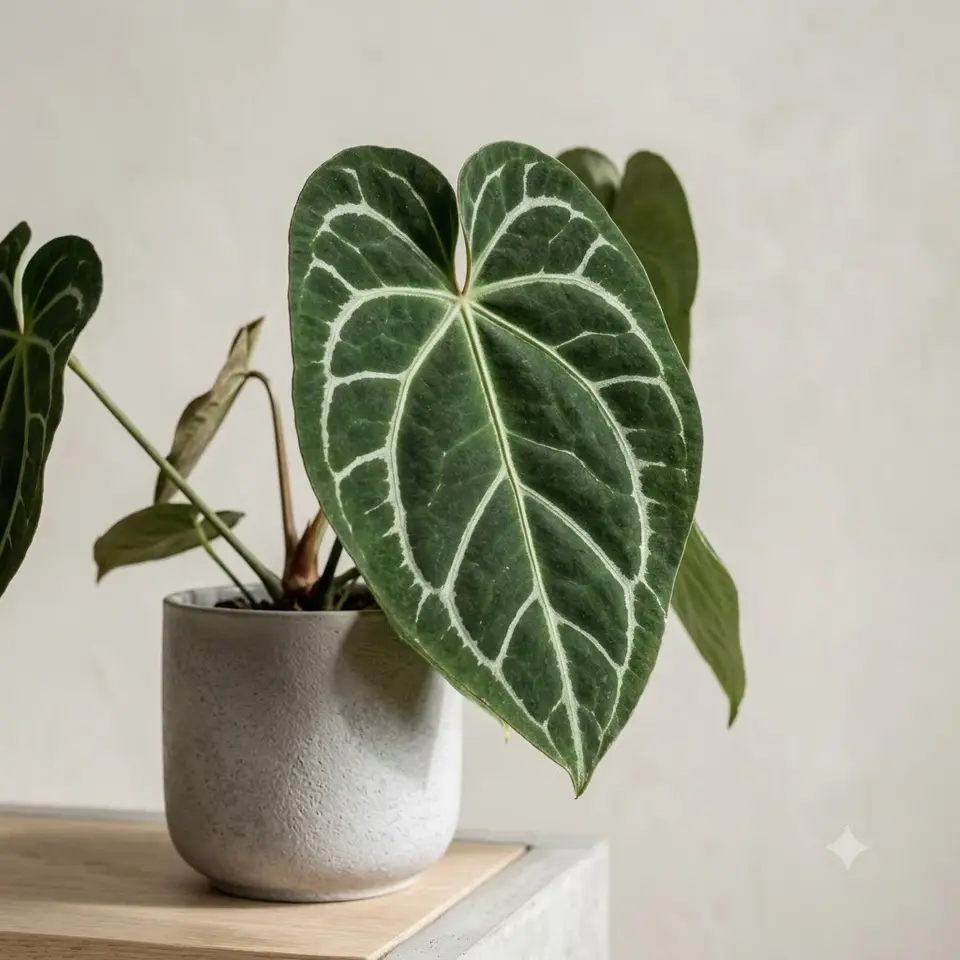 AI illustration
 Overview
Anthurium Magnificum is a large-leaved velvet Anthurium prized for its dramatic, deeply veined foliage and elegant proportions. Collectors chase it for the combination of matte velvet texture and bold silver venation, plus its signature square, winged leaf stems that set it apart from lookalikes. It is a true collector aroid that rewards patience with statement-sized leaves (Anthurium magnificum).
Origin & Natural Habitat
It is native to the tropical rainforests of Colombia, where it grows on the shaded, humid forest floor and as a low epiphyte on tree trunks. In habitat it enjoys warm, stable temperatures, constant moisture and dappled light beneath the canopy.
Appearance
The leaves are large, heart-shaped (cordate) and held on distinctively quadrangular, winged petioles - a key identifying trait. Mature foliage is velvety dark green with striking pale, silvery-white veins, and new leaves often flush a coppery bronze or reddish tone before hardening off. Indoors leaves commonly reach 30 to 60 cm long, and a well-grown plant can span a metre or more across.
Why People Grow It - Qualities & Benefits
- Bold, velvety foliage with high-contrast silver veining that reads as a living sculpture
- The square, winged petioles make it an instantly recognisable collector species
- Coppery new-leaf flushes add seasonal color interest as it grows
- Slower, upright habit stays tidy and does not sprawl like many trailing aroids
Care
Light: Bright, indirect light. Protect it from direct midday sun, which scorches the velvet surface; an east window or a metre or so back from a bright window is ideal.
Water: Keep the mix lightly and evenly moist, watering when the top 2 to 3 cm feels dry. It dislikes both drought and soggy roots, so let excess drain fully. It is sensitive to mineral salts, so filtered water, rainwater or distilled water helps prevent leaf-tip burn.
Soil: A chunky, fast-draining aroid mix - orchid bark, perlite, coconut coir or chunky peat, plus charcoal and a little sphagnum. The roots need air, so avoid dense, water-logging potting soil.
Temperature & Humidity: Warmth-loving: 18 to 27°C and never below about 15°C. This is the honest hurdle - it wants 60 to 80% humidity, and in dry indoor air the veining flattens, leaf edges crisp and growth stalls. A humidifier, grouping or a grow cabinet makes a real difference.
Feeding: Feed with a balanced, diluted liquid fertiliser (about half strength) every 3 to 4 weeks during spring and summer. Ease off in the darker, cooler months. Flush the pot occasionally to clear built-up salts.
Extra: The make-or-break quirk is humidity plus airflow - low humidity is the single most common reason this plant sulks, so stabilise it before anything else. It does not go dormant, but growth naturally slows in winter. Toxic to cats and dogs (insoluble calcium oxalate crystals in the sap) - keep out of reach of pets and children.
Propagation
Propagate by division of clumps or by removing basal offsets, each with some roots attached; stem cuttings with a node and aerial root also work. Pot divisions into a chunky, airy mix and keep them warm and humid until established. Seed is possible but slow and mainly for dedicated growers.
Common Problems & Pests
- Spider mites are the top pest in dry air - watch for fine webbing and stippling on the undersides; thrips, scale and mealybugs also target the velvet leaves
- Root rot from overwatering or dense soil; crispy brown leaf tips and margins usually signal low humidity or salt and mineral buildup from tap water
- Faded veining, small new leaves or stalled growth typically mean too little light or humidity
Toxicity & Safety
Anthurium Magnificum is toxic to cats and dogs, and to humans if chewed. All parts contain insoluble calcium oxalate crystals; when bitten, they release and cause intense oral irritation, pain, drooling, pawing at the mouth, and vomiting, with possible swelling of the mouth and throat. The sap can also irritate skin and eyes, so wear gloves when repotting or dividing and wash your hands afterwards.
Pros & Cons
Pros
- Show-stopping velvet leaves with dramatic silver veining and a coppery new-growth flush
- Distinctive square, winged petioles make it a standout, prestige collector plant
Cons
- Genuinely humidity-fussy and prone to spider mites in dry indoor air
- Toxic to pets and children, so it needs a safe placement out of reach
Best Suited For
- Aroid collectors who can provide warmth, high humidity and consistent care
- Growers with a humidifier, greenhouse cabinet or naturally humid, bright room
FAQ
How is it different from Anthurium crystallinum?
The clearest tell is the petiole: Magnificum has square, winged leaf stems, while crystallinum has rounded ones. Magnificum also tends toward larger leaves with a slightly more matte, textured surface.
Why are the edges of my leaves turning brown and crispy?
That is usually low humidity, underwatering, or mineral buildup from tap water. Raise humidity, keep the mix evenly moist, and switch to filtered or rainwater to reduce salt-related tip burn.
Gear for growing anthurium magnificum
Links go to Amazon or a partner store (such as Adagio Teas) and may earn us a commission at no extra cost to you. As an Amazon Associate we earn from qualifying purchases. We link gear types, not sponsors' picks: you choose the exact product.