Empress Wu Hosta
'Empress Wu' is widely regarded as the largest hosta cultivar ever introduced, forming a colossal mound of deeply textured blue-green foliage that can top 1.2 m tall and spread wider still (Hosta 'Empress Wu').
Last reviewed: September 2026
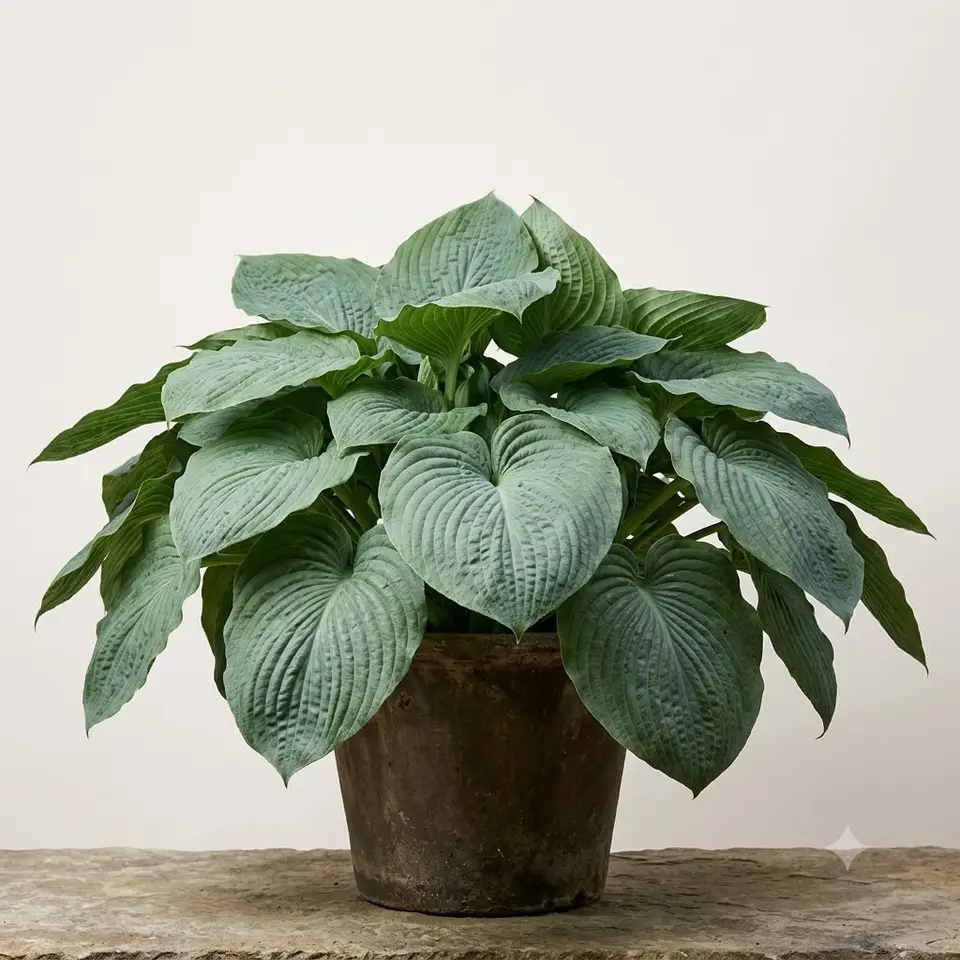 AI illustration
 Overview
'Empress Wu' is widely regarded as the largest hosta cultivar ever introduced, forming a colossal mound of deeply textured blue-green foliage that can top 1.2 m tall and spread wider still (Hosta 'Empress Wu'). Where most hostas are a tidy edging plant, this one reads as a shrub-scale specimen. It is grown almost entirely for its dramatic leaf size and presence rather than its modest flowers.
Origin & Background
Garden hostas descend from species native to northeast Asia - Japan, Korea, China and the Russian Far East - where they grow on wooded slopes and stream banks. 'Empress Wu' is a complex hybrid selected in the United States, discovered by Brian and Virginia Skaggs and introduced to the trade around 2009 under plant patent. It was named for Wu Zetian, the only woman to rule China as emperor, a nod to its commanding scale.
Appearance
The foliage is the whole point: broad, heart-shaped leaves in a deep, dusty blue-green, heavily corrugated and thick-substanced, individual blades often reaching 45 cm long and nearly as wide on a mature clump. The plant builds slowly into an upright, vase-to-mounded form roughly 1.2 to 1.5 m tall and 1.5 to 1.8 m across when fully established, which takes several seasons. In early-to-mid summer it sends up scapes of pale lavender, near-white bell flowers held just above the leaves. The blue cast is a waxy bloom that is strongest in cooler weather and part shade; foliage yellows and dies back after autumn frost, with the plant fully dormant in winter.
Why People Grow It - Qualities & Benefits
- Unmatched scale - a single specimen fills a large shaded corner the way a shrub would
- Bold blue-green, corrugated leaves that add heavy texture and cool color to shade
- Thick leaf substance gives it better slug resistance than thin-leaved hostas
- Reliable, low-fuss perennial that returns bigger each year in the right spot
Care
Light: Part shade to full shade; morning sun with afternoon shade is ideal, and deep shade is tolerated though growth is slower. Water: Consistent, even moisture - this large plant is thirsty, especially while establishing and during dry spells. Soil: Rich, deep, well-drained soil high in organic matter; slightly acidic to neutral pH around 6.0 to 7.0. Hardiness: USDA zones 3 to 9. Bloom or Season: Foliage plant from spring emergence through autumn, with pale lavender flowers in early-to-mid summer; leaves yellow and collapse after frost, no true autumn color. Extra: Give it room and patience - it needs three to five years to reach full imperial size, so do not crowd it. Toxic to cats and dogs. Hostas contain saponins; ingestion causes vomiting, diarrhoea and depression.
Planting & Propagation
Plant in spring or early autumn in a hole amended generously with compost, setting the crown at soil level and spacing at least 1.5 to 1.8 m from neighbors to allow for the eventual spread. Mulch to conserve moisture and keep the root zone cool. Propagate by division in early spring as the shoots (eyes) emerge: lift the clump, cut through the crown with a clean sharp spade so each division carries several eyes and roots, and replant immediately - though many growers leave this slow-maturing cultivar undivided to reach maximum size.
Common Problems & Pests
- Slugs and snails, especially on young or shaded plants, though thick leaves resist them better than most
- Deer and rabbits, which browse hostas readily and can strip a plant overnight
- Crown rot and foliar diseases in soggy, poorly drained soil, plus leaf scorch if exposed to hot afternoon sun
Toxicity & Safety
'Empress Wu', like all hostas, is toxic to cats and dogs. The leaves and other parts contain saponins; when chewed or eaten they irritate the digestive tract, causing vomiting, diarrhoea and depression (lethargy). Keep pets from grazing on the foliage, and contact a veterinarian if a significant amount is ingested or symptoms are severe.
Pros & Cons
Pros
- Spectacular, largest-in-class specimen presence for shade
- Tough, cold-hardy and long-lived once established
Cons
- Slow to reach full size and needs a lot of space
- Toxic to cats and dogs, and attractive to deer
Best Suited For
- Shaded or woodland gardens needing a bold focal-point plant
- Patient gardeners with room for a large, statement perennial
FAQ
How big does Empress Wu really get?
In good conditions it reaches about 1.2 to 1.5 m tall and 1.5 to 1.8 m wide, making it the largest common hosta cultivar - but expect three to five years of steady growth before it hits that mature scale.
Does it need shade, or can it take sun?
It performs best in part to full shade. It can handle morning sun, but hot afternoon sun scorches the leaves and fades the blue coloring, so a sheltered, shaded spot with rich moist soil is ideal.
Gear for growing empress wu hosta
Links go to Amazon or a partner store (such as Adagio Teas) and may earn us a commission at no extra cost to you. As an Amazon Associate we earn from qualifying purchases. We link gear types, not sponsors' picks: you choose the exact product.