Fire and Ice Hosta
Fire and Ice is a compact, high-contrast hosta grown for its dramatic reverse variegation: each leaf has a bright creamy-white centre framed by a wide, deep-green margin (Hosta 'Fire and Ice').
Last reviewed: September 2026
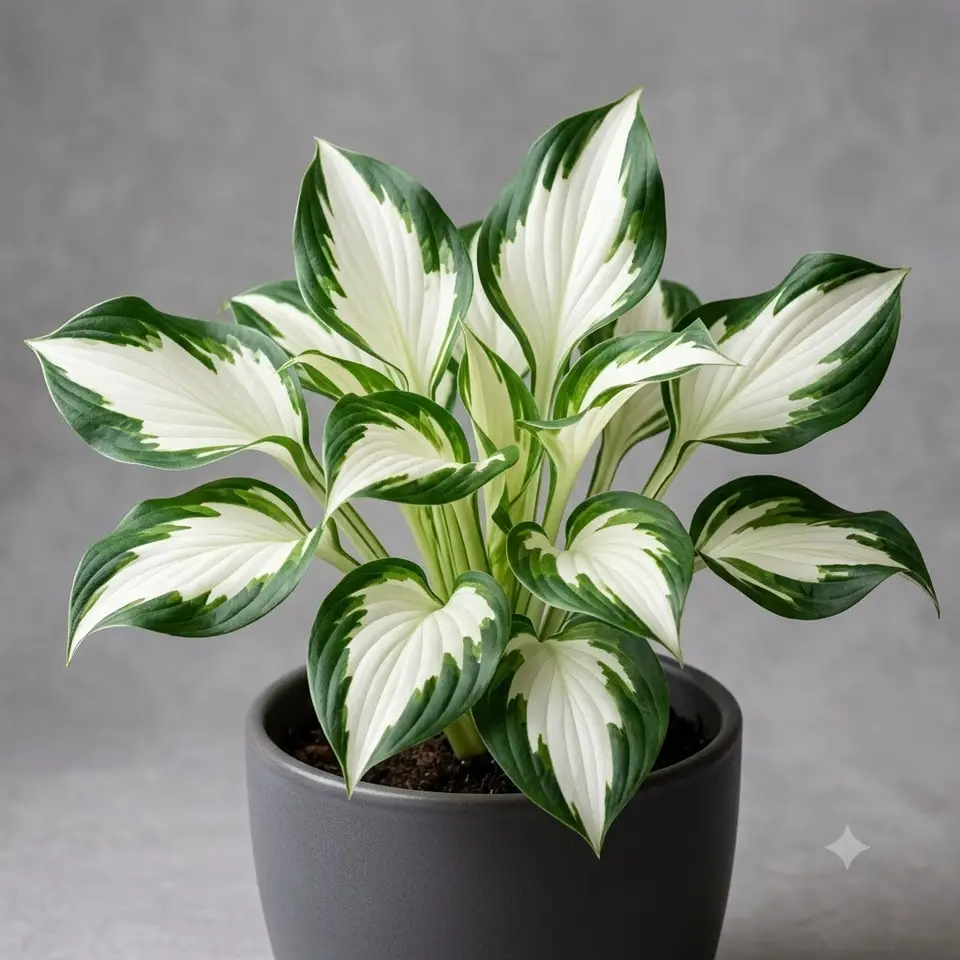 AI illustration
 Overview
Fire and Ice is a compact, high-contrast hosta grown for its dramatic reverse variegation: each leaf has a bright creamy-white centre framed by a wide, deep-green margin (Hosta 'Fire and Ice'). It is a sport of the popular 'Patriot', flipping that plant's colour pattern inside out, which gives it an unusually crisp, almost graphic look in the shade garden. Because so much of the leaf is white and low in chlorophyll, it stays smaller and grows a little more slowly than fully green hostas.
Origin & Background
The genus Hosta is native to the woodlands and stream banks of northeast Asia, chiefly Japan, China and Korea, where the plants grow as shade-loving perennials. 'Fire and Ice' is not a wild species but a cultivated sport discovered as a spontaneous mutation of 'Patriot' (itself descended from the classic 'Francee'). It was introduced to the nursery trade around the turn of the 2000s and quickly became a favourite for its bold white-centred foliage.
Appearance
The leaves are broadly oval to heart-shaped with a pointed tip and gently rippled edges, showing a pure white to creamy centre with a bold, irregular dark-green border. The plant forms a tidy, dense mound roughly 25 to 35 cm tall and about 50 to 75 cm wide at maturity, taking a few seasons to fill out. In mid to late summer it sends up scapes of pale lavender, funnel-shaped flowers that rise above the foliage. As a herbaceous perennial it dies back to the ground after frost, then returns each spring; there is no autumn leaf colour in the way a maple shows, though foliage can yellow and soften before dormancy.
Why People Grow It - Qualities & Benefits
- Striking white-centred, green-edged leaves that brighten dark, shaded corners
- Compact, well-behaved mound that suits small beds, edging and containers
- Reliable, low-fuss perennial that returns year after year in cold climates
- Pale lavender summer flowers add a soft vertical accent above the leaves
Care
Light: Part shade to full shade; morning sun with afternoon shade is ideal. The white centres scorch easily in hot direct sun, so protect it from harsh midday light. Water: Keep the soil evenly moist, especially in its first seasons and during dry spells; it dislikes drying out. Soil: Rich, humusy, well-drained soil that holds moisture; slightly acidic to neutral pH (around 6.0 to 7.0) is best. Hardiness: USDA zones 3 to 9. Bloom or Season: Foliage mound from spring through autumn, with lavender flowers in mid to late summer; the plant is deciduous and dies back over winter. Extra: The large white leaf centres mean less chlorophyll, so this cultivar is slower and slightly less vigorous than green hostas - be patient and avoid stressing it. Toxic to cats and dogs. Hostas contain saponins; ingestion causes vomiting, diarrhoea and depression.
Planting & Propagation
Plant in spring or early autumn in a shaded, moisture-retentive spot, setting the crown level with the soil surface and spacing plants about 60 cm apart to allow the mound to spread. Water in well and mulch to conserve moisture and suppress weeds. Propagate by division in early spring as the shoots emerge: lift the clump, cut or tease it into sections each with roots and several eyes, and replant promptly. Division every few years keeps clumps healthy and is the only way to reliably reproduce the cultivar true to type.
Common Problems & Pests
- Slugs and snails chew ragged holes in the leaves, especially the softer white tissue
- Leaf scorch and browning if exposed to too much direct sun or allowed to dry out
- Deer and rabbits browse the foliage heavily in many gardens
Toxicity & Safety
Fire and Ice, like all hostas, is toxic to cats and dogs. The leaves contain saponins, natural compounds that irritate the digestive tract. If a pet eats any part of the plant, expect vomiting, diarrhoea and depression or lethargy. Keep animals away from the foliage, clear up any nibbled leaves, and contact a veterinarian if a pet ingests it and symptoms are severe or persistent.
Pros & Cons
Pros
- Bold reverse variegation that lights up shady spaces
- Compact size fits small gardens, borders and pots
Cons
- Slower growing and less vigorous than all-green hostas
- Very prone to slug damage and to scorch in too much sun
Best Suited For
- Shade and woodland gardens needing a bright focal accent
- Gardeners in cold-winter zones wanting a compact, dependable perennial
FAQ
How big does Fire and Ice Hosta get?
It forms a compact mound about 25 to 35 cm tall and 50 to 75 cm wide, taking two or three seasons to reach full size.
Why is my Fire and Ice growing so slowly?
The large white leaf centres contain little chlorophyll, so the plant produces less energy and naturally grows slower than green hostas. Give it steady moisture, rich soil and gentle light rather than trying to force faster growth.
Gear for growing fire and ice hosta
Links go to Amazon or a partner store (such as Adagio Teas) and may earn us a commission at no extra cost to you. As an Amazon Associate we earn from qualifying purchases. We link gear types, not sponsors' picks: you choose the exact product.