First Frost Hosta
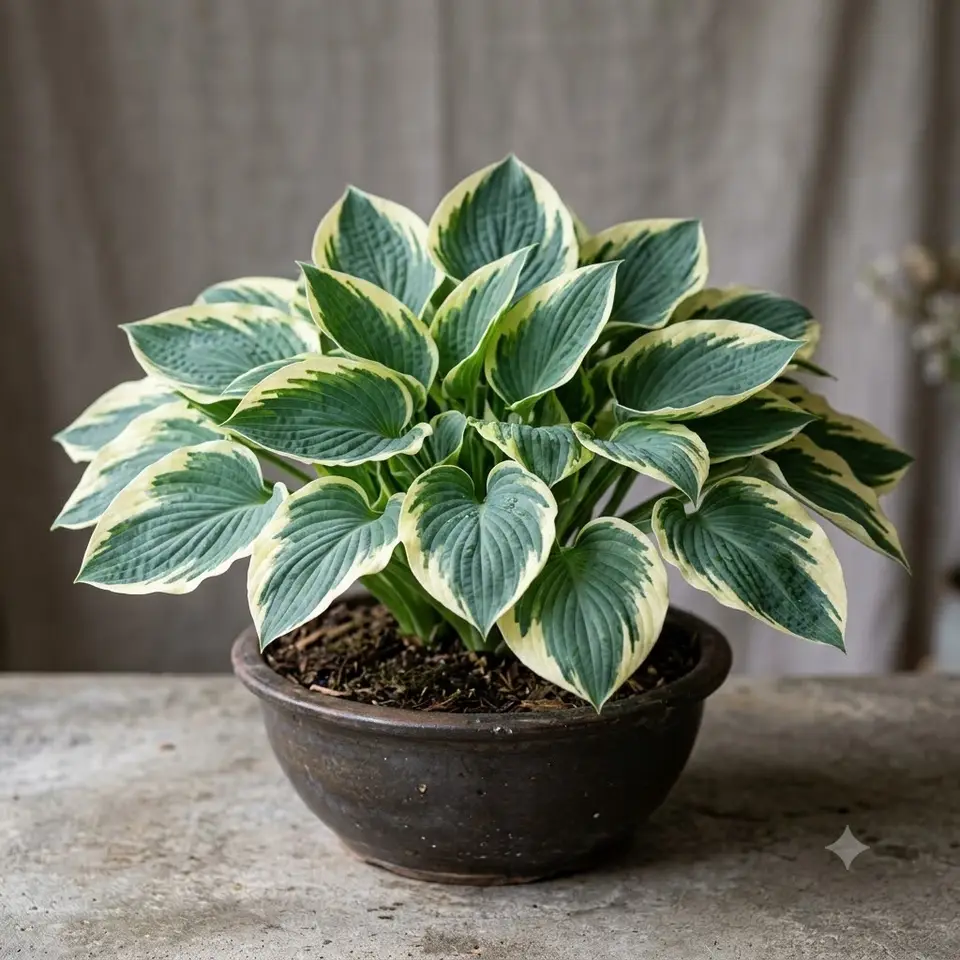
First Frost is a medium-sized shade hosta prized for its blue-green heart-shaped leaves edged with a crisp margin that opens gold and matures to creamy white, giving the plant a frosted look through the season (Hosta 'First Frost').
Last reviewed: September 2026
 AI illustration
 Overview
First Frost is a medium-sized shade hosta prized for its blue-green heart-shaped leaves edged with a crisp margin that opens gold and matures to creamy white, giving the plant a frosted look through the season (Hosta 'First Frost'). It is a well-behaved, mounding perennial that reads as tidy and colourful without needing much attention. It was named the American Hosta Growers Association Hosta of the Year in 2010, a nod to how reliably it performs in ordinary gardens.
Origin & Background
The genus Hosta is native to East Asia, chiefly Japan, Korea and parts of eastern China, where the wild species grow on woodland edges, shaded slopes and streambanks. First Frost is a garden cultivar rather than a wild plant: it arose as a sport (a spontaneous mutation) of the classic blue Tardiana hosta 'Halcyon', inheriting that parent's blue-green substance while adding the changing marginal colour that defines it. It has been widely propagated and distributed since the 2000s and is now one of the more common named hostas in the trade.
Appearance
The leaves are broadly heart-shaped, thick and slightly cupped, with a soft blue-green centre laid down by a waxy coating. The margin emerges gold in spring, then cools to ivory and creamy white as summer advances, so the same plant looks subtly different from May to August. A mature clump forms a dense mound roughly 25 to 40 cm tall and 60 to 85 cm wide. In late summer, usually July into August, it sends up scapes of pale lavender, funnel-shaped flowers held just above the foliage. Like most hostas it dies back cleanly after frost and returns from the crown in spring.
Why People Grow It - Qualities & Benefits
- Bright, shifting foliage colour that lights up shady corners where flowers struggle
- Compact, well-proportioned mound that suits borders, edging and containers
- Thick, waxy leaves that show better slug resistance than thin-leaved hostas
- Low-maintenance and long-lived, thriving for years with minimal intervention
Care
Light: Part shade to full shade; morning sun with afternoon shade keeps the margins bright without scorching. Deep, dark shade dulls the contrast. Water: Consistent, even moisture; water during dry spells and do not let an establishing clump dry out. It does not tolerate soggy, waterlogged soil. Soil: Rich, humus-heavy, well-drained soil that stays moist; slightly acidic to neutral pH (about 6.0 to 7.0) is ideal. Hardiness: USDA zones 3 to 9. Bloom or Season: A spring-to-frost foliage plant; the margin shifts from gold to creamy white over the season, with lavender flowers in mid to late summer. No autumn colour to speak of - it simply yellows and dies back. Extra: The signature quirk is the colour change, so the "frosted" white edge is strongest in the second half of summer, not at leaf-out. Note: hostas are toxic to cats and dogs - ingestion causes vomiting, diarrhoea and depression, so site it away from pets that graze.
Planting & Propagation
Plant in spring or early autumn, setting the crown at soil level in ground enriched with compost or leaf mould, and space clumps about 60 to 75 cm apart to allow the mound to fill in. Mulch to conserve moisture and keep roots cool. The standard and easiest way to propagate is division: in early spring, as the pointed shoots (eyes) push up, lift the clump and split it into sections with a spade or knife, making sure each division carries roots and at least two or three eyes, then replant immediately and water in.
Common Problems & Pests
- Slugs and snails chew ragged holes, though the thick leaves resist them better than most hostas
- Leaf scorch, browning and crisping of margins from too much sun or dry soil
- Deer and rabbits browse the foliage readily in gardens where they are present
Toxicity & Safety
Hostas, including First Frost, are toxic to cats and dogs. The plants contain saponins, and ingestion causes vomiting, diarrhoea and depression (lethargy). Signs are usually gastrointestinal and self-limiting, but a pet that has eaten a significant amount, or shows worsening symptoms, should be seen by a veterinarian. Keep animals from grazing on the leaves and dispose of trimmings where pets cannot reach them.
Pros & Cons
Pros
- Colour that changes through the season for long-running shade interest
- Tough, adaptable and low-maintenance once established
Cons
- Toxic to cats and dogs
- Dies back fully in winter, leaving a bare gap until spring
Best Suited For
- Shaded and part-shaded borders, woodland gardens and north-facing beds
- Gardeners who want a reliable, container-friendly foliage plant with minimal fuss
FAQ
Why is my First Frost losing its white edge?
The margin is gold when leaves emerge and turns creamy white as summer progresses, so early in the year the frosted edge simply has not developed yet. Too little light can also mute the contrast; a spot with morning sun and afternoon shade gives the strongest edge.
How big does First Frost get, and how fast?
It settles into a mound around 25 to 40 cm tall and 60 to 85 cm wide. Hostas take a few seasons to reach full size, so expect it to bulk up noticeably by its third year.
Gear for growing first frost hosta
Links go to Amazon or a partner store (such as Adagio Teas) and may earn us a commission at no extra cost to you. As an Amazon Associate we earn from qualifying purchases. We link gear types, not sponsors' picks: you choose the exact product.