Foxtail Lily
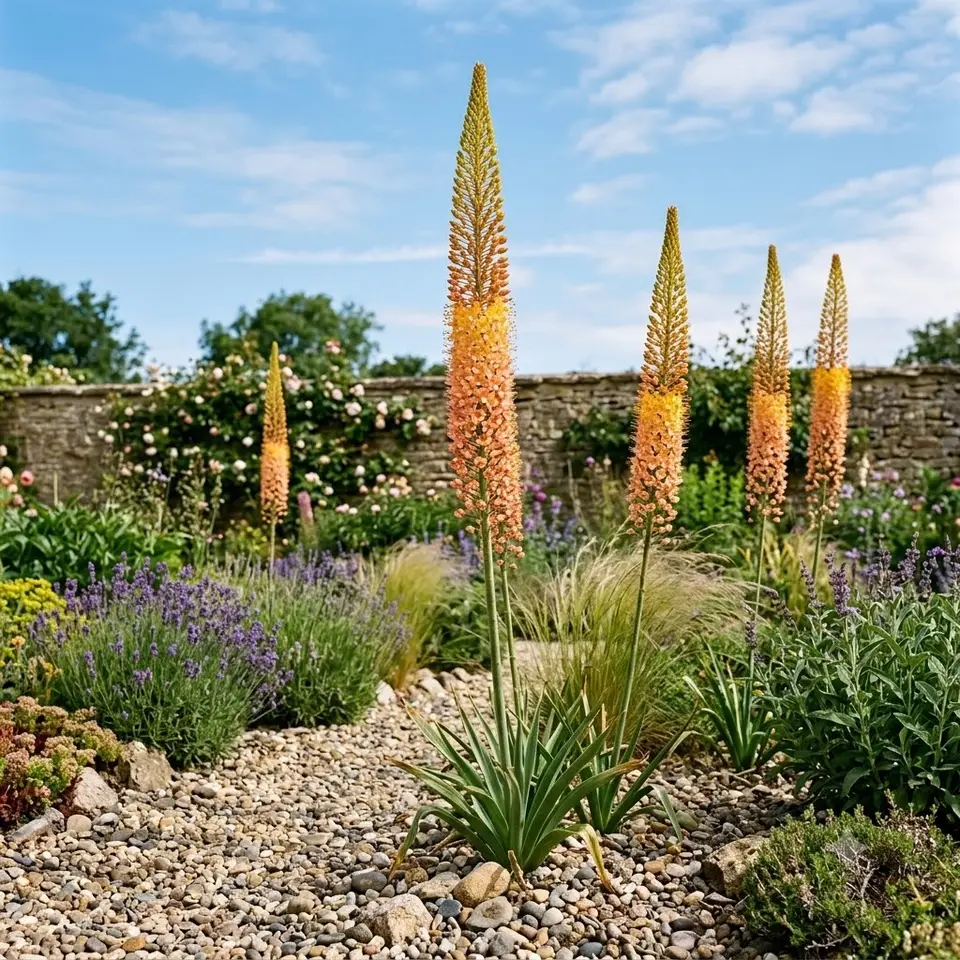
Foxtail lilies send up two-meter towers packed with hundreds of starry blooms in peach, gold and white, rising from bizarre starfish roots.
Last reviewed: October 2026
 AI illustration
 Overview
Foxtail lilies send up two-meter towers packed with hundreds of starry blooms in peach, gold and white, rising from bizarre starfish roots. Nothing in June out-verticals them; nothing punishes soggy soil faster. High drama for sharp drainage. (Eremurus.)
Origin & Natural Habitat
Steppes of Central Asia (Afghanistan, Iran, the -stans) - baking summers, cold winters, fast-draining grit.
Appearance
Basal leaf rosettes send up 1.5-2.5 m pokers, the top half packed with hundreds of small stars opening bottom-up for weeks - 'Cleopatra' peach, himalaicus white, bungei gold.
Why People Grow It - Qualities & Benefits
- Tallest floral exclamation of early summer
- Bee-swarmed bloom towers
- Steppe toughness (drought, cold)
- Cut spikes are event flowers
Care
Light: Full baking sun.
Water: Spring moisture, then DRY - summer wet on the crown is the great killer.
Soil: Sharply drained, gritty, even poor; heavy clay demands raised grit beds or regrets.
Planting: Fall: the starfish (octopus) roots laid FLAT on a grit cone, crown 10-15 cm down, handled like porcelain (brittle roots snap).
Hardiness: Zones 5-8 (cold-hardy; wet-winter-tender).
After flowering: Spikes brown standing (leave for structure or cut); foliage vanishes by midsummer - mark the spot, plant around the gap.
Propagation
Careful fall division of multi-crown clumps every 4-6 years; roots resent poking otherwise.
Common Problems & Pests
- Crown/root rot in wet soils: THE failure mode
- Wind-snap of towers (stake in gusty gardens)
- Slugs on spring rosettes
- Fragile roots at planting
Toxicity & Safety
Low concern - considered non-toxic to pets in normal contact.
Pros & Cons
Pros
- Unmatched vertical drama
- Pollinator towers
- Drought-proof once set
Cons
- Demands drainage most gardens must build
- Summer die-down gap
- Brittle-root planting care
Best Suited For
- Gravel and steppe gardens
- Sunny well-drained slopes
- Back-of-border spectacles
- Cut-flower ambitions
FAQ
Why did mine rot the first winter?
Water sat on the crown - the species' one deal-breaker. Replant on a cone of sharp grit in your sunniest, driest spot; many gardens grow them in near-rubble happily.
Do they need staking?
Sheltered gardens: no - the rockets self-support. Wind corridors: a discreet cane saves the two-month tower from one June squall.
Gear for growing foxtail lily
Links go to Amazon or a partner store (such as Adagio Teas) and may earn us a commission at no extra cost to you. As an Amazon Associate we earn from qualifying purchases. We link gear types, not sponsors' picks: you choose the exact product.