Endless Summer Hydrangea
Endless Summer is a reblooming bigleaf hydrangea (Hydrangea macrophylla 'Endless Summer') that flowers on both old and new wood, so it keeps producing its big mophead blooms through summer even after a hard winter or a heavy prune.
Last reviewed: September 2026
 AI illustration
 Overview
Endless Summer is a reblooming bigleaf hydrangea (Hydrangea macrophylla 'Endless Summer') that flowers on both old and new wood, so it keeps producing its big mophead blooms through summer even after a hard winter or a heavy prune. That remontant habit is what sets it apart from older bigleaf types, which flower only on stems formed the previous year and can lose a whole season to frost. Its blooms shift between blue and pink depending on your soil, giving the same plant two very different looks.
Origin & Background
The bigleaf hydrangea species is native to coastal Japan, where it grows in mild, humid woodland edges and thickets. Endless Summer was selected as a cold-hardy, repeat-flowering cultivar (trademarked from the plant known by the code name 'Bailmer') and introduced to the market in the mid-2000s. Its arrival was notable because it brought reliable reblooming and improved cold tolerance to a plant that gardeners in colder regions had long struggled to flower.
Appearance
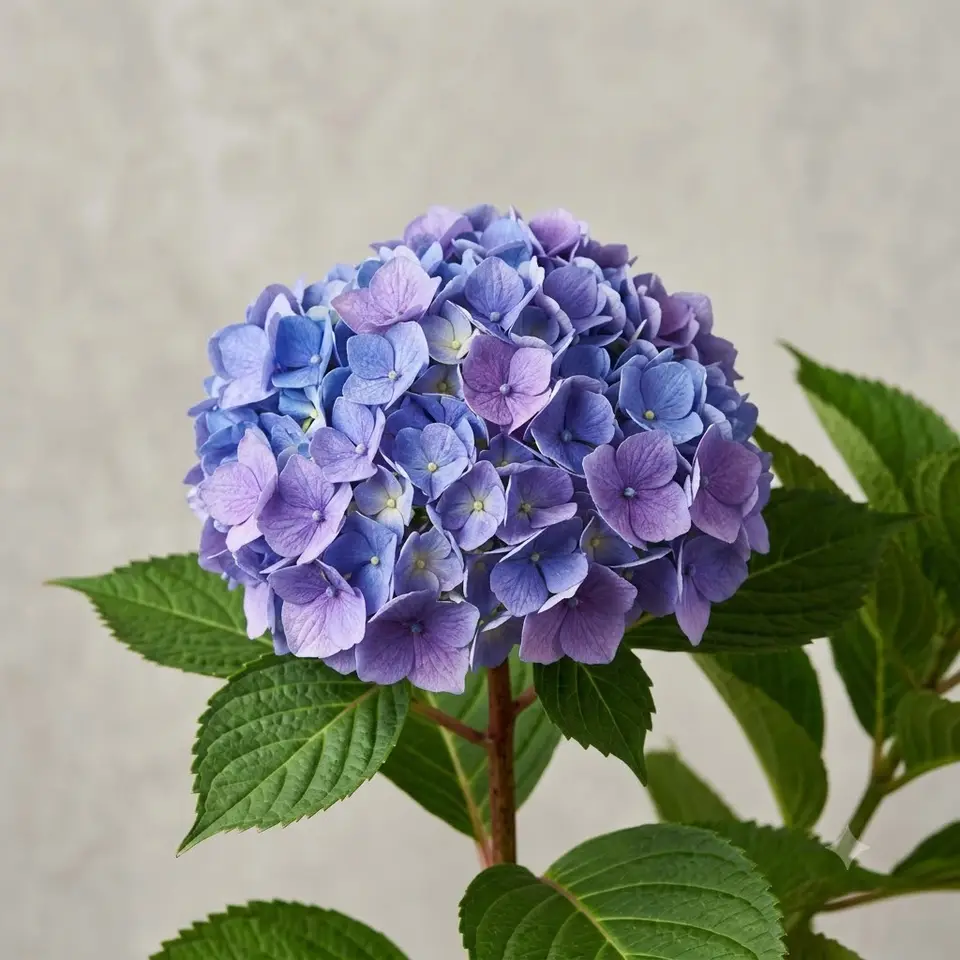
Endless Summer forms a rounded, mounding shrub with large, glossy, coarsely toothed green leaves. The flowers are classic mopheads - rounded clusters up to about 20 cm across - carried on strong stems from early to mid summer and, thanks to the reblooming habit, on and off into autumn. Colour depends on soil chemistry: rich blue to violet in acidic soil, and pink to rose in neutral to alkaline soil, with lavender tones in between. Mature height and spread are roughly 90 to 150 cm in each direction. As the season closes, the foliage can take on reddish tints and the ageing blooms fade to soft antique greens and dusky pinks.
Why People Grow It - Qualities & Benefits
- Reblooms on old and new wood, so a late frost or an accidental prune rarely costs a whole season of flowers.
- Colour is tunable - you can steer blooms toward blue or pink by adjusting soil pH.
- Long display, with fresh flushes of large mopheads from early summer into autumn.
- Cold-hardier than many traditional bigleaf hydrangeas, extending the range where these blooms are dependable.
Care
Light: Part shade suits it best - morning sun with shelter from hot afternoon sun. Too much deep shade thins the flowering; too much harsh sun scorches leaves and wilts blooms. Water: Needs consistent, even moisture. The large leaves lose water quickly and the plant wilts in dry spells, so water deeply in heat and mulch to hold moisture. Soil: Rich, moist but well-drained soil high in organic matter. Flower colour tracks pH: acidic soil (below about 6.0, with available aluminium) gives blue, neutral to alkaline soil (above about 7.0) gives pink. Hardiness: USDA zones 4 to 9. Bloom or Season: Main flush early to mid summer, with repeat flowering into early autumn given steady moisture and feeding. Extra: The reblooming habit means light deadheading of spent mopheads encourages more flushes - avoid hard late-season pruning that removes forming buds. Note: this plant is toxic to cats, dogs and horses; the leaves and flowers contain a cyanogenic glycoside and ingestion can cause vomiting, diarrhoea and lethargy.
Planting & Propagation
Plant in spring or autumn in a sheltered, part-shade spot, setting the crown level with the surrounding soil and watering in well. Propagate named cultivars vegetatively to keep them true - take softwood cuttings from non-flowering shoot tips in late spring to early summer, or semi-hardwood cuttings later in the season, and root them in a moist, free-draining mix under humidity. Simple layering also works well: pin a low, flexible stem to the ground, cover a section with soil, and let it root before separating it the following season. Avoid seed for named cultivars, as seedlings will not come true to the parent.
Common Problems & Pests
- Wilting and leaf scorch from dry soil or too much direct sun - a moisture and siting issue more than a disease.
- Powdery mildew and leaf spot in humid, crowded, or poorly ventilated conditions.
- Aphids and spider mites on soft new growth, sometimes with scale on older stems.
Toxicity & Safety
Hydrangeas, including Endless Summer, are toxic to cats, dogs and horses. The leaves, buds and flowers contain a cyanogenic glycoside, which can release cyanide compounds when the plant tissue is chewed and broken down. In practice, poisoning is usually mild because animals rarely eat large amounts, but ingestion can cause vomiting, diarrhoea and lethargy. Keep prunings and spent blooms out of reach of pets and grazing animals, and contact a vet if a significant quantity is eaten or symptoms appear.
Pros & Cons
Pros
- Reblooms reliably on both old and new wood, protecting the display from frost and mistimed pruning.
- Colour can be shifted between blue and pink to suit the garden scheme.
Cons
- Wilts fast and needs steady watering, so it is not a plant-and-forget shrub.
- Bloom colour depends on soil chemistry, so getting a specific shade takes ongoing adjustment.
Best Suited For
- Gardeners in cooler zones who want dependable mophead blooms despite late frosts.
- Mixed borders, foundation plantings and part-shade beds where a long, colour-adjustable summer display is wanted.
FAQ
Why are my Endless Summer blooms pink when I wanted blue?
Colour follows soil pH and aluminium availability. Blue develops in acidic soil (roughly below pH 6.0), while neutral to alkaline soil produces pink. To move toward blue, acidify the soil over time; to hold pink, keep the soil more neutral to alkaline.
Do I need to prune it, and when?
Only light pruning is needed. Remove dead or weak stems and deadhead spent flowers to encourage more flushes, but avoid hard cuts in late summer or autumn, since that removes buds already formed for next year and reduces the early-season display.
Gear for growing endless summer hydrangea
Links go to Amazon or a partner store (such as Adagio Teas) and may earn us a commission at no extra cost to you. As an Amazon Associate we earn from qualifying purchases. We link gear types, not sponsors' picks: you choose the exact product.